
Production Equipment
Extrusion Equipment Financing
Finance new or used extrusion equipment including single-screw, twin-screw, and sheet extruders. $50k minimum, application-only up to $400k, funding in 1-2 weeks.
Start Review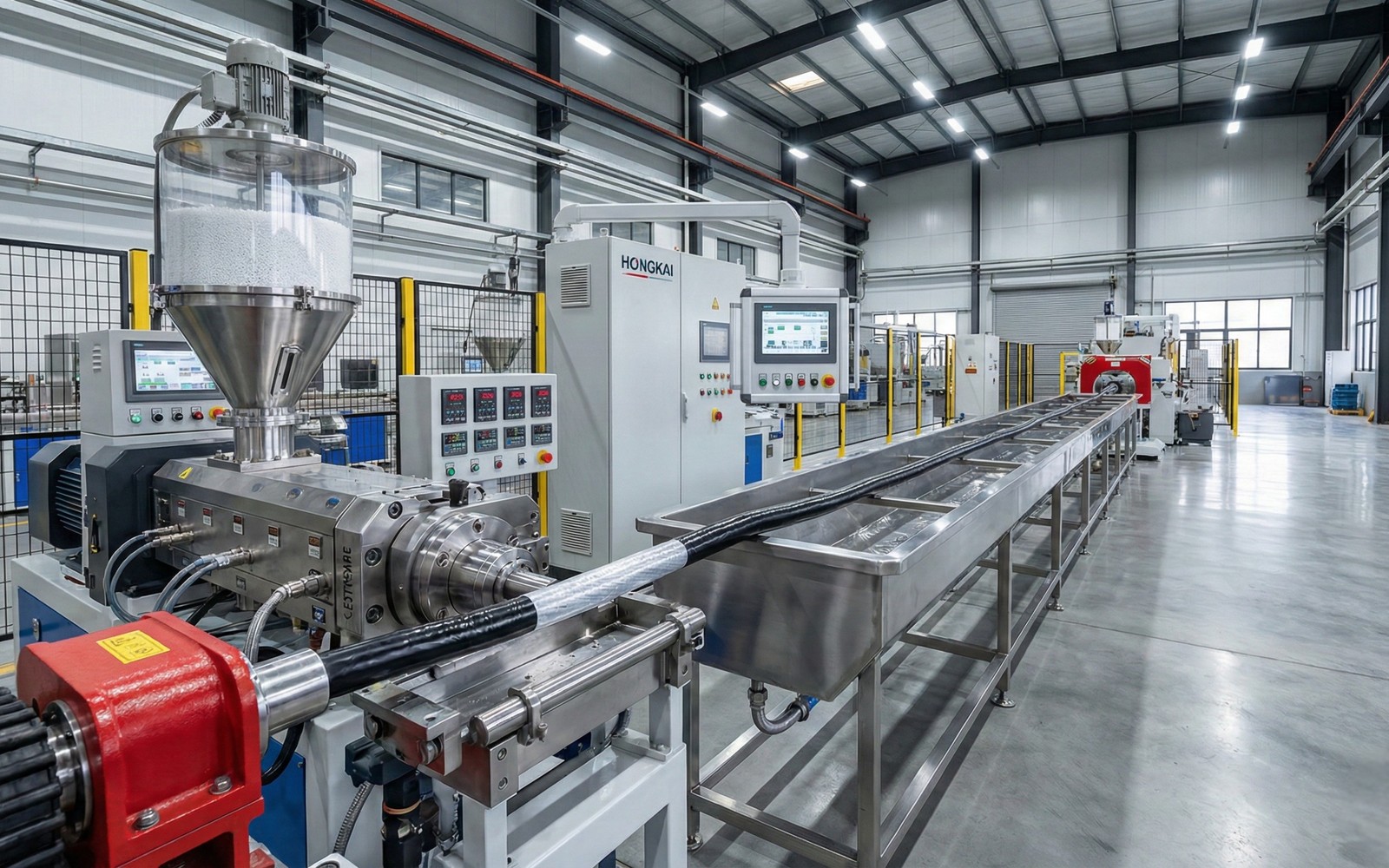
The extruder is the throughput engine. Every meter of profile, pipe, sheet, or film that leaves your plant started as pellets fed into a barrel, and the screw geometry, barrel temperature zones, and die design determine how many pounds per hour you push. A line that is running below its rated output is leaving margin on the floor, and the most common reason is tooling age or screw wear that no one has budgeted to address.
We finance extrusion equipment across the full range of configurations: single-screw machines for film, pipe, and tubing; co-rotating and counter-rotating twin-screw systems used in compounding and specialty profiles; and sheet and profile extrusion lines where die quality and haul-off tension management set the product consistency. We work with Plastics Manufacturing running commodity polyolefins and with specialty compounders whose recipes require precise shear and residence-time control. The same financing structure applies either way.
Our minimum transaction is $50,000, and the sweet spot for most extrusion projects falls between $100,000 and $300,000 once you price in the die, haul-off, cutter, and upstream material handling. Application-only approval is available up to approximately $400,000 with three months of bank statements for larger amounts. Funding typically completes in one to two weeks from approval.
Extruder Configurations and What They Cost
Single-screw extruders in the 2.5- to 6-inch diameter range are the backbone of film, sheet, and pipe production. A refurbished 3.5-inch single-screw with a modern AC drive and updated barrel can be sourced landing between $80k and $150k. New machines from established builders carry higher price tags but come with current drive controls, precision barrel bore tolerances, and often a manufacturer warranty that lenders accept as added collateral comfort.
Twin-screw compounding lines are a different capital commitment. A mid-size co-rotating twin-screw extruder with loss-in-weight feeders, vacuum vent, and underwater pelletizer can run $400,000 to well over $1 million depending on screw diameter, L/D ratio, and throughput rating. These machines carry strong resale value in the used market because the barrel-and-screw wear parts are replaceable, which makes them solid financing collateral even at 10 or more years of age.
Sheet and profile lines require costing the entire train: extruder, screen changer, die, calibration table, haul-off, cutter or saw, and stacker. Buying only the extruder head and deferring the downstream equipment creates a bottleneck immediately downstream of the screw. We can structure a single facility that covers the complete line so you are not financing the extruder in January and scrambling for a separate arrangement for the haul-off in March.
New Equipment vs. Quality Used Lines
The used extrusion market is one of the more liquid secondary markets in plastics manufacturing. A twin-screw from a reputable builder that has been rebuilt with new screws and barrel segments carries most of the performance of a new machine at 40 to 60 cents on the dollar. Used equipment financing for extruders is structured the same as new: the lender takes a first-lien security interest in the machine, and approval depends on the business credit profile and operating history rather than the machine's age alone.
Where new equipment matters most is in film and barrier applications where die precision and drive stability translate directly to gauge control and scrap rates. Modern servo-driven haul-offs with closed-loop tension control simply perform better than machines built two decades ago, and the scrap savings can pay the difference in the first year. For commodity pipe, profile, or sheet where specs are wider, a well-maintained used line delivers the throughput you need without the lead time of a new build, which can run six to twelve months for a custom-spec twin-screw.
Sale-Leaseback and Refinancing for Extrusion Operations
Plants that own extruders outright have capital sitting in steel that could be working elsewhere. A Sale-Leaseback converts that equipment equity into cash you deploy toward tooling upgrades, new die inventory, downstream automation, or working capital during a capacity expansion. The extruder stays in place and in production; you make lease payments against the machine you are already running.
Refinancing works the same logic for machines that still carry a balance. If rates or terms on an existing loan no longer fit the business, a refi can restructure the payoff, lower the monthly obligation, or release equity that was locked in the original deal. We handle both purchase financing and refinance transactions with the same underwriting team and comparable timelines.
Operators adding Conveyor System Financing or downstream automation alongside their extrusion expansion often package those assets into a single facility rather than running parallel applications. That approach simplifies the documentation and typically closes faster than managing two separate lender relationships.
Who Uses This Financing
The most common applicants are independent plastics processors, contract profile extruders, and regional pipe manufacturers that operate between two and twenty extrusion lines and are reinvesting in OEE improvement or adding capacity for a new customer program. Many of these operators have seen strong demand in construction, agricultural irrigation, or automotive trim markets and need to move faster than internal capital allows.
Compounders developing new specialty materials for Automotive Parts Suppliers (Tier 1/2) or medical clients are also frequent applicants. The capital cost of entering a new compound family, including twin-screw time, formulation development, and laboratory equipment, often exceeds what the compounder can self-fund before the customer program ramps.
We also work with Building Products Manufacturing adding PVC window profile or decking capacity, where a complete downstream line including calibration water tanks, haul-off, and saw can push total project cost well above $500,000. Those projects benefit from our higher approval limits and our familiarity with equipment that has a long economic life and strong residual value even in a soft secondary market.
Finance Your Extrusion Equipment
Tell us the machine configuration, the seller, and your timeline. We will put a structure together that covers the extruder, tooling, and downstream equipment in one facility so the line comes up complete. Transactions from $50,000 to several million dollars, new and used, across every extrusion segment.
Questions About Extrusion Equipment Financing
Clear answers on equipment eligibility, documentation, timing, and transaction structure before you send the file.
Can I finance a complete extrusion line including the die, haul-off, and cutter as a single package?
Yes. We routinely structure facilities that cover all downstream components as a single asset schedule. The total transaction amount determines whether it goes application-only or requires bank statements and financial documentation.
My extruder is ten years old and I want to refinance it to pull cash out. Is that possible?
Used extruders with verifiable serial numbers and a clear title chain are refinanceable. We look at the machine's condition, remaining economic life, and your business operating history. Age alone does not disqualify the machine.
How is a co-rotating twin-screw extruder different to underwrite compared to a single-screw?
Twin-screws carry higher resale values because the barrel and screw segments are serviceable wear parts, not structurally failed components. That rebuiltability makes lenders more comfortable with older machines and with higher advance rates relative to the purchase price.
We have two extrusion lines we want to upgrade at the same time. Can both go into one loan?
Yes. A blanket facility listing multiple machines under one loan agreement is a common structure for operators replacing more than one line. It simplifies administration and usually closes faster than separate applications.
We had a slow year and credit took a hit. Can we still get approved for extrusion equipment?
B and C credit is considered on these transactions. We look at the full picture: equipment type, down payment, time in business, and recent cash flow. Stronger collateral and a larger down payment can offset credit challenges.
Finance Your Extrusion Equipment Financing
Send the equipment quote, seller details, price, deposit, and delivery schedule. The financing desk will review the file and return a practical next step.