
Service Area
Production Line Equipment Financing in Buffalo, NY
Finance production line equipment in Buffalo, NY. Food manufacturing, plastics, metals & automotive lines from $50k. Application-only to $400k. Fast approvals.
Start Review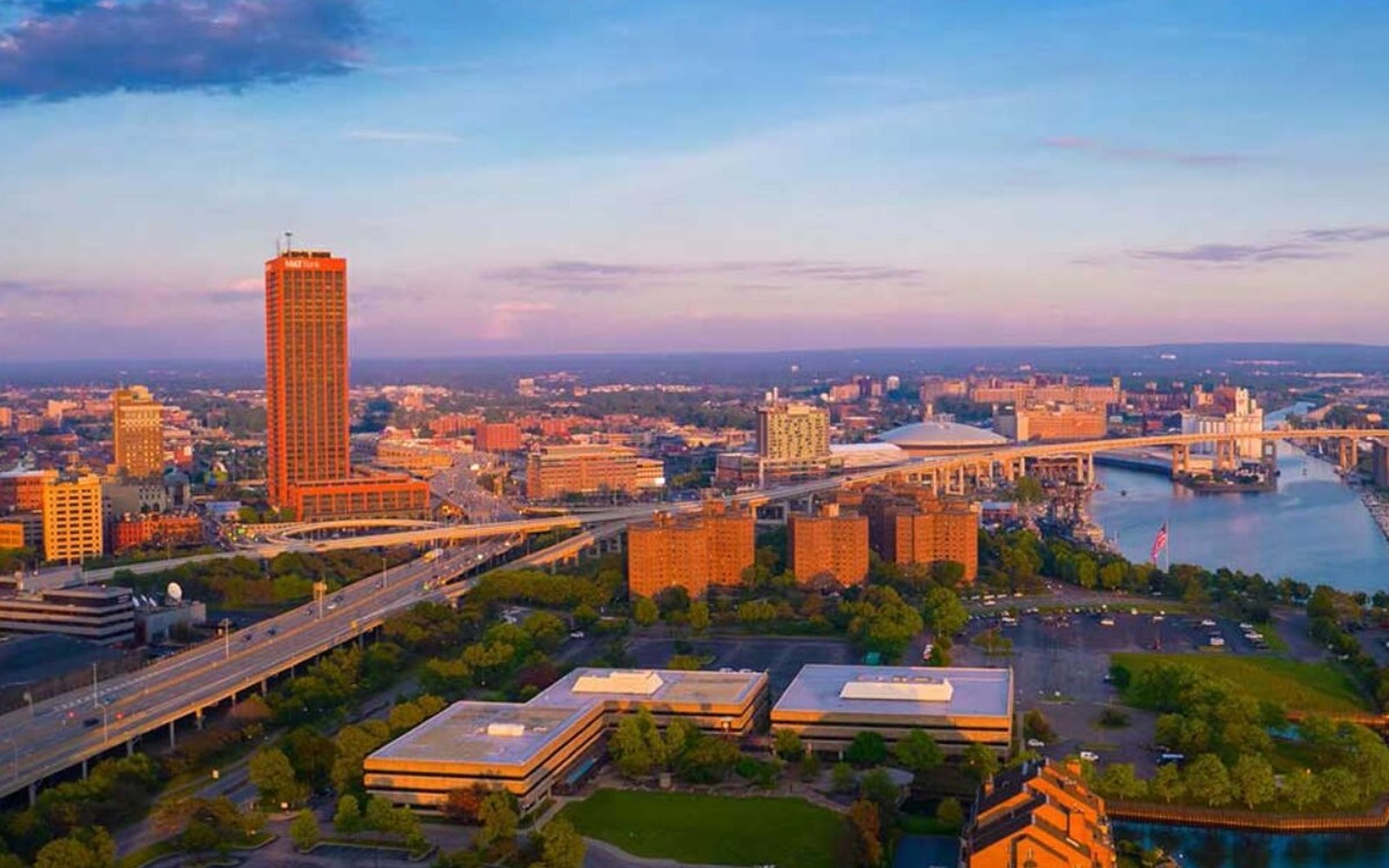
Buffalo's industrial revival over the past decade has been real and measurable. The resurgence of food manufacturing, the persistence of a metals and fabrication base that survived the steel collapse and reinvented itself, and a growing medical technology sector have created a layered manufacturing economy along the Niagara Frontier. The production lines in those plants run under the same throughput pressure that every manufacturer feels: a bottleneck on one station limits the whole line, and the capital to address it should not be the rate-limiting step. We finance production line equipment for Buffalo-area manufacturers starting at $50,000, with most transactions running $100,000 to $300,000 for equipment additions, upgrades, and refinances of existing iron.
Erie County and Niagara County together define the greater Buffalo manufacturing base. The equipment we finance here spans food and beverage processing lines, metal fabrication and specialty steel equipment, plastics manufacturing systems, and medical and life sciences assembly equipment. Structures include direct loans, capital and operating leases, Sale-Leaseback for plants with equity in existing assets, and Production Line Upgrade Financing for manufacturers who are adding capacity to an existing line rather than replacing it wholesale. Application-only approval covers up to roughly $400,000 with minimal documentation; larger deals require bank statements and financials.
Buffalo's Industrial Mix Along the Niagara Frontier
Food manufacturing is Buffalo's most consistent manufacturing sector by employment. Rich Products Corporation, headquartered in Buffalo, is one of the largest privately held food companies in North America and a major local employer. The company's presence has attracted a supplier and co-manufacturer ecosystem that creates steady demand for food processing and packaging equipment. Beyond Rich Products, the region hosts grain milling, dairy processing, specialty food production, and a growing craft beverage sector that runs relatively small but capital-intensive bottling and canning lines.
The metals and fabrication sector here has evolved considerably since the steel mill era. Specialty steel, aluminum fabrication, and precision metalworking for industrial and defense customers replaced the commodity steel production that left decades ago. These operations run stamping presses, laser cutting systems, precision turning centers, and automated quality inspection equipment. The asset values are substantial, the secondary markets are active, and the financing structures we use here reflect those characteristics.
Medical technology has emerged as a meaningful Buffalo sector through the University at Buffalo and Roswell Park Comprehensive Cancer Center's commercialization activity. Medical device assembly and instrumentation manufacturing have created demand for cleanroom-compatible assembly systems, precision joining equipment, and inspection tools that fall squarely in our financing range. Medical device manufacturers in the Buffalo area often have strong credit profiles and long-lived assets, which supports favorable financing terms.
Automotive components manufacturing persists in the greater Buffalo area, particularly in facilities that supply the Canadian side of the cross-border supply chain. Parts flowing to Windsor and Toronto assembly plants come from Erie and Niagara County suppliers who run stamping, plastic injection molding, and sub-assembly lines on tight program timelines.
New Equipment vs. Secondhand Iron in the Buffalo Market
Buffalo's manufacturing heritage has produced an active secondary market for quality used industrial equipment. Regional auction houses handle surplus equipment from plant closures, consolidations, and upgrades on a regular basis. For a food processor looking to add a filling line or a fabricator adding a press, sourcing quality used equipment locally can deliver 50 to 60 percent of the cost of new while capturing the same throughput improvement. We finance used equipment on its actual condition and value, not on a blanket haircut from new price.
New equipment makes more sense when the technology gap matters: a current-generation packaging line with modern controls, faster changeover, and better sanitary design will outperform a 10-year-old line in ways that affect both throughput and regulatory compliance. For food manufacturers facing increasingly demanding retailer audits and FDA inspection regimes, newer equipment's documentation and design compliance often justify the premium. We finance both and help borrowers think through the total cost of ownership comparison when the choice is not obvious.
Used equipment financing through us follows the same process as new: application, credit review, equipment details, and value support (appraisal, inspection, or market comparable). The key difference is that for older assets, we often require a physical inspection before funding to confirm the condition matches what was described. That step adds a few days to the timeline but protects the borrower from overpaying on a misrepresented asset as much as it protects the lender.
What Qualifies for Buffalo Equipment Financing
The equipment types we finance here include food processing and packaging systems, stamping and fabrication equipment, injection molding machines, CNC machining centers, robotic systems for welding or material handling, Automated Storage & Retrieval System (AS/RS) Financing, and conveyor and sortation equipment. The common thread is that the asset must be identifiable, have a meaningful productive role in the business, and have a supportable value. We do not finance consumables, tooling with extremely short useful lives, or assets that are difficult to identify and repossess if needed.
On the borrower side, established manufacturers with two or more years of operation in the Buffalo area qualify on standard terms. Newer businesses and B/C credit borrowers are evaluated on the full picture: revenue, time in business, personal credit, and the quality of the equipment. B and C credit financing is available through our financing team; the terms reflect the profile but the capital is accessible.
The $50,000 minimum applies regardless of the borrower's size. A small specialty food producer buying a $75,000 packaging upgrade and a large metal fabricator acquiring a $300,000 laser cutting system go through the same fundamental process, scaled to the transaction size. For the smaller end of our range, the Application-Only Equipment Financing for Production Lines is particularly efficient.
Start Your Buffalo Equipment Financing Request
Buffalo's manufacturers have rebuilt this industrial base through consistent reinvestment in productive equipment. If your operation needs capital to continue that investment, tell us the project. Minimum $50,000, application-only to roughly $400,000, funding in approximately one to two weeks from approval.
Questions About Production Line Equipment Financing in Buffalo, NY
Clear answers on equipment eligibility, documentation, timing, and transaction structure before you send the file.
We are a food manufacturer and supply Rich Products and other regional food companies. How does that relationship factor into underwriting?
Revenue from creditworthy customers like major regional food companies reflects positively on the business's income stability. If you have active purchase orders or supply contracts, including them in the file gives underwriters context for the revenue stream. The contracts themselves are not collateral in equipment financing, but they inform the cash flow picture.
Buffalo's winters can affect equipment installation timelines. Can we close a transaction now and defer the first payment?
A deferred first payment of 30 to 90 days is sometimes available depending on the lender and the borrower's credit profile. This allows time for installation and ramp-up before the first payment is due. It is not universally available, but it is worth discussing at the application stage if your installation timeline calls for it.
We have a press in our plant that we are using as collateral on a bank line of credit. Can we also finance new equipment against it?
An asset that is already pledged as collateral on another loan is encumbered. Lenders generally will not take a second lien position on the same collateral without the first lender's consent. However, the new equipment you are buying is its own collateral. A transaction secured purely by the new equipment does not require any action on the encumbered press.
We manufacture automotive parts for Canadian assembly plants. Does the cross-border business model create any financing complications?
The financing itself is domestic, secured by equipment located in the United States. Your customers' location does not affect eligibility. Cross-border revenue is treated as business revenue the same as domestic sales. The main consideration is that the equipment must remain in the U.S. (in our case, at your Buffalo facility) for the duration of the financing.
How do you handle a sale-leaseback if the equipment has not been formally appraised in years?
For a sale-leaseback on older equipment, we typically require a current appraisal or inspection report to establish the value at which the transaction is structured. The cost of the appraisal is modest relative to the capital the sale-leaseback releases, and it protects both sides from pricing the transaction on stale data.
Finance Your Production Line Equipment Financing in Buffalo, NY
Send the equipment quote, seller details, price, deposit, and delivery schedule. The financing desk will review the file and return a practical next step.