
Production Equipment
Industrial Robot Financing
Finance industrial robots for welding, palletizing, assembly, and material handling. $50k minimum, B/C credit considered, funding in 1-2 weeks.
Start Review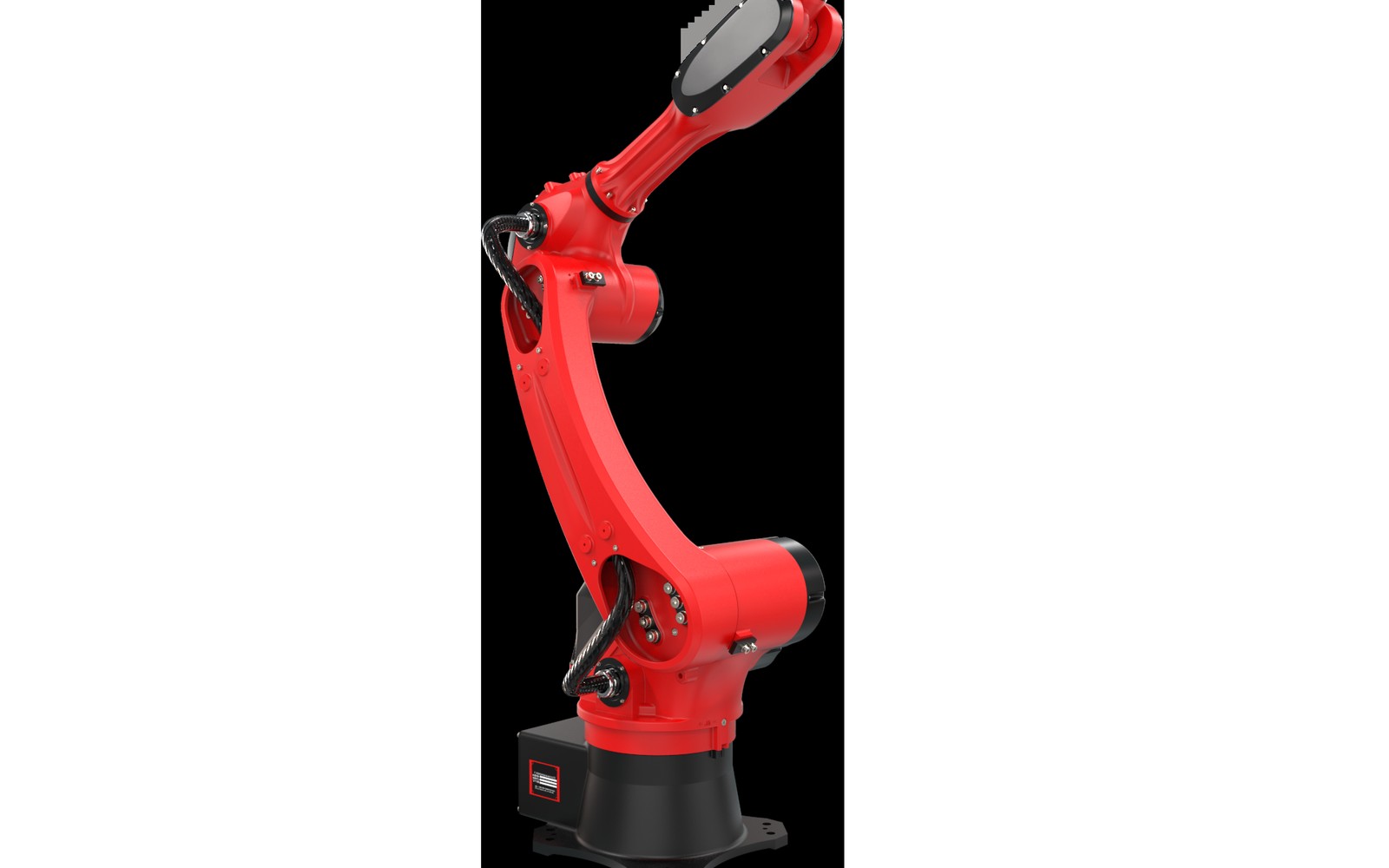
A cell that runs a second shift with no overtime pays for itself on a schedule you can actually put on paper. That is the core argument for Industrial Robot Financing, and it is the first question we ask when a plant engineer calls us: where is the labor constraint, and how fast does the robot clear it? If the payback math works at current volumes, the financing should not be the thing that slows the project down.
Industrial robots cover a wide range of tasks on the factory floor: arc welding, spot welding, material handling, palletizing, machine tending, assembly, and vision-guided pick operations. Payload capacities range from under 10 kg for small assembly cells up to 1,000 kg and beyond for heavy-payload palletizing units. Reach envelopes vary just as widely, from a 500 mm compact cell to a 4,000 mm six-axis arm working a large press. The robot is only part of the capital cost; a complete cell typically includes the controller, end-of-arm tooling, safety fencing, teach pendants, and integration labor. We finance the full cell as a single asset package, which simplifies both the approval and the title.
Our minimum is $50,000, and most robot-cell projects land between $150,000 and $600,000 once tooling and integration are included. New and used robots both qualify. A two-year-old FANUC or ABB unit coming off a plant sell-off carries real residual value and can often be financed at the same advance rate as new iron. If your credit profile is mixed or your business is relatively young, we work with lenders who underwrite to the asset and the production story, not just the score.
What the Cell Actually Costs
Robot OEM list prices are a starting point, not the number to plan around. A FANUC R-2000iC heavy-payload arm lists above $80,000 before the controller, and a fully integrated welding cell including fixtures, wire feeders, and the safety enclosure can run $250,000 to $400,000 for a single station. Palletizing systems from the major OEMs typically land between $150,000 and $350,000 for a turnkey cell with infeed conveyor and layer-forming equipment. Small assembly cells using collaborative or lighter six-axis arms can be done for $75,000 to $120,000, though collaborative deployments without full guarding require a thorough risk assessment that sometimes adds cost.
Used and refurbished robots introduce another price band. A well-maintained FANUC or KUKA arm with fewer than 30,000 hours and an updated controller can be sourced at 30 to 60 percent of new cost. Integrators who specialize in refurbishment often provide a parts-and-labor warranty that satisfies lender requirements, making used equipment a genuinely competitive option. We have financed refurbished units from all the major OEMs; the key is documentation of the inspection and any controller upgrades.
Integration is the line item that surprises buyers most. Labor to program, fixture, and validate a welding cell can equal or exceed the hardware cost on complex applications. We treat verified integration quotes as part of the collateral package, which means you do not need to float the integrator deposit on your operating line while waiting for equipment approval.
Which Operations Drive Most Robot Requests
The buyers who call us most often are operating in three situations. First, a manufacturer replacing a manual station that has become a labor bottleneck, typically arc welding, machine tending, or repetitive assembly. The OEE calculation is straightforward: if a robot runs two shifts at higher throughput than two headcount at one shift each, the payback period is usually under three years on a properly sized cell.
Second, a food or consumer goods plant adding a palletizing robot to handle end-of-line stacking for a new SKU or an increased order volume. Food and beverage manufacturers are among the largest robot buyers in the country, and palletizing is the most common first automation step because the payback is fast and the integration complexity is low relative to welding or assembly cells.
Third, an automotive parts supplier or metal fabricator adding a robot to a press or stamping line. Automotive parts suppliers face strict cycle-time requirements from their OEM customers, and a robot that reduces chip-to-chip time by even a few seconds across a high-volume run has measurable value. We understand how to size the facility to the OEM program, which helps us build a credit package that makes sense to the lender.
Across all three groups, the common thread is a clear throughput or labor argument. A robot cell with a documented payback period finances more easily than one that is speculative.
New Robot vs. Refurbished: Financing Differences
New industrial robots from the major OEMs typically finance at advance rates of 90 to 100 percent of the purchase price, and terms of 48 to 72 months are standard on full-cell packages. Residual values on new equipment from FANUC, ABB, KUKA, and Yaskawa Motoman are strong, which is one reason lenders are comfortable with longer terms on these assets.
Refurbished robots require a bit more documentation: the inspection report, the controller software revision, the warranty from the refurbisher, and sometimes an independent appraisal if the unit is more than ten years old. Most of our lenders will advance 80 to 90 percent on a well-documented refurbished cell. The payment on a refurbished unit at 85 percent advance can be substantially lower than on a new unit at full price, which is often the deciding factor for a mid-size plant adding its first robot.
One structure worth considering for either new or used equipment is a Sale-Leaseback on a robot you already own. If you installed a cell in the last few years and it is free and clear, a leaseback converts that sunk cost into operating capital without adding a new machine to the floor.
Timeline from Application to Funded
Robot-cell projects have a natural lead time: the integrator needs a deposit before programming starts, and the OEM may have a build queue. That makes early financing approval valuable even if delivery is 12 weeks out. We can issue a credit approval in 2 to 5 business days on most applications, which lets you hold your integrator slot and lock the equipment price without waiting until the invoice date.
For applications up to approximately $400,000, we can often process on an application plus three months of bank statements alone, with no full financials required. Larger or more complex projects, including multi-cell programs above $500,000, will need P&L and balance sheet documentation, but the underwriting is still focused on the asset value and the production case, not a checklist driven by a bank credit policy.
Funding happens when the vendor is ready to ship or when integration is complete, depending on how the purchase agreement is structured. We coordinate with your integrator or dealer to confirm delivery and send payment directly. Most funded projects are settled within 1 to 2 weeks of final approval.
Questions About Industrial Robot Financing
Clear answers on equipment eligibility, documentation, timing, and transaction structure before you send the file.
Can I finance the integrator's labor along with the robot hardware?
Yes. We package the robot, controller, end-of-arm tooling, safety fencing, and verified integration labor into a single facility. The integrator needs to provide a written quote that itemizes their scope, but you do not need to separate the hardware and labor into two financing arrangements.
My plant has been operating for two years and my credit score is below 680. Can I still get approved?
Probably, especially if the robot cell has a clear payback case. We work with lenders who underwrite to the collateral value and the production story. A documented OEE improvement or a labor cost reduction that exceeds the monthly payment is a compelling argument even when the credit profile is not perfect.
Can I refinance a robot cell I installed 18 months ago and still owe on?
If you have equity in the cell and the remaining term and rate are above market, a refinance can lower your monthly payment or free up capital. Send us the current payoff amount and the original invoice and we will run the numbers.
What is the minimum project size you will consider for a robot cell?
Our minimum is $50,000. Most robot-cell projects are well above that once integration is included, but smaller collaborative-robot cells or single-axis machine-tending units can come in at or near that threshold.
Do you finance robots for <a href='/industries-served/electronics-assembly'>electronics assembly</a> and clean-room applications?
Yes. Clean-room and electronics applications, including SCARA robots, delta-style pick units, and small six-axis arms rated for controlled environments, all qualify. The financing structure is the same; we just need documentation of the cell configuration.
Finance Your Industrial Robot Financing
Send the equipment quote, seller details, price, deposit, and delivery schedule. The financing desk will review the file and return a practical next step.