
Production Equipment
Autonomous Mobile Robot (AMR) Financing
Finance autonomous mobile robots for warehouses and production lines. $50k minimum, B/C credit considered, application-only up to $400k, 1-2 week funding.
Start Review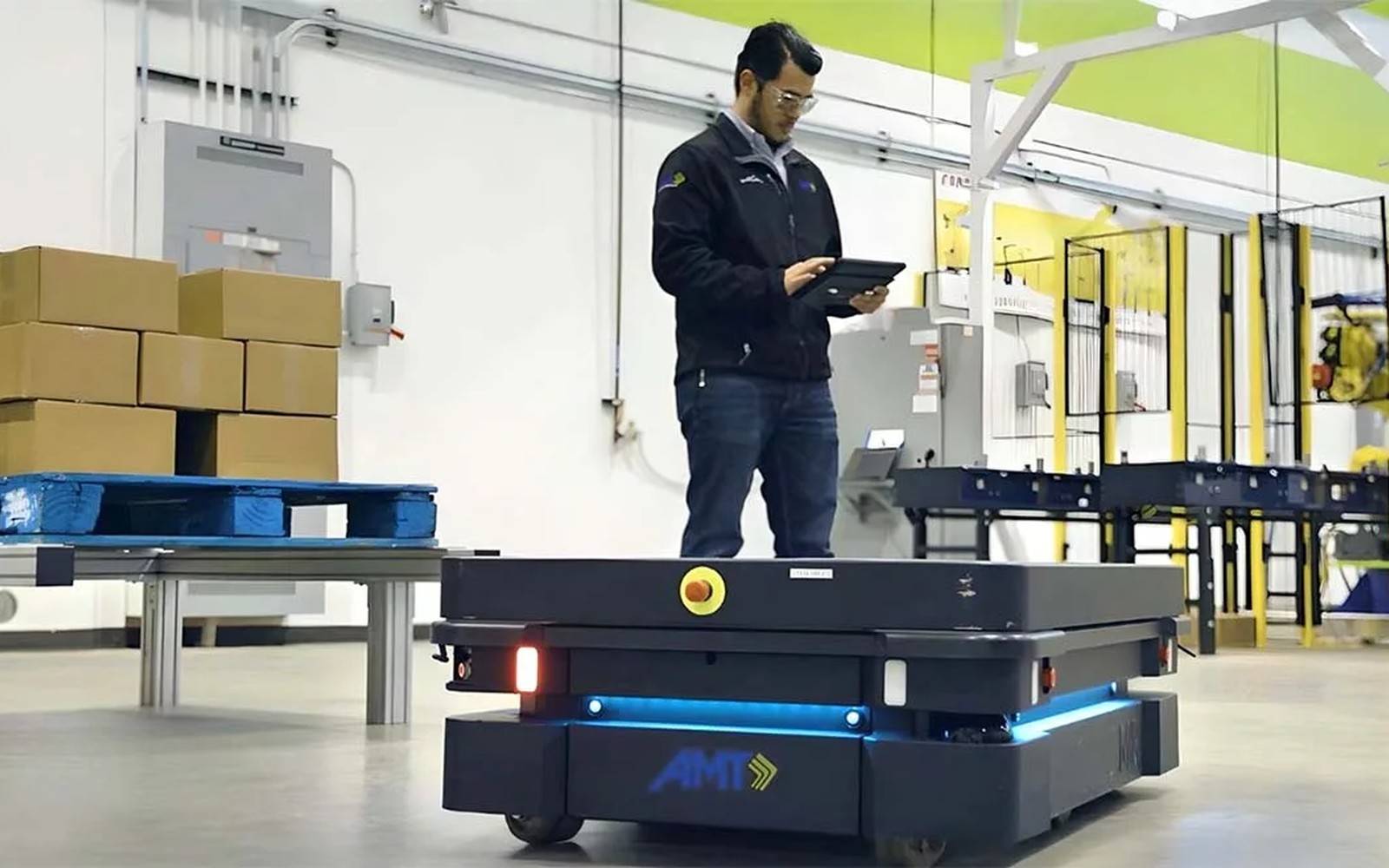
AMRs don't follow a fixed path. That's the core difference between them and their AGV predecessors, and it's what makes them practical for operations with dynamic layouts, frequent SKU changes, or floors shared with pedestrian traffic. An autonomous mobile robot navigates using onboard sensors and mapping software, rerouting around obstacles in real time without any infrastructure modification. That operational flexibility comes with a meaningful price tag, and financing is how most operations deploy AMRs without draining capital they need for inventory, staffing, or other equipment investments.
We finance AMR deployments for warehouses, fulfillment centers, manufacturing plants, and pharmaceutical facilities. Transactions start at $50,000 and routinely reach $1,000,000 to $5,000,000 for multi-robot fleet deployments with fleet management software and integration services. New systems from brands like MiR (Mobile Industrial Robots), Locus Robotics, Fetch Robotics, and Boston Dynamics are all financeable, as are certified refurbished units from some vendors. If your operation is also considering fixed-path Automated Guided Vehicle (AGV) Financing alongside AMRs, we can structure both under a single credit facility or as separate transactions depending on your deployment timeline.
AMR Categories and What Lenders Evaluate
Lenders segment AMR collateral by payload class and use case. Goods-to-person AMRs (shelf-carrying robots that bring inventory to pick stations) are the most common and have the strongest secondary market. Pallet-moving AMRs handle loads of 500 kg to 1,500 kg and compete in a market segment where traditional forklift-type AGVs also operate. Piece-picking and collaborative AMRs work alongside human pickers and represent the fastest-growing deployment category in fulfillment.
Key factors lenders assess:
- OEM identity and warranty terms (established brands with service networks are preferred)
- Fleet size and total system value including fleet management software
- Nature of integration: standalone or embedded in an AS/RS system
- Lease vs. purchase structure and end-of-term technology risk
- Operating environment (standard warehouse, cleanroom, cold storage)
AMR financing approval is generally faster and simpler than traditional automation projects of equivalent value because the collateral is mobile, identifiable by serial number, and has an established resale market. A fleet of 20 payload AMRs from a recognized OEM is a more straightforward collateral story than a custom-integrated conveyor system of the same price.
Refinancing and Sale-Leaseback for Existing AMR Fleets
Operations that financed AMRs two to four years ago under aggressive growth conditions sometimes find themselves holding the equipment with strong cash flow but a payment structure that no longer fits. Refinancing can extend the remaining term to lower monthly obligations, or pull cash equity from owned AMR assets back into working capital.
A Sale-Leaseback on a mid-life AMR fleet is increasingly common. You sell the fleet to a lender at appraised value, receive the proceeds as capital, and continue operating the equipment under a lease. The AMRs don't move. The work doesn't stop. The capital goes into expansion, new product lines, or bridging a cash flow gap. For operations in the Third-Party Logistics (3PL), where capital cycles quickly and new client contracts require rapid investment, this structure is particularly useful.
We also work with facilities that want to refinance into a Cash-Out Refinance for Production Line Equipment on a partially paid-down AMR fleet. If you've been paying for two years and have built equity, the cash-out pulls that equity without terminating your use of the equipment.
Who Uses AMR Financing
The most active buyers are fulfillment operations scaling order volume faster than headcount, and manufacturing plants replacing manual material transport on and between production lines. E-commerce growth has accelerated both categories. Fulfillment centers operating with 200 to 1,000 human pickers increasingly deploy goods-to-person AMR fleets that cut travel time per pick by 40% to 70%, according to published benchmarks from several major vendors. Those throughput gains translate directly into output per shift, which is the metric that justifies the financing cost.
Pharmaceutical manufacturers and medical device plants use AMRs for intra-facility transport of materials and WIP in environments where documentation and chain of custody requirements make manual cart transport error-prone. The AMR's digital track record also simplifies audit trails in regulated environments.
Consumer packaged goods plants moving toward Consumer Packaged Goods (CPG) on intralogistics often pilot AMRs as a lower-commitment first step before committing to integrated conveyor upgrades. The pilot economics work because a small fleet can be financed independently and expanded under the same credit relationship.
Credit Profile and Documentation Requirements
AMR transactions up to $400,000 qualify for application-only review. That means a completed credit application, three months of bank statements, and a vendor quote or purchase agreement. No tax returns, no financial statements, no audit. Decisions come back in one to three business days. Funding closes in approximately one to two weeks.
Above $400,000, we move to a documented review: two years of business tax returns, interim financial statements, and a project scope document from the vendor. The process adds time but not complexity. Most large fleet projects have all of this documentation available because the vendor or integrator has already been through the budgeting exercise.
B/C credit is considered across the full AMR transaction range. We look at cash flow shown in bank statements, time in business (two-plus years preferred but not absolute), and the collateral quality. Operations with cash flow that supports the projected payment but an uneven credit history can often be structured with a modest down payment or cross-collateral arrangement.
Section 179 and bonus depreciation can apply to AMR purchases, depending on the tax year and the asset's classification. We recommend consulting your tax advisor before finalizing structure, but our team can walk through the general mechanics so you go into that conversation informed. See our Section 179 financing guide for how this typically applies to production equipment.
AMR Financing Questions
Start Your AMR Financing Application
Tell us the fleet size, OEM, and system value. We'll return options across loan, lease, and hybrid structures within one business day. Minimum $50,000. B/C credit welcome. Application-only up to $400,000.
Questions About Autonomous Mobile Robot (AMR) Financing
Clear answers on equipment eligibility, documentation, timing, and transaction structure before you send the file.
Can I finance AMRs that also include fleet management software and integration in the same package?
Yes, in most cases. Lenders with AMR experience typically finance the full project cost including fleet management software, particularly when it's sold by the OEM as part of the system. Pure third-party integration labor is sometimes capped at a percentage of the total, but we structure around that where possible.
We want to add 10 AMRs now and 10 more next year. Can we lock in rates for both phases today?
A phased approval with committed funding for both tranches is possible, though rates on the second phase may be subject to market conditions at the time of draw. We can also structure a master credit line that lets you draw on demand within the approved limit without reapplying.
Our fulfillment center is leased space, not owned. Does that affect AMR financing?
No. AMRs are personal property that move with you, not improvements to the building. Leased facilities are common in this transaction type. The collateral is the robots themselves, not the real estate.
Can I refinance AMRs we own outright to get cash for a facility expansion?
Yes. A sale-leaseback or cash-out refinance against owned AMR assets is a recognized transaction. We appraise the fleet at current market value, fund a percentage of that value as cash, and structure a lease or loan. The robots stay in operation throughout.
What credit score is the cutoff for AMR financing?
There is no hard cutoff. We work across the full credit spectrum. Strong cash flow shown in recent bank statements is often more important to the approval than the credit score number. We present each application to lenders whose appetite matches the profile.
Finance Your Autonomous Mobile Robot (AMR) Financing
Send the equipment quote, seller details, price, deposit, and delivery schedule. The financing desk will review the file and return a practical next step.