
Production Equipment
Automated Assembly Systems Financing
Finance automated assembly systems including robotic cells, vision-guided stations, and integration hardware. $50k minimum, 1-2 week funding. Apply now.
Start Review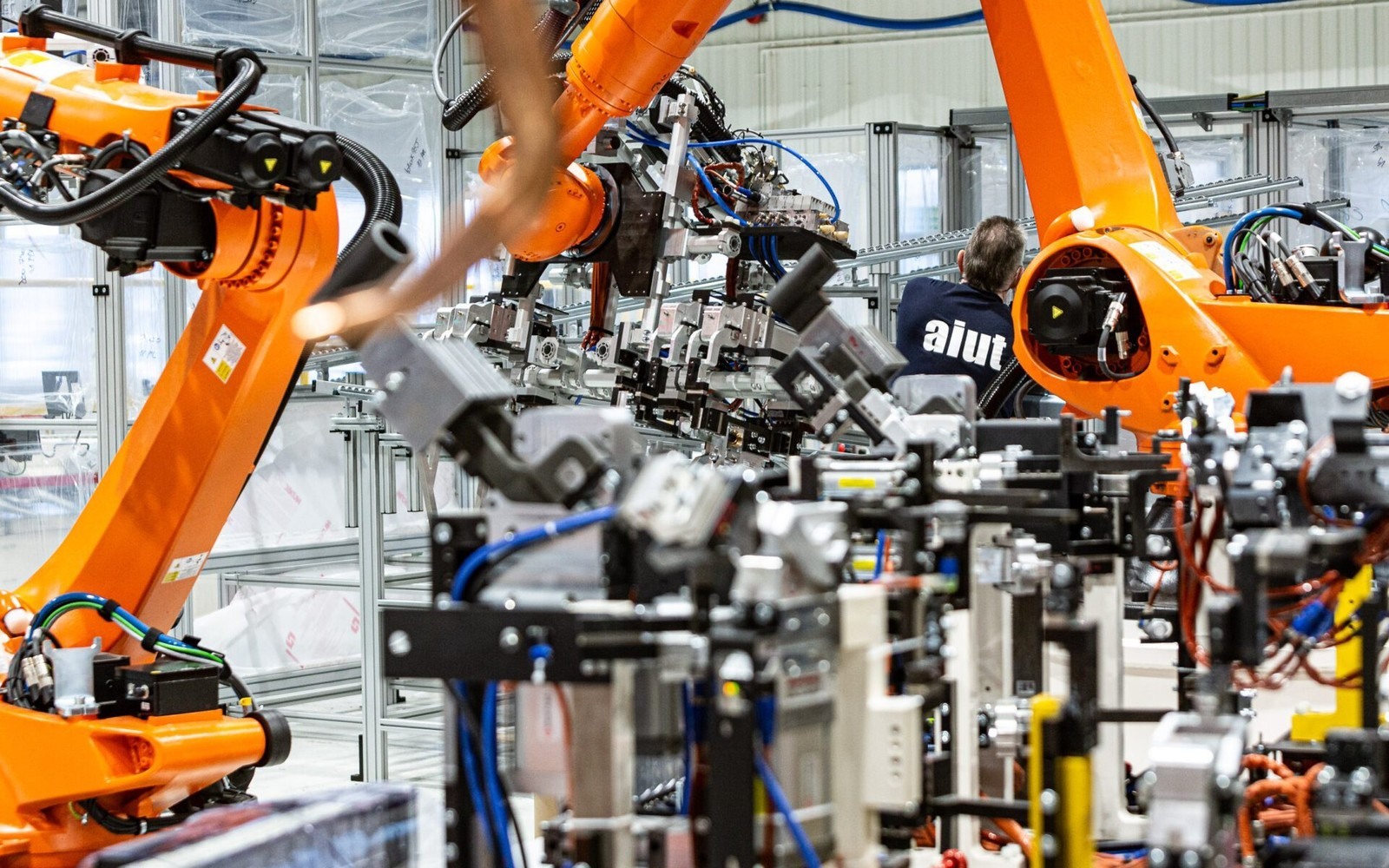
The bottleneck in most mid-volume assembly operations is not the conveyor or the test station. It is the manual operation that sits in the middle of the line and runs at human speed while everything else waits. Automated assembly systems address that constraint directly: a configured cell running at machine speed does not call in sick, does not fatigue, and does not vary its torque application from the fourth hour to the eighth. The payback calculus is usually measurable in months, not years, for operations where labor costs are high and volumes are sufficient.
We finance automated assembly systems for manufacturers who are deploying automation for the first time and for plants that are expanding an existing automated line. Minimum transaction size is $50,000, though most automated cell projects land well above that once you count the robot, the end-of-arm tooling, the safety guarding, the controller, and integration labor. We fund the full project scope, not just the mechanical hardware.
What We Finance Within an Automated Assembly System
Automated assembly systems bundle hardware, software, and integration into a single deliverable. The financeable scope includes:
- Industrial robots and collaborative robots. Robotic assembly cells using six-axis articulated robots handle part pick, insertion, fastening, and dispensing. Collaborative robots (cobots) work alongside operators at lower speeds with reduced guarding requirements. Both are financeable assets with established residual values.
- Automated fastening and torque systems. Programmable nutrunner systems, electric screwdriving stations, and riveting presses deliver repeatable torque and clamp force that manual tools cannot match at production speed. These are often the specific assets targeted by quality engineers when process capability audits reveal variation.
- Dispensing and adhesive systems. Programmable adhesive, sealant, and lubricant dispensing cells reduce material waste and ensure correct bead geometry on every part. Robotic dispensing cells range from simple gantry systems at $50,000 to multi-axis programmable systems at $300,000 and above.
- Vision-guided assembly. Vision inspection systems integrated into the assembly process guide the robot to part variations, verify insertion, and read codes at the point of assembly, not just at end-of-line inspection. The combination of vision and robot in a single cell is a common package.
- Safety systems and guarding. Light curtains, safety scanners, interlocked fencing, and safety-rated controllers are required for any automated cell operating near humans. These are capital items that belong in the financing package alongside the robot itself.
Who Finances Automated Assembly Systems
The strongest candidates for automated assembly financing fall into a few profiles. Electronics assembly operations are one of the most active segments. Printed circuit board assembly, connector insertion, and housing assembly all involve repetitive precision operations at volumes that make automation economics compelling. Electronics assemblers in San Jose and contract manufacturers across the Midwest regularly use financing to deploy automated cells for new programs without committing operating capital to the build.
Automotive tier suppliers are the other dominant segment. New model programs require dedicated assembly cells for fastening, adhesive, and press-fit operations that the OEM specifies as part of the production process approval. The cell often has to be validated before the program starts, which means the capital commitment comes before the first revenue from the program. Financing bridges that gap.
Medical device manufacturers are a third category. Automated assembly systems in medical device production often carry regulatory history and process validation documentation. The equipment itself can be difficult to remarket if process changes make it obsolete, which is something we factor into the structure. But for devices with long production runs, the throughput and quality benefits make automated assembly investment highly justified.
Approval and Funding Timeline
Automated assembly systems are well-understood collateral assets. Major robot brands including FANUC, KUKA, and ABB hold value well in the used market, which gives lenders confidence in the collateral position. That clarity on residual value tends to make the approval process faster and cleaner than it is for highly customized or proprietary systems.
Applications for systems up to about $400,000 typically move on a documentation-light basis: business profile, credit review, and the vendor quote. Larger systems require three months of bank statements and year-end financials. Either way, plan on one to two weeks from application submission to funded. If your integration timeline is longer, we can issue a commitment letter early so your integrator can proceed on contract while documentation finalizes.
For systems with multiple vendors, including a robot OEM, a systems integrator, and a guarding supplier, we coordinate a single close that funds each vendor directly. You do not need to front capital and seek reimbursement later.
Cost Ranges and Term Structures
A basic single-robot automated assembly cell with guarding and controller runs from $75,000 to $200,000. Multi-robot cells or cells with sophisticated vision and force sensing can reach $400,000 to $800,000 before integration. Full turnkey automated assembly lines with multiple cells, conveyance, and testing systems can exceed $2,000,000 for high-volume automotive programs.
Financing terms of 36 to 72 months fit most automated assembly investments. Shorter terms work well when the payback period is tight and the operator wants to own the equipment outright quickly. Longer terms reduce the monthly payment and can make the cash flow case easier to justify in the short term, particularly when the program ramp is gradual. An Equipment Leasing structure with a fair market value buyout option keeps the monthly cost lower and preserves flexibility to upgrade the cell when the program transitions.
Finance Your Automation Project
Share the project scope and a rough budget. We will respond with financing options that fit the system and the business within one business day. Applications are free and carry no obligation.
Questions About Automated Assembly Systems Financing
Clear answers on equipment eligibility, documentation, timing, and transaction structure before you send the file.
Can integration labor and programming costs be included in the financing?
Integration labor performed by a licensed systems integrator can typically be included as a soft cost, usually up to a stated percentage of the hard equipment value. Robot programming and validation services from the OEM or integrator are often includable on the same basis.
The cell is being built by a custom integrator with no standard quote. How does the approval work?
We work from the integrator's project proposal or contract. The description of the hardware components, their individual values, and the total project cost are what we need to underwrite the collateral. A custom build is not a barrier as long as the asset description is clear.
Can I refinance an automated cell we bought and paid off three years ago?
A sale-leaseback on a cell you own free and clear is available as long as the equipment has meaningful remaining useful life and a verifiable market value. We order an appraisal, purchase the equipment from you, and lease it back. You receive cash at closing.
We have a cobot purchase under $100,000. Is that too small?
Our minimum is $50,000, so a $100,000 cobot project qualifies. The process is straightforward at that size: a simple application and the vendor quote are usually sufficient to close.
The program that will run on this cell does not start for four months. Can we still finance now?
Yes. Financing for equipment that is on order or being built is common. We close when equipment is ready to deliver or in some cases on a draw schedule as the build progresses. Your payment schedule can be structured to begin after commissioning rather than at the order date.
Does the robot brand affect financing availability or terms?
Major brands with established used-market values, including FANUC, ABB, KUKA, and Yaskawa, are the easiest to finance because the collateral value is predictable. Lesser-known or proprietary automation platforms are financeable but may require a stronger business profile to offset the lower collateral liquidity.
Finance Your Automated Assembly Systems Financing
Send the equipment quote, seller details, price, deposit, and delivery schedule. The financing desk will review the file and return a practical next step.