
Popular Model
Dematic Multishuttle AS/RS Financing
Finance a Dematic Multishuttle automated storage and retrieval system for your warehouse or DC. $100k+ projects welcome, new and used systems considered.
Start Review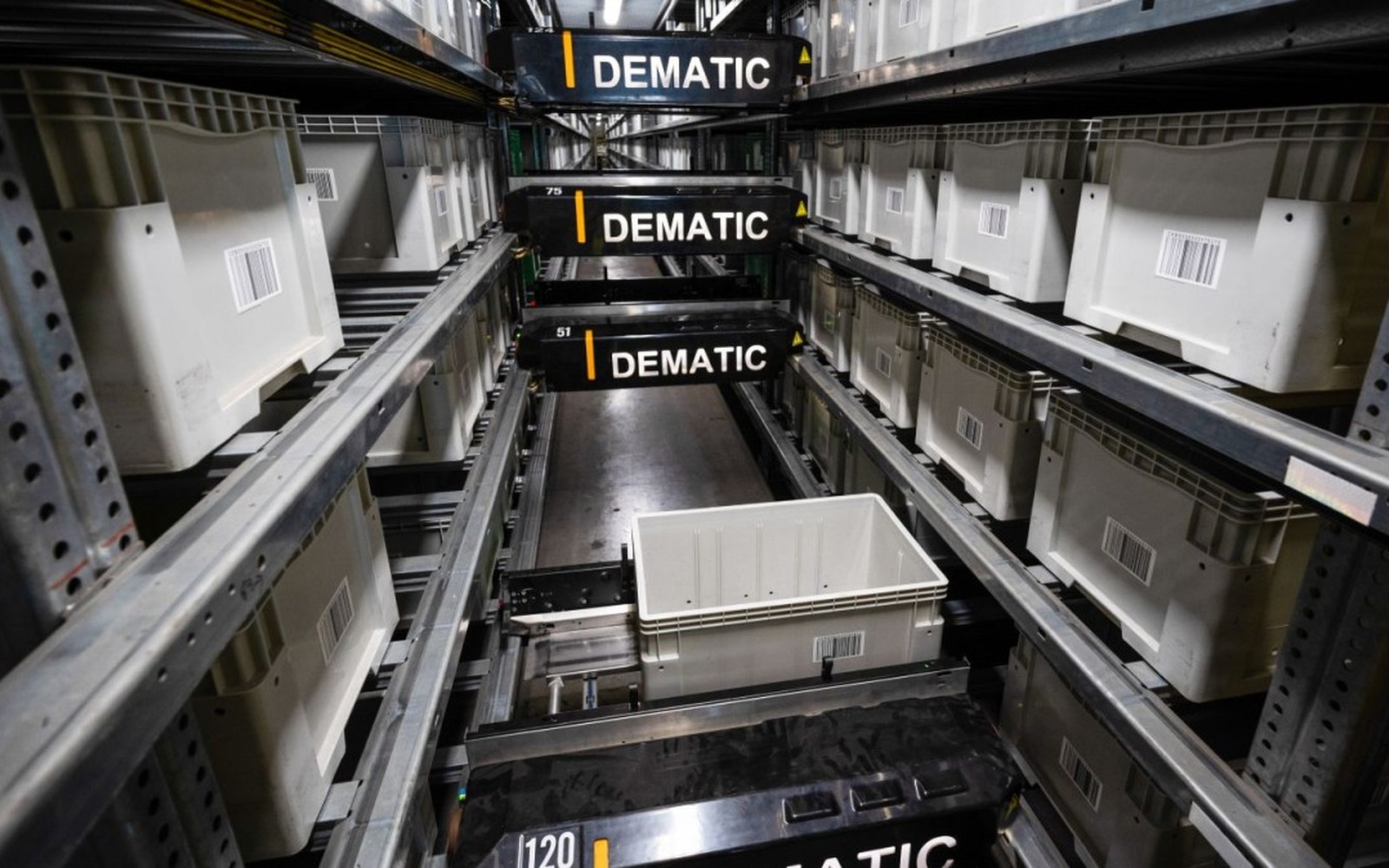
A Dematic Multishuttle system does not add lanes to your storage footprint. It multiplies the throughput of the lanes you already have. The system uses independently controlled carrier shuttles running on horizontal rails at each tier, feeding a shared lift that moves totes or cartons vertically between levels. The result is a dense buffer and sequencing layer that can feed downstream sorting, picking, or packaging lines at rates a conventional mini-load crane cannot match. That gap in cycle time is why distribution centers moving high-SKU, high-velocity inventory have adopted the Multishuttle as the buffer between receiving and the downstream production line.
Projects of this scale, typically $300,000 to several million dollars depending on tier count and the number of shuttles deployed, require a financing approach that matches the complexity of the installation. We work on Dematic Multishuttle transactions across the project lifecycle: new system purchases, refinancing a system already in place that carries equity, and sale-leaseback structures for operators who want to convert a paid-off system back into working capital. The starting floor for our deals is $50,000, and Multishuttle projects almost always land well above that threshold.
How the Dematic Multishuttle Works and Why It Holds Its Value
The Multishuttle architecture centers on the shuttle carrier itself, a battery-powered vehicle that rides on rails inside each storage tier. Each shuttle is responsible for the horizontal movement at its level, retrieving a tote from a storage location and presenting it to the tier's conveyor interface, where the vertical lift takes it to the pick or discharge level. Because each tier has its own dedicated shuttle (or multiple shuttles in higher-density configurations), the system's throughput scales with the number of shuttles rather than being constrained by a single crane serving the entire height of the aisle.
Dematic markets the Multishuttle in configurations suited to tote handling, case handling, and mixed environments. Cycle times published by Dematic for the standard Multishuttle configuration show dual-cycle throughput rates that depend heavily on tier count, shuttle count, and the sequencing logic programmed into the warehouse management system. In food distribution and e-commerce fulfillment applications, Multishuttle buffers are often used to sequence orders by zone or by delivery stop, reducing downstream sortation complexity significantly.
The resale market for Dematic systems is active among secondary integrators and refurbishment specialists, particularly for shuttle carriers and lift assemblies from systems that have been upgraded or reconfigured. That activity supports residual values in a way that justifies financing the system as a depreciating asset with real salvage value. For lenders, that residual story matters. For borrowers, it means the equipment's value relative to the outstanding loan balance stays healthier over time than many buyers expect.
Plants expanding into Third-Party Logistics (3PL) operations and food and beverage distributors building omnichannel fulfillment capacity are among the most active buyers of Multishuttle systems at the moment. The common thread is high order count with low average order size, exactly the environment where the Multishuttle's sequencing capability earns back its cost quickly.
How Financing Structures Apply to a Multishuttle Project
A Dematic Multishuttle installation is usually a capital project with a defined scope of work: equipment, installation, controls integration, and commissioning. The financing can be structured to cover the equipment and installation together, or the equipment line can be separated from the integration costs if the borrower's lender has a preference for hard-asset collateral only.
For projects in the $300,000 to $2 million range, we typically pull together a package that includes three months of business bank statements and the project quote. Tax returns may be required for larger transactions, but the asset quality and the borrower's demonstrated cash flow are the primary underwriting drivers. The Equipment Leasing structure is common for Multishuttle projects where the operator wants to preserve the option to upgrade to a higher-throughput configuration at lease end, or where the tax benefit of expensing lease payments aligns with the company's accounting objectives.
A Sale-Leaseback on an existing Dematic system is a move that makes sense for DCs that installed their Multishuttle with cash several years ago and now want that capital back for a second aisle, additional shuttle carriers, or a downstream automation investment. The system stays in place and operational; the operator receives a lump-sum capital infusion and makes lease payments going forward. We have structured these on systems ranging from three to twelve years old, provided the equipment is in good working condition and documented.
What Terms Look Like on a Multishuttle Deal
Term length for a system like the Multishuttle typically runs 60 to 84 months, reflecting the equipment's useful life (Dematic designs these systems for 15 to 20 year service lives with proper maintenance) and the borrower's preference for monthly payment level. Longer terms reduce the monthly outlay and improve cash flow, which matters when the system is still ramping to full throughput in the first six to twelve months after commissioning.
Down payment requirements vary by credit profile. Strong credits with documented revenue and low existing debt service may qualify for no-money-down structures. More leveraged businesses or those with shorter operating histories may be asked for 10 to 20 percent down. We look at the whole picture rather than defaulting to a fixed requirement.
Buyers who want to use the purchase to accelerate depreciation should look at Section 179 financing or bonus depreciation planning with their tax advisor. The deduction applies to the full system cost in the year placed in service, while the monthly payments stretch over the term. That spread can be meaningful on a $500,000 to $1 million Multishuttle project.
For companies that want to compare the total cost of a loan against a lease structure, we run both scenarios. The FMV vs. $1 Buyout Lease comparison is particularly relevant for Multishuttle installations where the residual value at lease end is real and the operator may want flexibility to upgrade.
It is worth checking how this fits with JBT Financing, and GEA Financing.
Questions About Dematic Multishuttle AS/RS Financing
Clear answers on equipment eligibility, documentation, timing, and transaction structure before you send the file.
Can we finance the full project cost including installation and controls integration, not just the hardware?
Often yes. Hard equipment is always financeable, and soft costs like installation, controls programming, and commissioning can frequently be included, typically up to a percentage of the hard-equipment value depending on the lender. Tell us what the total project cost breakdown looks like and we will work out how much of it we can wrap into the financing.
We bought our Multishuttle outright three years ago. Can we refinance it now?
Yes. A sale-leaseback or cash-out refinance on an installed Dematic system is something we structure regularly. The system stays in operation, you receive capital, and you make lease or loan payments going forward. We will need documentation of the original cost, current condition, and any subsequent upgrades to establish the asset value.
What happens if we need to add more shuttles or a second aisle mid-term?
Expansion financing on an existing system is handled as a new transaction. Some borrowers structure the initial deal with a master lease or line that accommodates additions; others come back for a second transaction when the expansion is approved. Either way works. The existing system's equity position can sometimes support the new financing without additional collateral.
Our business has been operating for 18 months. Are we too new for a deal this size?
Eighteen months of operating history is a real constraint on the largest transactions, but not an automatic barrier. A strong personal guarantee, solid monthly revenue shown in bank statements, and a creditworthy co-borrower or guarantor can move a deal forward for a younger company. We look at the full credit picture rather than the calendar alone.
How do lenders value a used Multishuttle system for collateral purposes?
Lenders typically look at a combination of the original cost, the system's age and maintenance history, and comparable sale data from secondary integrators. A well-maintained Multishuttle with documented service records holds value significantly better than a system with unknown maintenance history. NADA or OEM-certified refurbishment documentation also helps.
Finance Your Dematic Multishuttle AS/RS Financing
Send the equipment quote, seller details, price, deposit, and delivery schedule. The financing desk will review the file and return a practical next step.