
Manufacturing Market
Consumer Packaged Goods (CPG)
Production line equipment financing for consumer packaged goods manufacturers. Form-fill-seal, cartoners, palletizers, vision inspection. $50k minimum, funded in 1-2 weeks.
Start Review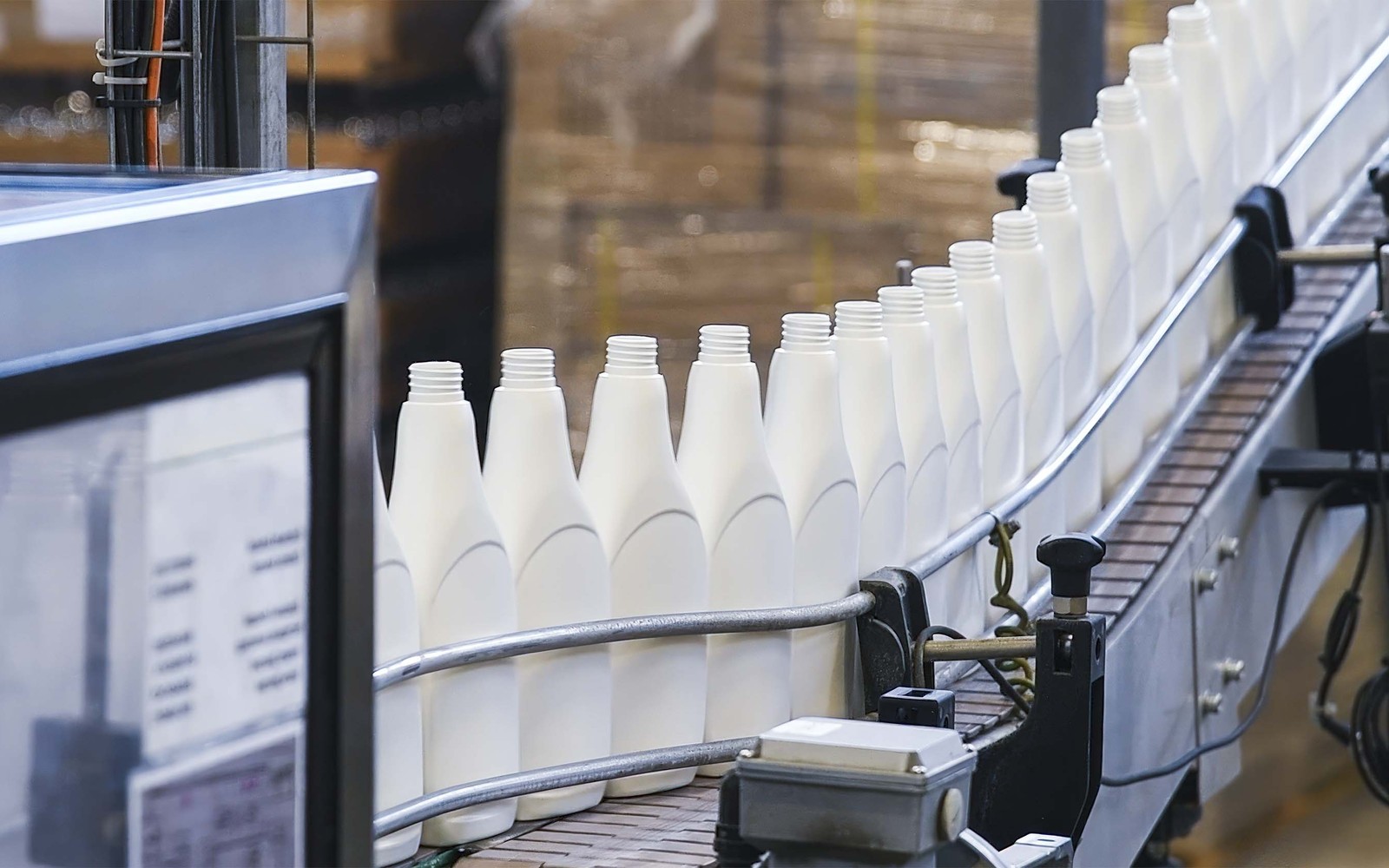
SKU proliferation, retailer shelf resets, and seasonal demand spikes hit CPG manufacturers with capital equipment demands that do not wait for annual budget cycles. A new retailer listing requires its own pack format. A promotional bundle requires secondary packaging equipment that does not exist in the current line. A private-label contract won at the last trade show has a start-up date that is eight weeks away. The equipment has to be there. We finance Packaging Line Financing, Form-Fill-Seal (FFS) Machine Financing, Cartoning Machine Financing, Palletizer Financing, and the vision and checkweigher systems that regulators and retailers require at line end. Minimum transaction size is $50,000, with application-only approval available up to $400,000. Most deals fund in one to two weeks.
The Capital Cycle in CPG Manufacturing
CPG brands and contract manufacturers operate in a market where the packaging format is part of the product. A brand that wins shelf space at a major retailer typically has a specific pack configuration, shelf-ready format, and weight tolerance spec that is non-negotiable. If the manufacturer cannot produce to that format, the listing goes to someone who can. The equipment is not separable from the commercial opportunity.
Private-label manufacturing adds a parallel dynamic. A grocery chain or club retailer awarding a private-label contract typically specifies the package style, the throughput rate, and the QC controls. The winning manufacturer often needs to invest in new packaging equipment to meet the spec. The contract itself is the justification for the capital; the challenge is that the contract window and the equipment procurement timeline are both short. Lenders that can underwrite quickly, with minimal paperwork for mid-size transactions, are the right fit for this cycle.
Seasonal products compound the urgency. A manufacturer of seasonal household goods, personal care kits, or holiday food items may have one annual window to produce an entire year's volume. Equipment that is not in place and validated before that window opens cannot contribute to the season's output. The equipment-financing decision is made not against a long payback horizon but against a very specific production calendar.
Packaging and Production Equipment for CPG Lines
Form-fill-seal equipment is the workhorse of CPG primary packaging. Vertical FFS machines for powder, granule, and snack products and horizontal FFS machines for solid food and personal care items each have distinct markets. A mid-speed vertical VFFS machine at 60-80 bags per minute starts around $80,000 for a basic single-lane setup; multi-lane, servo-driven equipment with integrated checkweighers and vision systems reaches $400,000 to $800,000. Flow wrappers for bar products, medical devices, and personal care items are a related category, typically landing between $100k and $300k for production-grade units.
Secondary packaging involves cartoners, case packers, and shrink systems. An intermittent-motion cartoner for folding cartons at 60-120 cartons per minute runs $150,000 to $400,000. Continuous-motion cartoners for high-speed lines are significantly more. Case packers for retail club packs and shelf-ready trays range from $120,000 to $500,000 depending on speed, format flexibility, and whether the packer is drop-in, wrap-around, or robotic. Shrink wrap systems for multi-packs and transit packaging are often added to existing lines rather than purchased as part of a new line build; we finance these as stand-alone transactions from $50,000.
End-of-line automation, including palletizers and stretch wrappers, closes the loop. A conventional layer-forming palletizer at 25-30 layers per hour runs $150,000 to $400,000. Robotic palletizers for mixed-SKU pallets or fragile products often run higher. Stretch wrappers at the pallet discharge point are typically $20,000 to $60,000 and usually bundled into the larger line financing rather than financed independently.
Sale-Leaseback and Refinance Options for Existing CPG Equipment
CPG manufacturers that have paid down or paid off older packaging lines have an asset on the floor that can be converted to working capital. A Sale-Leaseback sells the equipment to a lender at appraised value and leases it back on a monthly payment. The proceeds are unrestricted and often directed at new SKU development, raw material inventory for a new private-label contract, or down payment on a next-generation line. The production line stays in place; the equity leaves the equipment and enters the operating account.
Refinancing an existing equipment loan to extend the term or pull cash out is a parallel option. A CPG manufacturer three years into a five-year loan on a FFS line may find that refinancing to a seven-year term on the outstanding balance frees up monthly cash flow for other commitments. Cash-out refinancing on paid-down assets is also available when the equipment value exceeds the payoff amount.
Line Up the Equipment Your Next SKU Needs
Retailer listings and private-label contracts do not come with an extended equipment procurement window. Tell us the equipment, the amount, and when the line has to run. We work fast. $50,000 minimum; application-only up to $400,000; most deals fund in one to two weeks.
Questions About Consumer Packaged Goods (CPG)
Clear answers on equipment eligibility, documentation, timing, and transaction structure before you send the file.
We just won a private-label contract and need a cartoner running in eight weeks. Is that timeline realistic for financing?
For transactions under $400,000, application-only approval typically takes one to three business days and funding follows within two weeks of approval. Eight weeks from a standing start is plenty of time for the financing piece. The equipment procurement and lead time from the vendor is usually the longer constraint.
We run multiple SKUs with different pack formats. Can we finance a line that requires a lot of changeover tooling?
Yes. Changeover tooling, format parts, and operator-change kits are soft costs that can often be bundled into the same transaction as the primary packaging equipment. We deal in full installed project costs regularly. The exact percentage of soft costs that qualify varies by deal size and asset type.
Our CPG company is two years old with solid revenue but no significant equipment on our balance sheet as collateral. Can we still qualify?
Two-year-old CPG manufacturers qualify for equipment financing, particularly under the application-only program up to $400,000. The business credit profile and the revenue history matter. The equipment itself is the primary collateral; you do not need existing titled equipment to initiate financing.
Can I refinance a FFS line I bought three years ago and pull some cash out?
Cash-out refinancing is available on equipment that has been paid down to less than its current appraised value. The difference between the appraised value and the payoff is the cash-out potential. Three years into a five-year loan on a well-maintained FFS line often leaves meaningful equity depending on the original purchase price and the current secondary market for that equipment.
The retailer requires a checkweigher and vision system at line end. Is that included in the financing or separate?
Checkweighers, metal detectors, and vision inspection systems can be included in the same financing transaction as the primary packaging line. We finance these as a complete line package. If they are being added to an existing line as a standalone upgrade, we can finance them separately starting at $50,000.
Finance Your Consumer Packaged Goods (CPG)
Send the equipment quote, seller details, price, deposit, and delivery schedule. The financing desk will review the file and return a practical next step.