
Production Equipment
Complete Production Line Financing
Finance a complete production line from conveyors and fillers to palletizers and inspection systems. $50k minimum, funding in 1-2 weeks. Apply today.
Start Review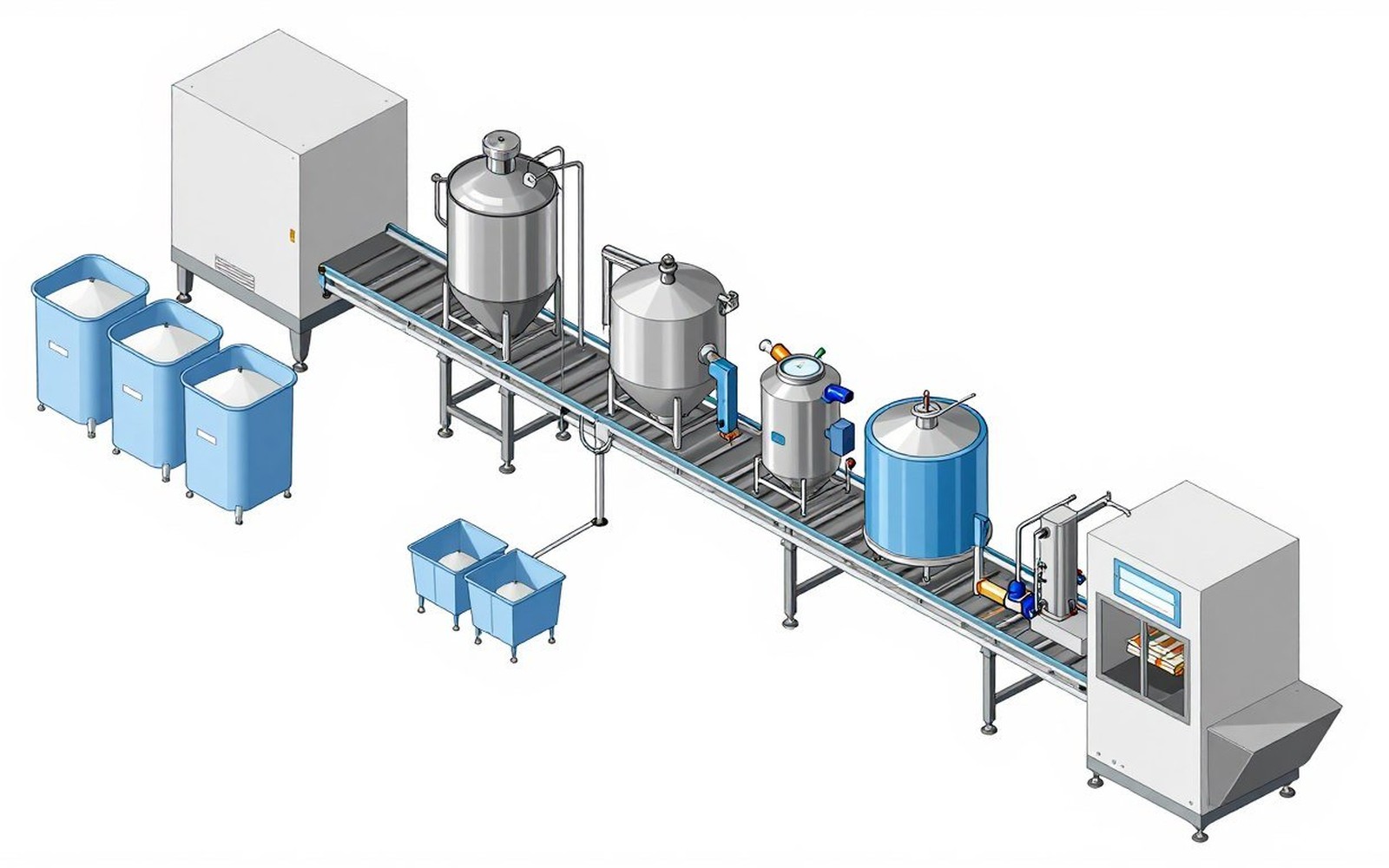
A line is only as fast as its slowest station, so the smart spend is the one that clears the bottleneck first. But the most impactful plant investments are rarely a single machine. They are coordinated systems: a filler paired with a capper, a labeler downstream, conveyors threading it all together, and an inspection gate before the pallet goes out the door. Financing a complete production line as a single transaction changes the conversation from individual capital requests to a single approval that funds the full throughput improvement.
We work with manufacturers, co-packers, bottlers, and processors who are adding a new line from scratch, relocating equipment into a greenfield bay, or replacing an aging line that has become the plant's chronic bottleneck. Transactions start at $50,000. The sweet spot we see most often runs from $100,000 to well over $1,000,000 when a turnkey line integrator is involved. Both new and used equipment qualify, and sale-leaseback structures can free up capital already sitting in machinery you own.
What Goes Into a Complete Line Transaction
Production lines in the food, beverage, consumer goods, and industrial sectors share a common anatomy even when the products differ sharply. A typical transaction we finance bundles the following stations:
- Infeed and depalletizing. Empty containers arrive on pallets. Depalletizers and air rinse systems stage them for filling. These alone can run $75,000 to $300,000 for high-speed plastic or glass configurations.
- Filling and sealing. Liquid and dry filling machines are typically the highest-value single asset on the line. Volumetric, gravimetric, and piston-fill configurations each carry different price points and residual values.
- Capping, labeling, and coding. Labeling machines and cappers finish the primary package. These often come from a different OEM than the filler, which is exactly why a bundled finance structure simplifies the paperwork significantly.
- Conveyance. Conveyor systems link every station. Depending on layout complexity, they can represent 15 to 25 percent of total line cost.
- Inspection and checkweighing. Vision systems, metal detectors, and checkweighers sit between secondary packaging and palletizing. They protect the line from costly recalls and are increasingly required by retail buyers.
- End-of-line palletizing. Robotic and conventional Palletizer Financing close the line. A robotic palletizer can handle multiple SKU patterns and typically runs $150,000 to $500,000 installed.
We finance all of these assets in a single structure. You submit one application, work with one point of contact, and close once. The alternative, chasing individual approvals from equipment vendors or multiple lenders, adds weeks and creates gaps in draw timing that can delay installation.
How the Financing Process Works
For transactions under roughly $400,000 we can often move on an application-only basis, meaning we review the business profile and the quote without requiring two to three years of tax returns. Above that threshold, we pull three months of business bank statements and the most recent year-end financials. Neither path requires a full SBA-style package.
Timeline from application to funded: plan for one to two weeks in most cases. For larger turnkey lines above $750,000 with multiple vendors, add a few days for document coordination. We work in parallel with your integrator and individual equipment vendors so draw schedules align with delivery milestones rather than lagging behind them.
Structures available on a complete line include equipment loans (title stays with you from day one), Equipment Leasing (lower monthly outlay, buyout at end), and Sale-Leaseback if you have installed equipment you own free and clear and want to convert it to working capital. Terms typically run 24 to 72 months. Rates are fixed for the term so your monthly number does not move with the market.
Who Finances Complete Lines with Us
The buyers we work with most frequently fall into a few clear categories. First are established manufacturers adding a second or third SKU family that requires a dedicated line rather than sharing time on an existing one. These are often Food & Beverage Manufacturing responding to a major retail or foodservice account that specified a volume the current line cannot hit.
Second are Contract Packaging & Co-Packers who have won a new account and need a line configured for that client's package format. Co-packer lines often need to handle a range of container types, so flexibility in the filling and seaming equipment is a priority, and the total project cost can be significant.
Third are companies relocating from a leased facility into owned or larger leased space. A relocation is an opportunity to reconfigure the line layout, add capacity, and upgrade bottleneck stations, all financed together under one approval. We have structured transactions where a relocation line project included new conveyance, an upgraded filler, a new labeler, and installation costs all rolled into a single note.
Credit requirements are practical. We consider B and C credit situations as long as the business has operating history and a clear revenue picture. Startups with a signed contract and a reasonable deposit position can sometimes qualify under Startup and New-Business Production Line Equipment Financing programs, though terms will be more conservative.
New Line, Refurbished Equipment, or a Mix
A complete line does not have to be all-new iron. Many efficient plants run lines that mix recent OEM equipment with refurbished assets from a reputable rebuilder or from a plant that closed. We finance all three scenarios.
Used and refurbished equipment often carries a lower upfront cost and faster delivery than new machinery, which can have lead times of six to eighteen months from European manufacturers. The trade-off is shorter remaining useful life and potentially limited OEM support. For buyers comfortable with that profile, used equipment financing can stretch the capital budget considerably, allowing a complete line where a new-equipment budget would only cover the filler and one or two downstream stations.
When we structure a mixed line, each asset gets appraised against the collateral pool. Used conveyors and standard fillers hold value reasonably well. Proprietary high-speed systems from major OEMs tend to have acceptable residual values even at five to seven years old, which keeps the collateral package clean.
Get Your Line Financed
Send us the project quote or a list of the equipment you are sourcing. We will turn around a financing structure within one business day and can often pre-approve before you finalize vendor selection. There is no obligation and no cost to apply.
Questions About Complete Production Line Financing
Clear answers on equipment eligibility, documentation, timing, and transaction structure before you send the file.
Can I finance equipment from multiple vendors under one agreement?
Yes. We routinely bundle equipment from three, four, or five different vendors into a single financing agreement. You provide invoices or purchase orders from each vendor, and we fund them in one or multiple draws timed to delivery.
Does installation and freight count toward the financed amount?
Soft costs like installation labor, freight, and commissioning can often be included up to a reasonable percentage of the hard equipment value. Ask us about the specific limit for your project size, as it varies by structure.
We already own part of the line. Can we refinance those assets and finance new additions together?
A sale-leaseback on owned equipment can be combined with a new-money advance on the additional machines. This is a common structure when a plant is upgrading an existing line rather than building from scratch.
Our credit has some blemishes from a difficult year. Will that disqualify us?
Not automatically. We work with B and C credit profiles regularly. The business revenue picture, time in business, and the equipment collateral all factor into the decision alongside credit scores. The application is free and tells you exactly where you stand.
How long do terms run on a complete line?
Most complete-line transactions close on 36 to 72-month terms. Longer terms lower the monthly payment but increase total interest cost. We can show you a payment schedule at multiple term lengths so you can choose what fits the line's projected payback period.
Finance Your Complete Production Line Financing
Send the equipment quote, seller details, price, deposit, and delivery schedule. The financing desk will review the file and return a practical next step.