
Production Equipment
Filling Machine Financing
Finance volumetric fillers, auger fillers, piston fillers, and net-weight filling systems for food, pharma, cosmetics, and industrial operations. $50k minimum.
Start Review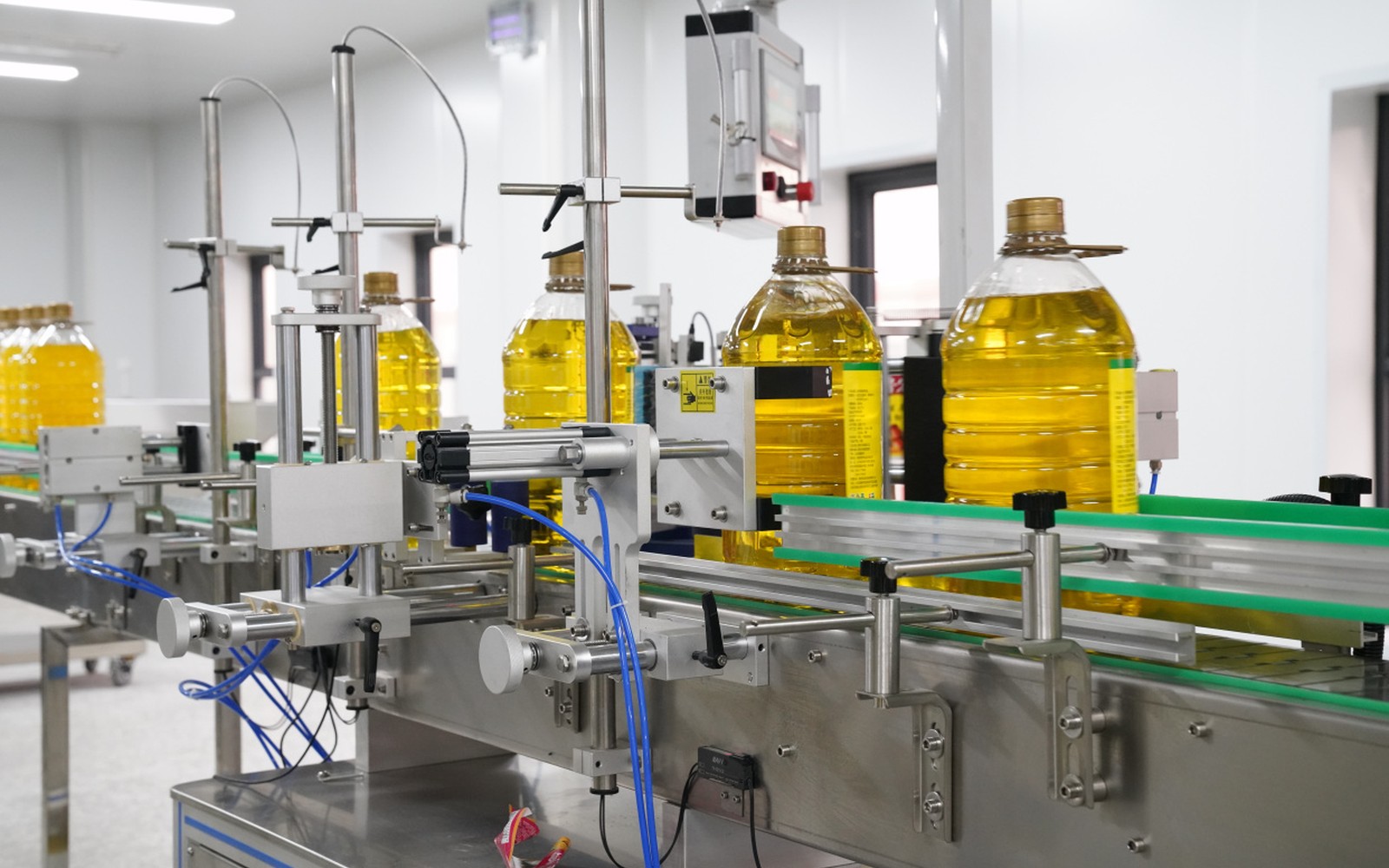
The filling machine is often the most expensive and most critical single asset on a packaging line. Every container that leaves a plant passed through a filler first, and if the filler is the bottleneck, the line speed is the filler speed regardless of what everything else is rated for. Choosing the right fill technology for the product (auger for powders, piston for pastes, volumetric cup for granules, flow meter for free-flowing liquids, weigh-fill for high-accuracy applications) requires real application knowledge. Financing the right machine rather than settling for an affordable compromise is often the better economic decision, and that is where Filling Machine Financing changes the project calculus.
Filling machine costs span a wide range. A simple single-head piston filler for a small food operation starts around $8,000 to $20,000, which is below our minimum and typically handled as an operating expense. Our financing programs start at $50,000, which generally means semi-automatic or fully automatic multi-head systems: a four-head to eight-head rotary piston filler for sauces or dressings, an auger filler with servo-driven head control for powders, a multi-head linear or rotary weigh-fill system, or a high-speed volumetric filler for beverage applications. These machines fill 20 to 200+ containers per minute depending on format and product viscosity, and they represent genuine capital equipment requiring deliberate financing.
We finance filling machines across the full spectrum of industries: Food & Beverage Manufacturing, Pharmaceutical Manufacturing, Cosmetics & Personal Care Manufacturing, chemical, nutraceutical, and more. New and used both qualify, and B and C credit profiles are considered on the asset's strength.
Fill Technology and What It Costs
Auger fillers are the dominant format for dry, free-flowing, and non-free-flowing powders: protein powders, spice blends, flour, coffee, and pharmaceutical powders. A servo-driven auger filler provides precise fill weights by controlling the number of auger revolutions per fill cycle. Simple single-head auger fillers for light-duty applications start around $15,000, but a multi-head automatic rotary auger filler capable of 40 to 80 fills per minute with weigh-confirmation checking runs $75,000 to $250,000. These are strong collateral assets because the servos and precision components retain value well.
Piston fillers handle viscous products: sauces, dressings, mayonnaise, peanut butter, creams, gels, and similar non-flowing products. The piston draws back to fill and pushes forward to dispense, with volume controlled by the stroke length. Servo-driven piston fillers allow the stroke to be programmed on the HMI, making format changes faster. A four-head to eight-head automatic inline piston filler suitable for a mid-volume food plant runs $60,000 to $180,000; high-speed rotary piston fillers for dairy or dressing operations can exceed $350,000.
Flow-meter fillers for free-flowing liquids use a mass flow meter to measure the product as it passes, cutting off when the target weight or volume is reached. These provide excellent accuracy at high speeds. Liquid filling machines using flow-meter technology are common in beverage, dairy, and chemical applications and typically run $100,000 to $400,000 for an inline multi-head system. Rotary liquid fillers from major OEMs like Krones Modulfill or Sidel Matrix can run considerably higher as part of a complete blow-fill-cap line.
Net-weight fillers use load cells under the container to determine when the target weight is reached, which makes them suitable for products where volume varies (aerated products, products with density variation, or products that must be labeled by weight). Checkweigher integration is common downstream to verify that every filled container is within specification before it passes to the capper.
Credit Profiles and Documentation
Filling machines qualify for our financing programs from established manufacturers with two or more years of operating history, as well as from businesses with shorter histories or mixed credit when the asset and production story are strong. Here is how we assess each profile:
For well-established manufacturers, the application process is straightforward. An application, three months of bank statements, and the vendor invoice is often sufficient for projects under $400,000. Credit approval typically comes back in 2 to 5 business days. Terms of 48 to 72 months on new equipment and 36 to 60 months on used equipment are standard.
For operations with credit scores below 650 or less than two years in business, a larger down payment (15 to 25 percent) and sometimes a blanket lien on business assets is part of the structure. The filler itself carries strong residual value in most applications, which helps. A supplement manufacturer with 18 months in business, clean bank statements, and a signed purchase order from a large natural foods retailer has a compelling story even if the score is not ideal.
Pharmaceutical filling projects above $400,000 require full financial statements and often a validated equipment specification. The added complexity is offset by the strength of the collateral: a validated pharmaceutical filler from an OEM like Syntegon, Bausch+Strobel, or Groninger is a highly specific and valuable asset that a sophisticated lender understands.
Financing the Full Filling Line
A filler rarely operates alone. The typical filling line includes some combination of: a depalletizer or unscrambler to feed empty containers, a filler, a checkweigher or metal detector immediately downstream, a Capping Machine Financing, a labeler, a vision inspection system, and a transfer conveyor to the case packer. We finance the full line as a single package when the project quote covers all equipment from a defined set of vendors.
Multi-machine packaging line projects that combine the filler with the downstream equipment are the most common large-ticket transactions we handle. A beverage plant installing a complete filling line from an integrated OEM might package $800,000 to $1,500,000 of equipment under one credit facility. We have lender relationships with appetite for this size of transaction and the experience to structure a draw schedule that matches each vendor's payment milestones.
For lines where the filler is the upgrade and the surrounding equipment is existing, financing the filler standalone is equally viable. The filler integrates into the existing line, and we finance only the new capital. If the existing equipment has been paid off and has value, a second facility on that equipment to help fund the filler upgrade is another option worth exploring.
Questions About Filling Machine Financing
Clear answers on equipment eligibility, documentation, timing, and transaction structure before you send the file.
Can I finance a filler that I am purchasing from a European OEM with a euro-denominated invoice?
Yes. We handle imported equipment financed in USD. You manage the currency conversion with your bank or payment provider; our financing facility is structured in US dollars against the US-dollar purchase price. European OEMs with a US subsidiary or distributor are generally straightforward; those without US presence may require additional import documentation.
The filler I need fills containers that range from 2 oz to 64 oz. Does the wide format range affect financing?
Multi-format capability is a plus, not a complication. A filler that handles a wide range of container sizes is more versatile and carries better residual value. Include the full format range and changeover method in the vendor specification sheet submitted with the application.
Can I finance a refurbished OEM filler that has been rebuilt by a third-party machine shop rather than the original manufacturer?
Third-party rebuilt fillers are considered case by case. The quality and warranty of the rebuild matters significantly. A rebuild backed by a one-year parts-and-labor warranty from a reputable refurbisher with documented scope of work is often approvable. A machine with no warranty and no rebuild documentation is a harder sell to most lenders.
My operation fills both aqueous products and alcohol-based products on the same filler. Does the flammable-product classification affect the financing?
No. The ATEX or NEC electrical classification of the filler (required for flammable product filling) is documented in the OEM specification and does not affect the financing structure. The lender cares that the machine is operational and has market value, and a properly classified filler for flammable products has a well-defined buyer market.
We want to use bonus depreciation on the filler purchase. Does the financing structure need to change to qualify?
To use bonus depreciation, you need to own the equipment (a loan structure, not an FMV lease). A dollar-buyout lease also qualifies. Discuss your tax strategy with your accountant, and then we structure the financing to match. See our bonus depreciation financing overview for details on how the structure works.
Finance Your Filling Machine Financing
Send the equipment quote, seller details, price, deposit, and delivery schedule. The financing desk will review the file and return a practical next step.