
Production Equipment
Material Handling Equipment Financing
Finance forklifts, conveyors, pallet jacks, AGVs, and full material handling systems. $50k minimum, B/C credit considered, funded in 1-2 weeks.
Start Review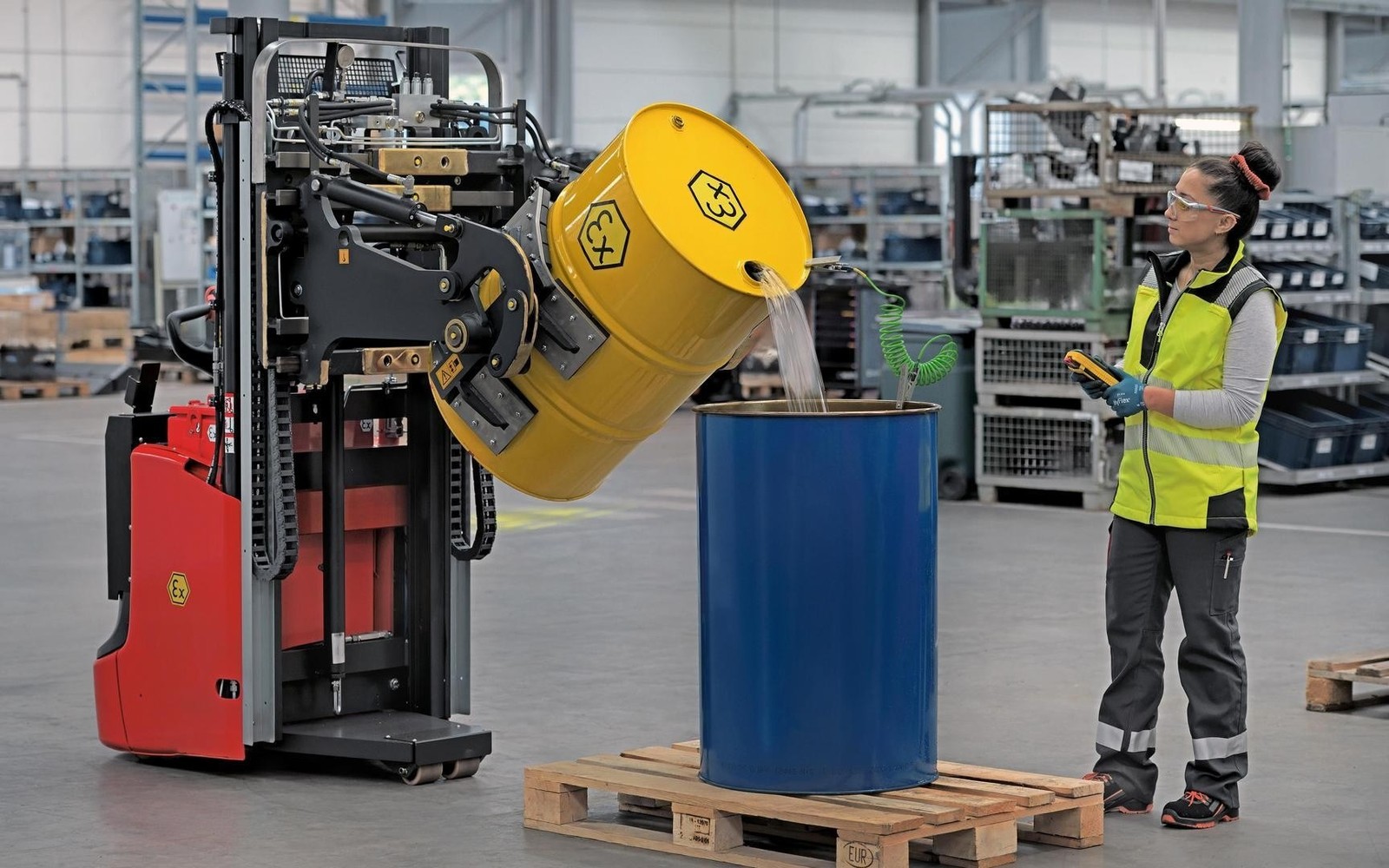
Material movement is not a secondary function in a manufacturing plant or distribution center. It is the connective tissue between every production station, storage lane, and shipping dock. When a lift truck breaks down, when a conveyor section stops, or when the pallet jack fleet is too small for the pick volume, the downstream effect is felt at every station. We finance the full range of material handling equipment, from individual forklifts and order pickers to integrated conveyor systems and automated guided vehicle fleets, with a $50,000 minimum and funding in about one to two weeks.
Material handling financing covers an unusually wide range of asset types, which means the right program depends heavily on what you are buying. A single electric counterbalance forklift is different from a 20-unit fleet of reach trucks. A pallet conveyor loop is different from a complete sortation system. Our job is matching the transaction structure to the asset and the operator, not applying a single template to every request.
Operations That Use This Financing
The broadest demand for material handling financing comes from three categories. Manufacturing plants that need to move raw materials from receiving to production, work-in-process between stations, and finished goods to a staging area before palletizing and shipping. Distribution and fulfillment centers that depend on lift equipment, conveyor sortation, and picking machines to move tens of thousands of SKUs daily. And third-party logistics providers that are asset-light by preference but need owned equipment for dedicated client operations.
Warehouse and distribution operations are among the heaviest users of material handling financing because their equipment is core to their service delivery, not a support function. A 3PL that loses a lift truck during a peak fulfillment period is exposed. A beverage distributor whose reach trucks are down during a holiday order wave loses money per hour. The financing structure matters because it should not create cash flow strain during the periods when equipment performance is most critical.
Automotive and industrial manufacturers, food processors, and large retailers running their own fulfillment all regularly finance material handling equipment through our programs. The Food & Beverage Manufacturing sector in particular, where sanitation requirements limit equipment sharing and drive dedicated fleet purchases, is a strong vertical for us in this asset class.
Equipment Types We Finance
Counterbalance forklifts, both internal combustion and electric, are the single most common financed asset in material handling. Major OEMs like Toyota Material Handling and Hyster-Yale Financing hold strong market positions with well-supported service networks and active secondary markets. New electric counterbalance forklifts from major OEMs run $25,000 to $65,000 per unit depending on capacity and battery configuration.
Reach trucks, order pickers, and very narrow aisle (VNA) turret trucks serve high-cube warehouse operations where vertical storage density is maximized. These are typically electric, dealer-maintained, and well-suited to fleet financing with terms of 36 to 60 months.
Conveyor systems, including powered roller, belt, and chain conveyors, range from $30,000 for a short section to $500,000 or more for a complete facility loop with diverters and sortation. Conveyors are often treated as real property improvements, which changes how some lenders collateralize them. We work with programs that treat production conveyors as equipment rather than fixtures, which opens more financing options. A Conveyor System Financing that is clearly removable and identifiable generally qualifies.
Automated guided vehicles (AGVs) and autonomous mobile robots (AMRs) represent the growing edge of material handling automation. Both can be financed through our programs, with transaction structures similar to other powered industrial equipment. The key underwriting question on these systems is integration cost, since an AGV fleet requires floor wiring or LiDAR mapping infrastructure that may or may not qualify as financeable equipment.
How We Structure Material Handling Transactions
Single-unit transactions for a forklift or reach truck landing between $25k and $60k are below our standard $50,000 minimum on their own. The workaround is financing two or more units as a fleet, or including ancillary equipment like chargers, battery watering systems, or safety cages to reach the minimum. Fleet transactions are naturally efficient because a single approval covers multiple units.
For larger system projects, including complete conveyor installations, AGV fleets, or mixed-equipment material handling buildouts, we structure the transaction around the total project cost and set terms against the useful life of the primary assets in the system. A complete material handling system project in the $300,000 to $1M range typically requires three months of bank statements and a full financial review, but the underwriting is tailored to the system's productive value, not just the individual machine costs.
Sale-leaseback is a useful tool for operators who own paid-off lift equipment and want to access that capital for other purposes. A fleet of five paid-off electric forklifts with a combined market value of $200,000 to $300,000 can generate meaningful working capital through a sale-leaseback without disrupting daily operations. We evaluate these transactions on the equipment's current market value and the operator's ability to service the resulting lease payments. Review our Sale-Leaseback or Cash-Out Refinance for Production Line Equipment if you already own the iron.
Finance Your Material Handling Equipment
Give us the equipment list, quantity, and seller. We handle everything from single lift trucks to complete handling system projects and can include AS/RS systems or Palletizer Financing in the same transaction. Minimum $50,000, B/C credit considered.
Questions About Material Handling Equipment Financing
Clear answers on equipment eligibility, documentation, timing, and transaction structure before you send the file.
Can I finance a mixed fleet of forklifts and order pickers from two different OEMs in one transaction?
Yes. Multi-OEM fleet transactions are common in material handling financing. We structure the deal around the total fleet cost and a single payment schedule. The individual unit makes and models are documented in the transaction, but they do not need to be from the same manufacturer.
We lease our building. Does that create a problem for financing conveyor systems that are bolted to the floor?
Some lenders require landlord subordination agreements for equipment that is physically attached to the building. A signed landlord subordination confirms that if the equipment is ever repossessed, the landlord will not claim it as a fixture. We handle this as part of the transaction documentation for installed conveyor systems. Most reasonable landlords will sign a standard subordination.
Our credit score is under 600. Is material handling financing still possible?
B and C credit programs are available for material handling equipment. The terms will reflect the credit profile, which typically means a higher rate and possibly a shorter term or a down payment requirement. Equipment value and business cash flow matter alongside the score. We work with lenders who specialize in this credit range.
We have a federal tax lien from three years ago that is now on a payment plan. Will that disqualify us?
An active tax lien on a payment plan does not automatically disqualify a transaction. Lenders in our network vary in how they handle tax liens. Some require subordination by the IRS before funding; others can work around it with a payment plan documented and current. We will tell you which programs can accommodate your specific situation.
Can we finance safety equipment like barriers, column guards, and floor marking systems as part of a material handling project?
Loose safety accessories like barriers and column guards are generally too small and consumable to collateralize. However, if they are part of a larger project that includes equipment, the safety items might be includable as soft costs up to a percentage of the total transaction. The equipment must be the primary collateral.
Finance Your Material Handling Equipment Financing
Send the equipment quote, seller details, price, deposit, and delivery schedule. The financing desk will review the file and return a practical next step.