
Manufacturing Market
Warehouse & Distribution Centers
Finance forklifts, conveyor systems, AS/RS, pick-and-place machines, and full distribution center buildouts. $50k minimum, fast approvals, B/C credit welcome.
Start Review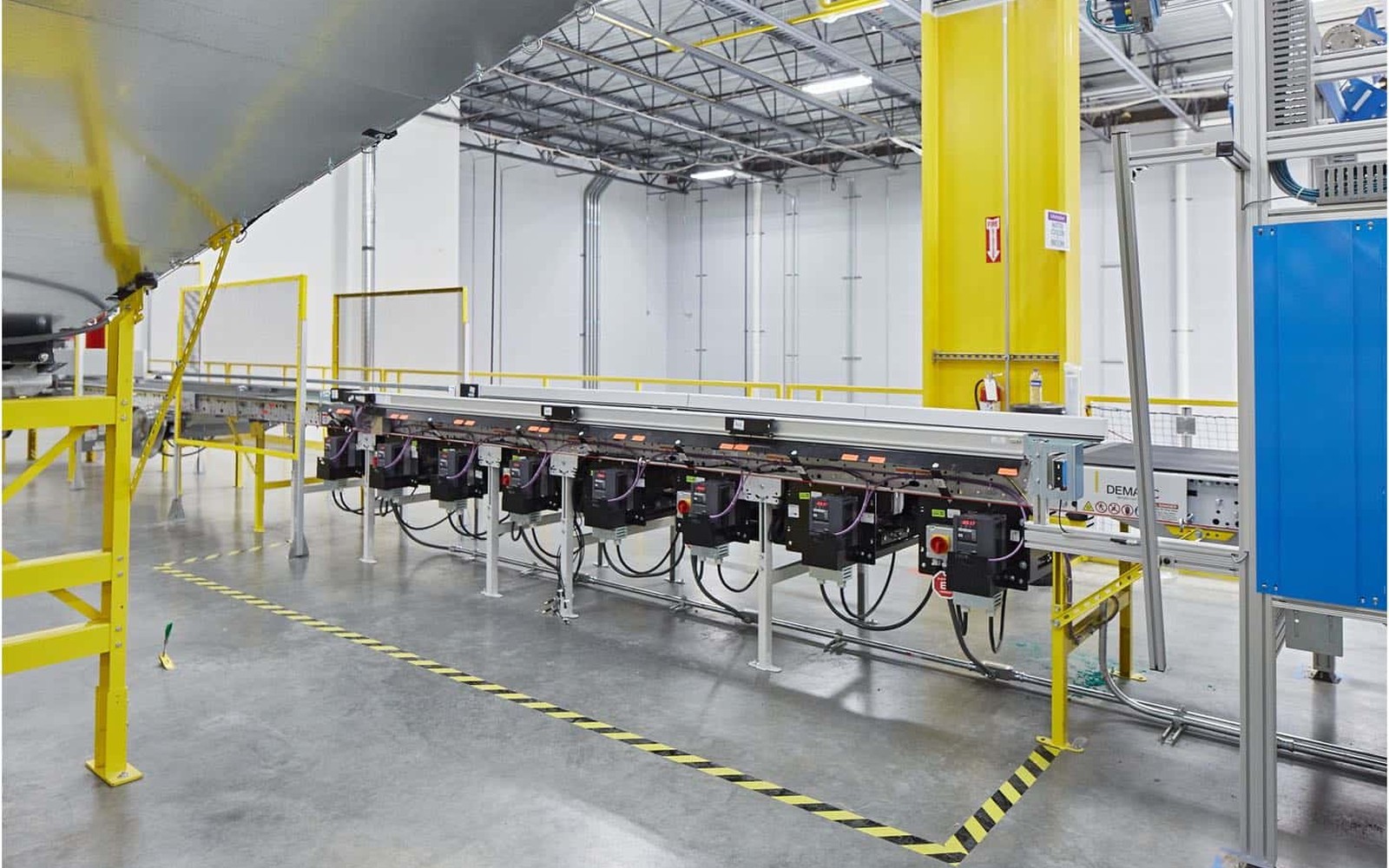
The throughput equation in a distribution center comes down to units per labor hour, and the equipment that drives that number is getting more expensive at exactly the moment when margin pressure demands it most. A sortation conveyor that can handle 30,000 units per hour, a goods-to-person pick system that replaces four manual pickers, or a stretch wrapping line at the end of the palletizing zone all represent capital decisions landing between $100k and $2k. Getting those assets into operation quickly, without depleting the working capital that fuels inventory, is what financing solves.
We finance warehouse and distribution center equipment across the full facility spectrum: forklifts and reach trucks, conveyor and sortation systems, automated storage and retrieval, pallet racking (when bundled with qualifying equipment), stretch wrappers, labeling systems, and dock equipment. Our minimum is $50,000 and most distribution deals fall well above that. New and used equipment both qualify. Application-only approvals up to roughly $400,000 move with three months of bank statements and fund in one to two weeks.
What We Finance Inside the Four Walls
Forklift and lift truck fleets are the most common distribution center financing we see. A single counterbalance forklift runs $25,000 to $55,000 new, so a fleet refresh of five to ten units hits the deal size we work with comfortably. Electric forklifts have become the dominant choice in enclosed distribution environments because of zero emissions and lower operating cost, and they carry strong resale values that support financing. Reach trucks for narrow-aisle high-bay operations and Order Picker Financing for case-pick and eaches operations are also common.
Conveyor and sortation systems are where the larger capital commitments happen. A cross-belt sorter or loop sorter for a regional e-commerce fulfillment center runs $500,000 to several million dollars. Gravity conveyor, belt conveyor, and roller conveyor sections that feed those systems are often financed as part of the same project. Palletizers at the end of fulfillment lines, including both robotic and conventional column palletizers, are another standard category.
Automated storage and retrieval systems represent the largest capital decisions in modern distribution buildouts. Mini-load AS/RS for cartons, unit-load AS/RS for full pallets, and shuttle-based multi-depth systems from manufacturers like Dematic and Honeywell Intelligrated can run $1,000,000 to $10,000,000 for a complete installation. These are projects where financing is essentially mandatory, and the deal structures we work with scale to match.
Financing a Distribution Center Buildout
Distribution center equipment projects often involve multiple vendors and staggered delivery schedules. A conveyor system might ship in phases over four months, while forklift deliveries happen on a separate timeline, and the AS/RS installation follows months later. We can structure master facility agreements or progress draw structures that accommodate multi-vendor, multi-phase projects, so the financing tracks the actual delivery of assets rather than requiring a single closing before a single delivery.
For smaller single-phase equipment purchases, a standard Equipment Loans or Equipment Leasing closes in the normal one-to-two-week window. For larger multi-phase builds, the structuring conversation takes longer but results in a facility that eliminates the need to return to the capital markets each time a new phase delivers. Companies that run multiple distribution centers also benefit from a master credit facility that pre-approves a pool of capital for equipment across locations.
New vs. Used Distribution Equipment
The secondary market for distribution center equipment is active and deep. Late-model Toyota, Crown, and Raymond forklifts have strong auction values and are routinely financed as used assets. Conveyor sections from a closed or restructured distribution center can be purchased, inspected, and redeployed at significant discount to new, and we finance those transactions on the same terms as new equipment provided the assets are properly documented.
Used equipment financing for distribution assets typically requires photos, serial numbers, and a description of condition. For larger conveyor systems or AS/RS purchased from a liquidating operation, an independent appraisal may be required to establish current market value. That process adds a few days to the timeline but does not change the fundamental deal structure.
Operations that are growing into their first distribution building often find that a combination of new and used equipment delivers the best capital efficiency. New forklifts at the dock, used conveyor in the receiving area, and a phased new sortation system installed in year two is a common pattern. We can structure the pieces separately or together depending on what works for the project.
Distribution Center Investment Trends
E-commerce fulfillment has driven a decade of warehouse buildout, and the pace has not fully normalized. Regions with major logistics infrastructure like the Inland Empire around Ontario, CA, the Columbus, OH freight corridor, and the Memphis, TN intermodal hub have seen constant new building and equipment investment. B2B distributors upgrading from manual pick operations to semi-automated or fully automated systems are another major driver, particularly in industrial, foodservice, and healthcare distribution where order accuracy and speed directly affect customer contracts.
Labor cost and labor availability remain the primary driver behind automation investment decisions in distribution. The labor savings math from a goods-to-person system or a fully automated palletizing line is now compelling enough that operations of 200,000 square feet and above are actively budgeting for it. Financing spreads the capital cost over the same period the labor savings accrue, which makes the NPV calculation straightforward to defend internally.
Get Financing for Your Distribution Center Equipment
Whether you are refreshing a forklift fleet, adding sortation, or building out a new facility, we structure deals that fit the project. Submit a short application with equipment details and we respond within one business day. Minimum $50,000, new and used equipment welcome, B and C credit considered.
Questions About Warehouse & Distribution Centers
Clear answers on equipment eligibility, documentation, timing, and transaction structure before you send the file.
Can I finance a forklift fleet refresh across multiple warehouse locations under one deal?
Yes. A fleet of forklifts across multiple locations can be structured under a single master agreement with the equipment scheduled across locations. The total financed amount just needs to clear the $50,000 minimum, which a fleet of five or more units easily does. Individual unit serial numbers and locations are listed in the equipment schedule.
We are leasing our building. Does that affect whether we can finance the equipment inside it?
No. Building ownership is not a requirement for equipment financing. The collateral for the financing is the equipment itself, not the real estate. Many of our distribution center clients operate in leased facilities. We may ask for a landlord waiver for fixtures that could be considered part of the building, but standard mobile equipment like forklifts and free-standing conveyor systems do not require that.
Can I do a sale-leaseback on the conveyor system we already own to free up cash?
Yes. Distribution center conveyor, sortation, and racking assets with established book values are good candidates for sale-leaseback. The lender pays you the appraised market value of the equipment, you lease it back under a fixed monthly payment, and retain full use. The cash released goes back into operations, inventory, or further facility investment.
Our distribution center serves multiple retail clients. Some months are much heavier than others. Does seasonal revenue hurt our application?
Seasonal revenue is common in distribution, particularly for operations supporting retail or consumer goods fulfillment. Lenders look at trailing twelve months of revenue, not just peak or trough periods. Seasonal concentration that results in reliable annual revenue is not a disqualifying factor, even if individual months show significant variation.
How long can I finance an automated storage and retrieval system given the long useful life?
AS/RS systems have useful lives of 15 to 20 years or more in many cases. Financing terms for major AS/RS installations typically run 60 to 84 months. Longer terms than 84 months are less common in equipment financing and generally require a strong credit profile. The goal is to match the term to a realistic payback period without extending further than the asset's productive life justifies.
Finance Your Warehouse & Distribution Centers
Send the equipment quote, seller details, price, deposit, and delivery schedule. The financing desk will review the file and return a practical next step.