

Production Equipment
Robotic Assembly Cell Financing
Finance robotic assembly cells including robot, tooling, guarding, controller, and integration. $50k minimum, 1-2 week funding. New and used robots. Apply now.
Start Review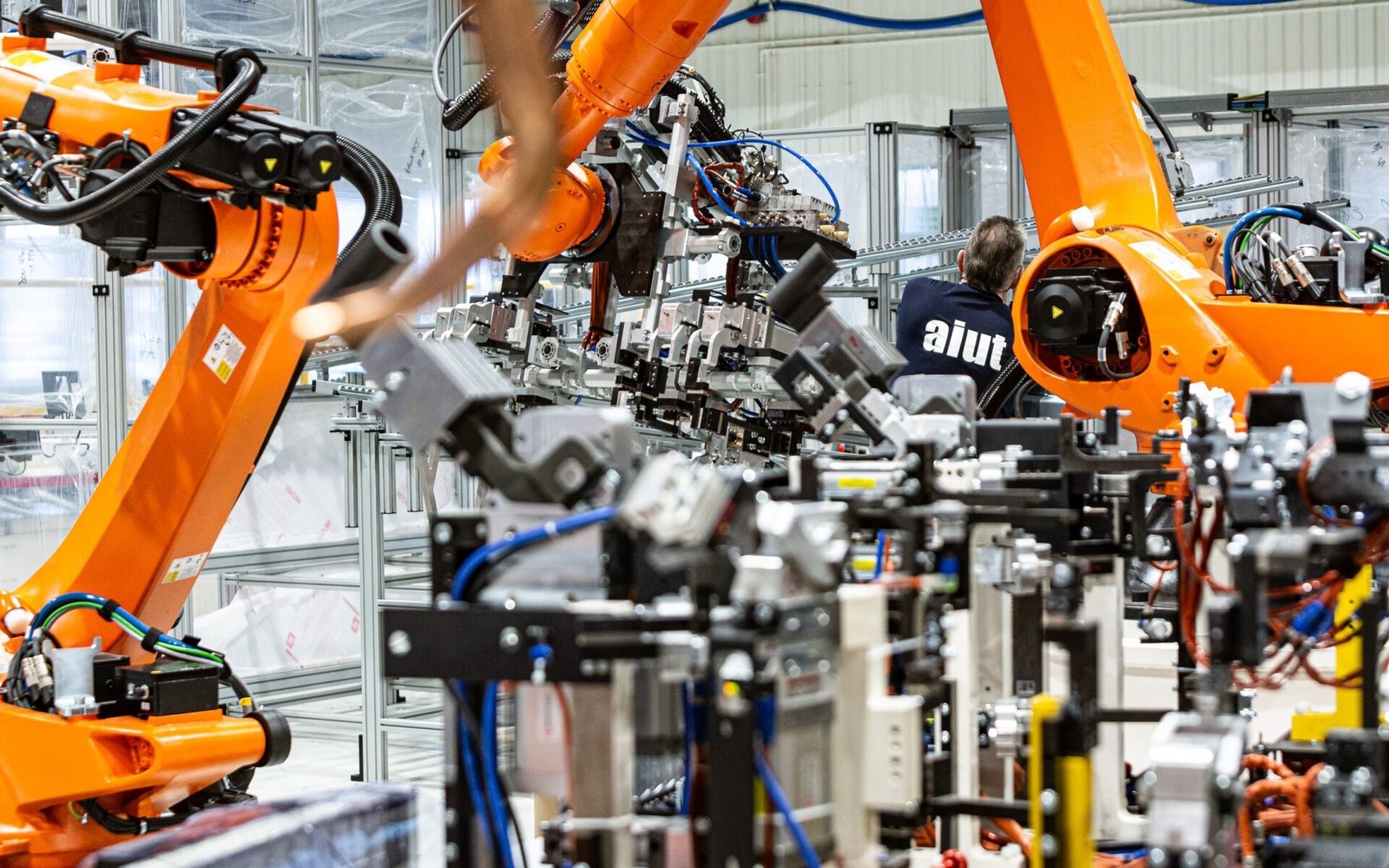
Throughput numbers do not lie. A robotic assembly cell running two shifts with consistent cycle times beats a manual station on output reliability, quality repeatability, and unit labor cost once volume crosses a threshold that most mid-volume manufacturers hit before they realize it. The capital cost is real, the integration timeline is real, and the payback is usually real too, if the application fits and the cell is sized correctly. Financing makes the investment happen without draining the working capital that keeps the rest of the plant moving.
We finance robotic assembly cells for plants adding their first robot and for multi-robot facilities expanding existing automation. The minimum is $50,000. A typical single-cell project with a six-axis robot, EOAT, safety guarding, and a programmable logic controller runs from $120,000 to $350,000. More complex cells with vision guidance, force sensing, or dual-robot configurations reach $500,000 and above. We handle all of it.
What a Robotic Assembly Cell Financing Package Covers
A robotic assembly cell is not just the robot. The full system includes several categories of capital assets that we finance together:
- The articulated robot. Six-axis industrial robots from manufacturers like FANUC, KUKA, and ABB Robotics are the backbone of the cell. Payload capacity ranges from under 10 kg for small-part assembly to over 300 kg for heavy-component handling. The robot itself is the most liquid resale asset in the cell, which supports favorable collateral treatment.
- End-of-arm tooling (EOAT). Custom grippers, vacuum systems, and multi-function tool changers are often the most precisely engineered component of the cell. Costs range from $5,000 for simple suction grippers to $80,000 or more for servo-driven multi-finger grippers with integrated sensing. These are typically included in the financed amount.
- Robot controller and programming. The controller hardware and the process program developed by the integrator are capital items. OEM controllers are included in the robot price. Custom programming from an integrator is a soft cost that can often be financed as part of the project.
- Safety guarding and light curtains. OSHA and ANSI RIA R15.06 standards require physical guarding or presence-sensing devices for industrial robots operating near personnel. Fencing, interlocks, safety scanners, and light curtains are legitimate capital assets included in the cell budget.
- Integration and commissioning. The systems integrator's labor for installation, tooling validation, and production runoff is a significant cost on any cell project. We finance integrator-provided services as part of the project scope.
For cells that feed into a larger line, the cell financing can be bundled with adjacent Conveyor System Financing and Vision Inspection System Financing in a single approval.
New Robots vs. Refurbished Cells
The used industrial robot market is well-developed. Major OEM robots with fewer than 40,000 service hours and current firmware can be refurbished and redeployed at 40 to 60 percent of new cost. Integrators who specialize in refurbished robot cells provide warranty coverage and integration services comparable to new installations for applications where cycle time and payload requirements fit the used unit's remaining capacity.
We finance refurbished and used robotic assembly cells with the same approach we use for new equipment. The key variables are the robot's age, service hours, the OEM's parts availability status for that model generation, and whether the end-of-arm tooling is new or refurbished. A clear service history and an integrator's inspection report are the documentation we look for on used cells. Used equipment financing at rates appropriate to the asset age is available. The minimum $50,000 transaction floor applies regardless of new or used status.
Industries and Applications We See Most
Robotic assembly cell financing crosses many industries. Automotive parts suppliers are the largest user base. Tier 1 and Tier 2 suppliers deploy robotic cells for sub-assembly operations, fastening, welding, and inspection. Program credentials often specify the cell architecture, so the financing decision is driven by a contract rather than purely by an internal ROI calculation.
Electronics assembly is the second major segment. Board handling, connector insertion, cable routing, and final assembly operations in electronics manufacturing benefit from robot precision in ways that manual assembly cannot replicate at high volumes. Consumer electronics, industrial electronics, and defense electronics assembly all involve robotic cell deployments.
Consumer packaged goods manufacturers are expanding their use of robotic cells for primary and secondary packaging operations that were previously manual. Robotic cells in CPG environments often handle a wider variety of formats than automotive cells, which puts more emphasis on quick-change tooling and vision-guided part location. Manufacturers in Chicago and Columbus across food, household, and personal care products make up a significant share of our CPG cell financing activity.
Credit and Documentation Requirements
Robotic cells are among the more straightforward automation assets to finance because the collateral is well-understood. A FANUC R-2000iC or a KUKA KR QUANTEC has documented used-market pricing, established OEM support timelines, and a liquid secondary market. That collateral clarity accelerates approval for applicants who otherwise would face more scrutiny.
For cells under $400,000, an application-only process works in most cases. We review the business credit, time in business (two-plus years preferred), and the equipment description. For cells above that threshold, three months of business bank statements and year-end profit and loss are the baseline documentation. Existing liens on the business or on other equipment are disclosed during the application and worked through during underwriting rather than being automatic disqualifiers.
B and C credit businesses qualify for robotic cell financing through programs designed for that profile. Terms will be shorter and the rate will reflect the credit position, but bad-credit equipment financing is a real path for businesses that have a solid revenue record even if credit events have occurred.
Get a Financing Quote for Your Cell
Share the robot model, the integrator's project quote, or the scope of the cell you are planning. We will return a financing proposal within one business day. There is no cost and no commitment to apply.
Questions About Robotic Assembly Cell Financing
Clear answers on equipment eligibility, documentation, timing, and transaction structure before you send the file.
Can we finance the robot and the integrator's project fee under the same agreement?
Yes. The robot from the OEM and the integration services from a certified integrator can be combined into one financing agreement. We coordinate draws to both vendors based on project milestones.
Our cell integrator is a small local shop. Does that affect approval?
The integrator's size does not directly affect the financing approval. What matters is the asset description and the project scope. A clear proposal from any integrator is sufficient documentation.
Can I refinance a robot cell I purchased outright two years ago?
Sale-leaseback is available on cells you own with clear title. We appraise the current market value, buy the equipment from you, and lease it back. Eligible cells need meaningful remaining useful life and an established resale market, which most major-brand robots have.
We want to lease the cell rather than buy it outright. What buyout options exist?
An FMV lease keeps the monthly payment lower because the residual is not fully amortized over the term. At end of term you can buy at fair market value, renew the lease, or return the equipment. A dollar-buyout lease amortizes the full cost and gives you title for one dollar at end of term. We can show you payment comparisons for both.
The cell project runs across two calendar years. Can we draw funds in stages?
Progress draw structures are available for longer build timelines. We issue a commitment at approval and fund in draws as defined milestones are completed, such as robot delivery, EOAT completion, and final commissioning.
Finance Your Robotic Assembly Cell Financing
Send the equipment quote, seller details, price, deposit, and delivery schedule. The financing desk will review the file and return a practical next step.