
Manufacturing Market
Medical Device Manufacturing
Production line financing for medical device manufacturers. Cleanroom assembly, injection molding, packaging lines, vision inspection. $50k minimum, funded in 1-2 weeks.
Start Review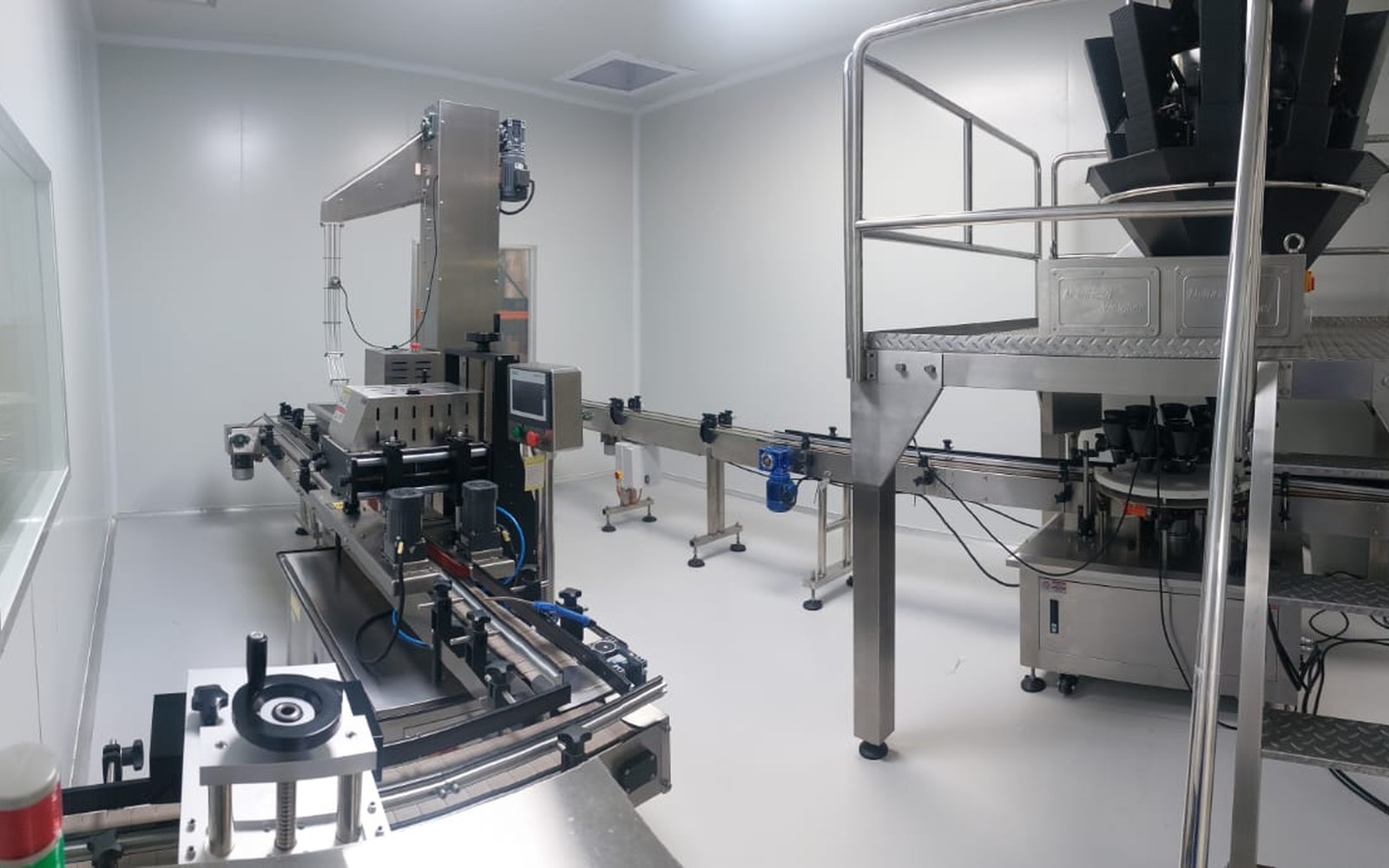
Capital equipment decisions in medical device manufacturing carry a consequence that most industries do not face: a design history file, a quality management system, and a 510(k) or PMA submission that may reference the production equipment by class and capability. Changing equipment mid-lifecycle triggers a change control process and potentially a regulatory re-evaluation. Getting the right equipment specified and funded before validation begins is not a preference; it is a condition of maintaining the manufacturing record. We finance production and packaging equipment for medical device manufacturers across Class I, Class II, and contract manufacturing environments: cleanroom assembly stations, Injection Molding Machine Financing, Vision Inspection System Financing, Form-Fill-Seal (FFS) Machine Financing for sterile barrier systems, and Automated Assembly Systems Financing for combination devices. Minimum transaction $50,000; application-only approval to $400,000; funding in one to two weeks.
How FDA Regulation Shapes Equipment Investment
A medical device manufacturer operating under 21 CFR Part 820 (Quality System Regulation) or its successor under the FDA's Quality Management System Regulation (QMSR) carries a documented production process that is part of the device's regulatory record. Equipment used in production is controlled through the quality system: equipment must be qualified, maintained on a documented schedule, and any change to production equipment must go through a change order process that evaluates potential impact on device safety and effectiveness.
This creates a strong incentive to get the equipment decision right the first time, before IQ/OQ/PQ validation begins. A manufacturer that finances the wrong press tonnage or the wrong precision class of mold and then needs to switch machines mid-validation is looking at tens of thousands of dollars in validation rework and potentially months of delay. The upfront capital planning decision and the equipment financing conversation are therefore the same conversation.
For contract medical device manufacturers (CMDMs), the added layer is that the customer often specifies or approves the production equipment as part of the supplier qualification. A CMDM winning a new device contract may have specific equipment requirements in the contract itself, and the financing needs to close before the equipment qualification timeline begins. Speed of financing is not just convenient; it is on the critical path of the program launch.
Production Equipment Categories for Medical Devices
Injection molding for medical device components is a precision-first application. Thin-wall housings for diagnostics instruments, catheter hubs, IV connectors, and syringe barrels run in clean molds with tight dimensional tolerances. Medical-grade molding machines from Engel, Arburg, or Sumitomo are typically all-electric for repeatability, cleanliness, and the precise shot-to-shot consistency that medical components require. An all-electric medical-grade molding machine in the 50-ton to 200-ton range runs $200,000 to $700,000 new. Used medical-grade molding equipment from these manufacturers qualifies for financing when condition is documented.
Assembly automation for combination devices and electromechanical medical products spans from simple semi-automated benchtop stations to fully automated robotic assembly cells. A semi-automated assembly station for a two-component disposable device might cost $40,000 to $100,000. A fully automated robotic cell for assembling a combination drug-device product or an implantable component may run $500,000 to $2 million depending on the number of operations, the camera and vision system integration, and the traceability and data capture required by the quality system. We finance Robotic Assembly Cell Financing for medical device applications across this range.
Packaging for medical devices in sterile barrier systems is a specialized category. Tyvek-to-film or foil-to-foil pouch sealers, thermoform-fill-seal machines for clamshell sterile packaging, and the validation-ready sealing systems that meet ASTM F2097 and ISO 11607 sterile barrier requirements are a distinct category from general-purpose packaging equipment. Validated medical pouch sealers run $30,000 to $150,000 depending on speed and configuration. Complete thermoform medical packaging lines run $200,000 to $600,000. Medical sealing equipment financing is available for both sterile barrier pouch lines and tray-seal systems.
Vision inspection and traceability are integral to medical device lines rather than add-ons. A UDI-compliant laser marking and vision verification system for implantable or critical devices is a regulatory requirement under FDA UDI final rule for Class II and Class III devices. These systems run $80,000 to $250,000 for an integrated mark-and-verify station and are financed as part of the production line or as a standalone compliance addition to an existing line.
Financing Approach for Medical Device Manufacturers
Medical device manufacturers include public companies with investment-grade credit, venture-backed startups pre-revenue, and every stage in between. Our equipment financing programs cover this full range. For established contract device manufacturers with multi-year revenue, application-only approval up to $400,000 is available without financial documentation. For larger transactions or earlier-stage companies, three months of bank statements and business financials allow a thorough underwriting review.
Venture-backed medical device startups that have raised institutional capital but are pre-revenue or early-revenue present a specific underwriting challenge that bank lenders typically decline. Equipment lenders who understand the device development lifecycle, including the fact that a company can be spending heavily on regulatory and clinical activities before first product shipment, are better positioned to underwrite these situations. The equipment collateral and the funded status of the company are both relevant to the credit story.
B and C credit consideration is available for device manufacturers that have experienced financial difficulty but are on a recovery trajectory. The equipment collateral and the operating outlook are the primary factors in these cases.
Get the Equipment Qualified Before Validation Starts
Regulatory timelines do not wait for slow financing. Tell us the equipment, the transaction amount, and your qualification deadline. $50,000 minimum; application-only up to $400,000; most deals fund in one to two weeks.
Questions About Medical Device Manufacturing
Clear answers on equipment eligibility, documentation, timing, and transaction structure before you send the file.
We are a Class II device manufacturer planning to finance a new automated assembly cell. Can the equipment be specified to our validation requirements and still qualify for financing?
Yes. Custom-specified and purpose-built automated assembly equipment for medical device applications qualifies for financing. We treat the validated, installed system as the collateral. The validation documentation becomes part of your equipment records; it does not affect the financing structure. The equipment needs to be from a credible vendor with a clear replacement cost or market value.
We are a venture-backed device company pre-launch but post-510k clearance. Can we finance the first production line?
Post-clearance, pre-revenue device companies are challenging for most bank lenders but are not automatically declined for equipment financing. The key factors are the institutional backing, the total funded status of the company, and the commercial plan. We have structured equipment financing for companies in exactly this stage. Larger transactions at this stage typically require a discussion rather than a standard application.
We need to add UDI laser marking and vision verification to our existing line. Is that financeable as a standalone upgrade?
Yes. UDI compliance upgrades starting at $50,000 qualify as standalone equipment transactions. These are treated as production-line additions, not ancillary expenses. Application-only approval covers most UDI system purchases. The regulatory compliance context actually reinforces the equipment's value in an underwriting analysis.
Our device contract involves equipment that our customer has specified by make and model. If the manufacturer delays delivery, how does that affect the financing?
Funding occurs upon delivery and acceptance of the equipment, so a vendor delay does not create a problem with the financing commitment. We can hold an approval for a reasonable period while equipment lead times are worked through. Extended lead times on specialty medical equipment are common and understood in our underwriting.
Can we finance the qualification activities (IQ/OQ/PQ) along with the equipment itself?
Validation and qualification services are typically soft costs that may be includable in the financing up to a percentage of the hard equipment cost. Whether qualification costs qualify depends on the transaction size, the lender, and the nature of the services. We routinely bundle some soft costs with equipment financing; the validation services question is one to raise when we discuss the specific transaction.
Finance Your Medical Device Manufacturing
Send the equipment quote, seller details, price, deposit, and delivery schedule. The financing desk will review the file and return a practical next step.