
Popular Model
Toyota Electric Reach Truck Financing
Finance a Toyota electric reach truck with terms built for warehouse throughput. Application-only up to $400k, funding in 1-2 weeks, new and used units considered.
Start Review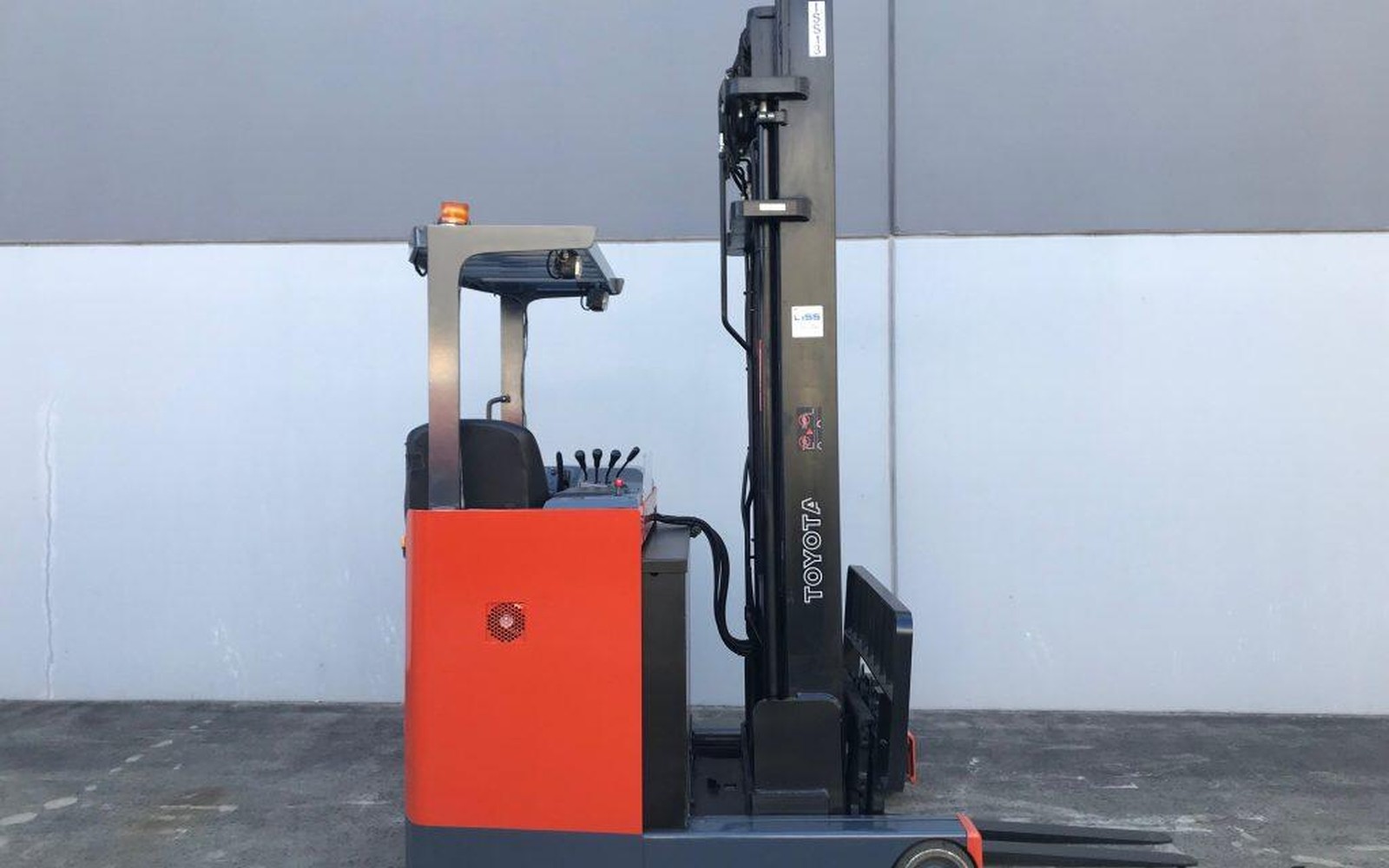
The bottleneck in a tall-rack warehouse is almost never the pick rate. It is the lift. Every time a reach truck sits idle waiting on a charger, a work order, or a repair queue, the line downstream feels it. Toyota's electric reach truck line addresses that problem with a machine designed for sustained throughput across multi-shift operations, and financing that machine should be structured with the same logic: terms that fit the duty, not a generic monthly number.
Toyota's electric reach trucks cover a lift-height range from roughly 188 inches up to 270 inches depending on the mast configuration, with load capacities typically between 3,000 and 4,500 pounds. These machines run AC motors, use regenerative braking to extend battery cycles, and are designed for Toyota's System of Active Stability (SAS), which uses sensors to detect lateral load shift and modulate the drive and hydraulics accordingly. That engineering history explains why these trucks carry strong residual value in the used market, which makes them attractive collateral for structured financing.
We work with Toyota forklift equipment purchases from $50,000 up, with a sweet spot landing between $100k and $150k for single-unit or small-fleet transactions. New machines, certified used, and auction units all qualify. If you are adding a second or third truck to a line that already runs Reach Truck Financing, we can structure a blanket agreement that covers the full expansion without running separate applications for each unit.
What Makes Toyota Electric Reach Trucks Work in High-Cycle Environments
Toyota's reach truck lineup spans several series, with the most commonly financed models falling in the 7- and 8-series electric configurations. The 8-series machines introduced improvements to traction control and an updated operator compartment with adjustable armrests and a full-suspension seat, both of which matter in warehouses running 10-hour shifts. Operator fatigue is a real throughput variable, and ergonomics that reduce it show up in productivity data.
Battery management is where the Toyota electric reach truck separates itself for multi-shift operations. The machines are compatible with both conventional flooded lead-acid batteries and lithium-ion packs, depending on the spec order. Lithium-ion configurations allow opportunity charging during breaks without the memory degradation that limits conventional batteries, which is relevant if your line cannot afford a full battery-swap window between shifts.
The telescopic mast designs used in Toyota's reach trucks maintain rated capacity at full extension better than many competitors, a spec that matters when the pallet weight varies and the pick height is at the upper range of the mast. Structural consistency at height reduces the frequency of load rejection events, which are the kind of invisible throughput killers that OEE calculations expose quickly.
For facilities running a Warehouse & Distribution Centers with racking above 30 feet, the extended-mast configurations with integrated camera systems and load backrest extensions make these machines a logical fit. The camera option, which feeds a monitor in the operator compartment, allows precise positioning at heights where naked-eye placement becomes unreliable.
New Versus Certified Used Toyota Reach Trucks
New Toyota electric reach trucks carry MSRP figures that typically land landing between $35k and $70k per unit depending on mast height, battery type, and attachments, though dealer pricing varies by region and volume. Certified pre-owned units from Toyota's dealer network go through an inspection checklist that covers drive components, hydraulic seals, mast chains, and electrical systems, and they carry limited warranty coverage. The certification matters for financing because it documents condition in a way that supports collateral valuation.
Auction units and off-lease machines from fleet disposals represent a different category. These can offer meaningful cost savings, especially for operators who run experienced technicians and can perform battery load testing themselves. We finance used Toyota reach trucks from both sources, and we look at actual machine hours, battery condition reports, and any service records available rather than applying a blanket age cutoff. A five-year-old machine with documented maintenance and fresh batteries is a better credit story than a three-year-old machine with deferred service history.
The residual value profile on Toyota reach trucks is strong enough that Sale-Leaseback is a practical option for facilities that own machines outright and want to pull capital back out of the fleet. If your balance sheet carries three paid-off units and you need growth capital for other line upgrades, a sale-leaseback converts that iron into working funds while keeping the trucks in production.
Application Process and Timeline
For transactions up to approximately $400,000, we work on an application-only basis. That means no tax returns, no audited financials. We ask for a completed credit application and three months of business bank statements. Most decisions come back within 24 to 48 business hours, and funding typically clears in one to two weeks from approval. If you are coordinating a dealer delivery date, that timeline is narrow enough to work backward from a scheduled delivery.
Transactions over $400,000, or portfolios that include multiple units being financed together, require more documentation. Full-package submissions include two years of business tax returns, interim financials, and sometimes a personal financial statement. The process takes longer but allows us to structure terms that reflect the full picture of the business rather than a model-score approximation.
Credit range matters, but B and C credit situations are considered. If your business carries some derogatory history, the path is not automatically closed. Equipment quality, time in business, and cash flow pattern all factor into the underwrite alongside the credit profile. Businesses with two-plus years of operating history and consistent bank deposits tend to move through the process more cleanly regardless of score range.
Term Structures for Reach Truck Financing
Reach truck financing typically runs on 24- to 72-month terms. Shorter terms carry lower total interest cost but higher monthly payments, which matters if the machine is seasonal or its utilization varies by quarter. Longer terms reduce the monthly load and preserve cash flow for other operating expenses, which is the choice most facilities running tight margins prefer.
We structure deals as either Equipment Loans with title held by the borrower from day one, or as leases with an end-of-term purchase option. The loan path gives you depreciation on the asset under Section 179 rules, which can have meaningful tax implications if you are purchasing in the fourth quarter and your accountant is optimizing for year-end. The lease path keeps the equipment off your balance sheet if that matters for covenant compliance or reporting purposes.
Refinancing an existing machine is also on the table. If you financed a Toyota reach truck through a dealer arrangement that carried a high rate, or through a banking relationship that has since changed, Equipment Refinancing can reduce the monthly number or free up equity if the machine's residual value exceeds the remaining balance.
Get Financing Terms for Your Toyota Reach Truck
Tell us what you are looking at, new or used, single unit or fleet, and we will put together term options within 24 hours. Minimum transaction size is $50,000. Application-only up to $400,000. Call or submit a request online and we will follow up the same business day.
Questions About Toyota Electric Reach Truck Financing
Clear answers on equipment eligibility, documentation, timing, and transaction structure before you send the file.
Can I finance a Toyota reach truck I bought at auction without a dealer invoice?
Yes. Auction purchases are eligible. We use the auction receipt and any available inspection or condition report in place of a dealer invoice for collateral documentation. Having a battery load test or service inspection from a Toyota dealer after purchase strengthens the file.
My business has been open 18 months. Does that disqualify me from reach truck financing?
It does not disqualify you, but it does narrow the lender pool. Businesses under two years in operation typically need stronger bank statement cash flow to offset the shorter history. If deposits are consistent and the transaction amount is under $150,000, there are programs we can access. Above that, a co-borrower or cross-collateral arrangement can help.
Can I roll the cost of a lithium-ion battery upgrade into the financing?
In most cases yes. Battery upgrades, attachments, and installation costs can be included in the financed amount as long as the total stays within the collateral value we can document. A lithium-ion pack typically adds significant residual value to the unit, which supports the higher financed amount.
We already have a loan on a Toyota reach truck but the rate is high. Can we refinance it?
Yes. We refinance existing reach truck loans. The process requires the current payoff amount and the machine's serial number so we can pull a condition and valuation reference. If there is equity in the unit beyond the payoff, a cash-out refinance can net you additional working capital at close.
How does the lender handle the collateral if the reach truck is assigned to a leased warehouse rather than a property we own?
The lender takes a lien on the equipment itself, not on the real estate. A leased warehouse is not a disqualifying factor. In some cases, lenders request a landlord waiver confirming they will not claim the equipment if the building lease defaults, which your landlord can typically sign within a few days.
Finance Your Toyota Electric Reach Truck Financing
Send the equipment quote, seller details, price, deposit, and delivery schedule. The financing desk will review the file and return a practical next step.