
Production Equipment
Cartoning Machine Financing
Finance horizontal and vertical cartoning machines for pharma, nutraceutical, food, and personal care operations. $50k minimum, B/C credit considered.
Start Review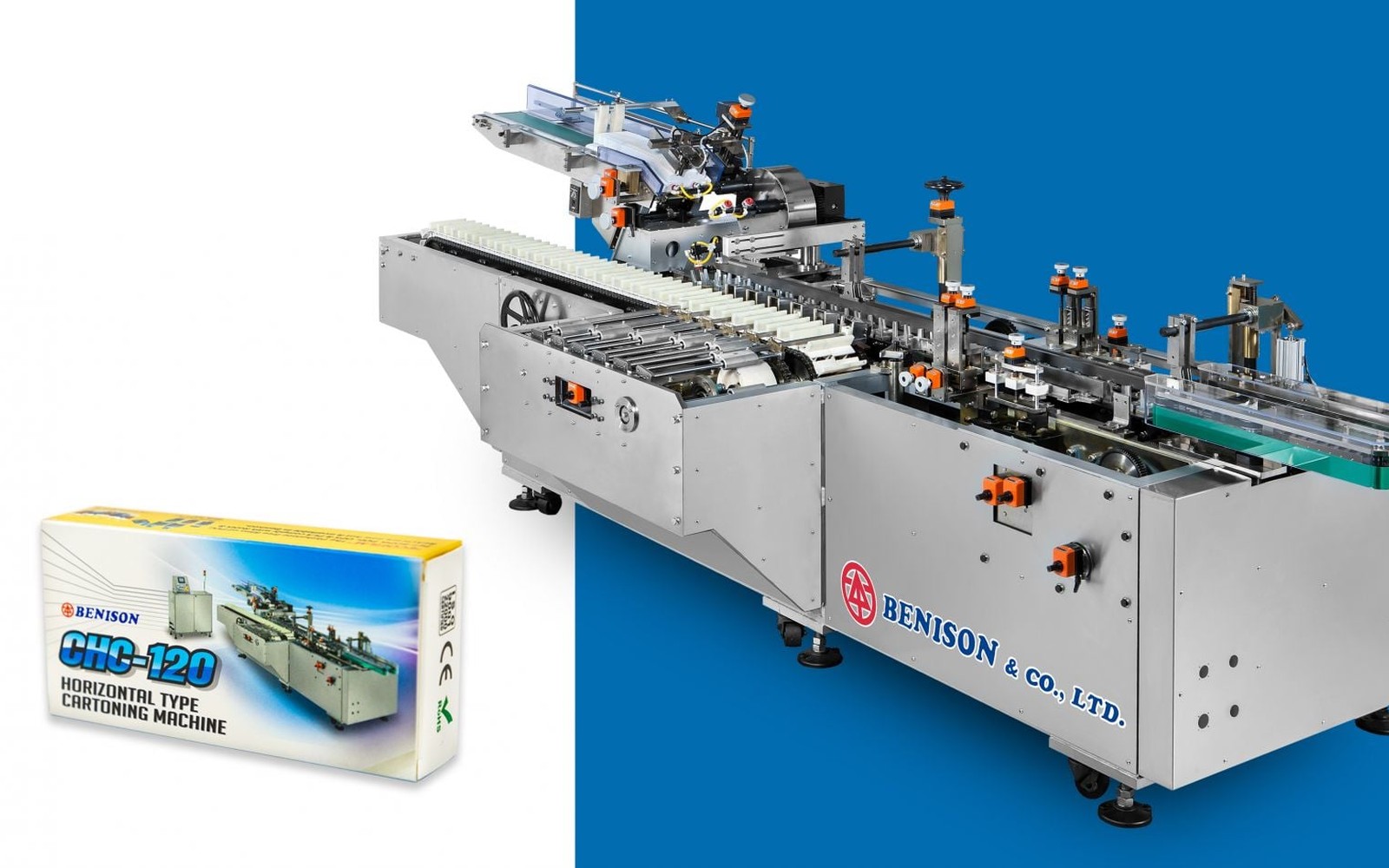
Cartoning is the process that puts a product into a folding carton, tucks or glues the end flaps, and delivers it to the case packer or pallet ready for retail or distribution. On a pharmaceutical blister line, the cartoner takes the thermoformed blister pack, inserts it into the carton with a leaflet, and seals it before the carton moves to the serialization station. On a cereal line, the cartoner counts product, fills the carton, and folds the top. The application determines the format, but the financial structure is consistent: a Cartoning Machine Financing is a well-understood industrial asset with clear residual value and a direct contribution to packaged output.
Horizontal cartoning machines handle products loaded from the side into the carton barrel, which is the dominant configuration for pharmaceuticals, medical devices, and personal care products. The carton travels horizontally through the machine while product is inserted, and the end flaps are tucked or glued to close. Vertical cartoners drop product from above into an erected carton, which is more common for flowable products in bags, or for product that stacks better than it slides. Both formats qualify for financing, as does the increasingly common robotic top-load cartoner where a delta or SCARA robot picks and places product into cartons at high speed.
Cartoning machines typically range from $75,000 for a basic intermittent-motion unit to $450,000 and above for a continuous-motion machine with servo axes, integrated leaflet insertion, and a vision inspection system for carton quality checks. The OEMs most commonly seen in our financing files are Syntegon (formerly Bosch Packaging), Marchesini, IMA, Coesia, and Uhlmann for pharmaceutical applications, and ProMach brands, Kliklok, and Wayne Automation for food and consumer products.
Where Cartoning Investment Concentrates
Pharmaceutical manufacturers are the single largest segment for cartoning machine investment in the United States. The combination of regulatory requirements, leaflet handling, and serialization integration makes pharma cartoners expensive and highly specified. An OTC drug or prescription drug carton must be accurately inserted, properly sealed, and serialized before leaving the line. The cartoner is typically the point at which these requirements converge, and the machine must integrate with upstream blister or bottle lines and downstream serialization systems. A pharma cartoner from Syntegon, IMA, or Marchesini in a complete serialized configuration can exceed $600,000 for a continuous-motion unit.
Nutraceutical and supplement manufacturers have similar cartoning needs without some of the strictest pharmaceutical requirements. Capsule and tablet products going into retail cartons need insertion, leaflet handling, and often a tamper-evident tuck. The capital cost is lower than pharma (typically $90,000 to $250,000 for a mid-speed machine) and the credit environment is more flexible.
Food and personal care operations use cartoning for a wide range of products: individual wrapped snacks placed in display cartons, cosmetic tubes or jars inserted in retail boxes, and dry goods in cartons for club-store formats. The requirement for food safety in the machine design adds some cost, but the range of OEMs serving the food cartoning market is broad and pricing is competitive.
One trend driving cartoning investment is the growth of e-commerce-ready packaging. Brands shipping direct-to-consumer need carton structures that survive parcel delivery without damage, which sometimes requires a sturdier carton format or additional insertion equipment to protect the product. Co-packers adding this capability to serve DTC-focused brands finance the equipment frequently.
Structuring the Credit Package
Cartoning machine financing follows the same basic structure as other capital equipment: a credit application, financial documentation appropriate to the deal size, a vendor quote or purchase agreement, and sometimes an appraisal for used equipment. For projects up to $400,000, the application-only track covering the application plus three months of bank statements is available. This is the most common path for a supplement manufacturer adding a mid-speed cartoner or a food company buying a used machine from the secondary market.
Projects above $400,000 require financial statements. The documentation request for a pharma cartoner at $500,000 to $600,000 will include two years of business tax returns and a current balance sheet. If the manufacturer is purchasing the cartoner to serve a new customer or contract, including that contract documentation in the file is helpful. Lenders respond to visible revenue tied to the capital purchase.
For operations considering a line expansion that includes both a cartoner and a Filling Machine Financing, packaging together both machines under a single approval is generally the most efficient path. We set up the master facility once, you draw down as each machine ships, and the monthly payment consolidates after final draw. Compared to two separate applications and two monthly payments, the packaged approach saves administrative time and often produces better terms because the lender is underwriting the full line rather than one component.
Using Existing Cartoning Equipment to Generate Capital
A pharmaceutical or nutraceutical operation that purchased a cartoner two or three years ago with operating capital may have $150,000 to $300,000 of equity sitting in that machine. If the business needs capital for expansion, a new product line, or to finance additional packaging equipment, a sale-leaseback or cash-out refinance on the cartoner is a straightforward way to release that equity without taking on new operating debt.
The leaseback works as follows: the finance company purchases the cartoner at an agreed appraised value, you receive the lump-sum cash, and you immediately lease the machine back under a fixed monthly payment. The cartoner stays on the floor and continues running production. The term of the leaseback is negotiated based on the machine's age, condition, and remaining useful life.
This structure works particularly well for pharmaceutical operations because pharma cartoners hold value well due to the high cost of alternatives, the specificity of the validations installed on the machine, and the long service lives typical of well-maintained pharmaceutical equipment. A 10-year-old IMA or Syntegon unit in a validated pharma environment can appraise at a substantial fraction of its original cost. Sale-Leaseback on these assets is a transaction we have structured for multiple pharma and nutraceutical clients.
Questions About Cartoning Machine Financing
Clear answers on equipment eligibility, documentation, timing, and transaction structure before you send the file.
The cartoning machine I need requires FDA validation (IQ/OQ/PQ) before it can run production. Does validation cost qualify for financing?
Vendor-performed validation services that are part of the OEM's installation and commissioning scope can typically be included in the financed amount. Third-party validation work performed by a separate consulting firm is harder to finance as part of the equipment facility, but is sometimes includable if it is contractually tied to equipment acceptance.
Can I finance a cartoner I am buying from a pharmaceutical plant closure?
Yes, with appropriate documentation. A plant-closure cartoner needs an equipment inspection report confirming the machine's condition, documentation of the machine's configuration (servo axes, leaflet systems, installed format parts), and a purchase agreement. If validation history accompanies the machine, include that as well. Well-documented pharma cartoners from plant closures are strong collateral.
Our cartoner uses proprietary format tooling that has significant value. Is that tooling included in the financed amount?
Format tooling that is specific to your product and not interchangeable is generally not included in the financed amount, since it has little value to a third party. Standard format parts that come with the machine and represent typical changeover capability are included. Define clearly in the purchase agreement what transfers with the machine.
We need a cartoner capable of both intermittent and continuous motion to handle different product speeds. Does that configuration affect the financing?
Not meaningfully. A servo-driven cartoner capable of both intermittent and continuous operation is a more capable and more valuable asset. The higher purchase price is financed at the same advance rate. Include the full OEM specification sheet confirming the dual-mode capability.
Is there a way to finance the cartoner off-balance-sheet to preserve our debt covenants?
An operating lease structured as a true lease (FMV buyout, no bargain-purchase option, term under 75 percent of useful life) may qualify for off-balance-sheet treatment under your accounting standards. Discuss with your accountant first; if an operating lease structure works for your situation, we can arrange one through our leasing partners.
Finance Your Cartoning Machine Financing
Send the equipment quote, seller details, price, deposit, and delivery schedule. The financing desk will review the file and return a practical next step.