
Manufacturing Market
Nutraceutical & Supplement Manufacturing
Production line financing for supplement and nutraceutical manufacturers. Encapsulation, tablet press, bottling lines, powder filling. $50k minimum, funded in 1-2 weeks.
Start Review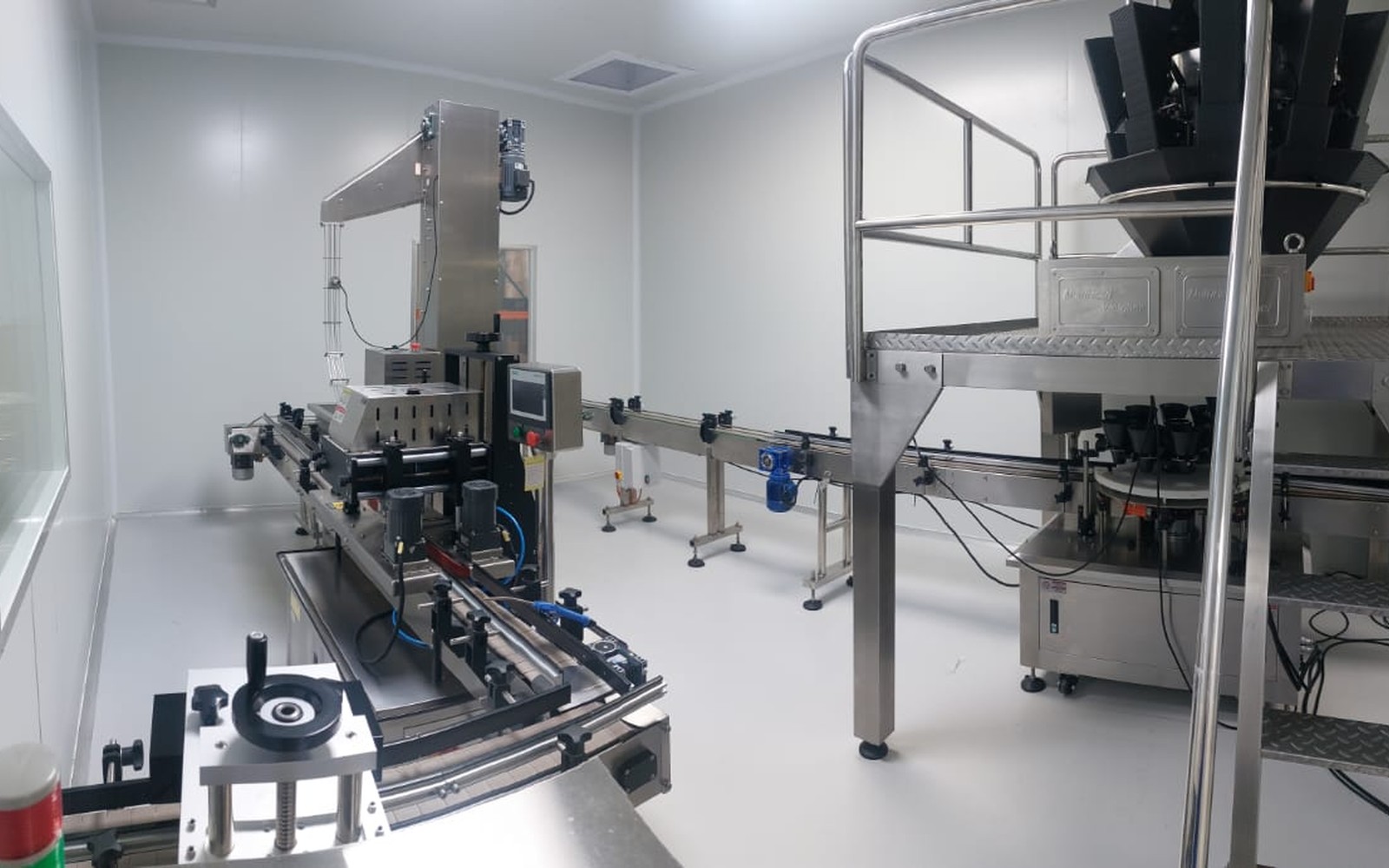
Supplement manufacturers live on throughput. A capsule filler running at 70 percent of rated speed because the tooling needs replacement, a powder filling line that loses 15 minutes per changeover between SKUs, an encapsulation machine that cannot hold the fill weight within tolerance: each of these is a direct OEE hit on the shift, and OEE is the whole margin story in contract supplement work. We finance the equipment that clears those bottlenecks: encapsulation machines, tablet presses, Filling Machine Financing, Bottling Line Financing, Capping Machine Financing, labelers, and the automated counting and packaging systems that move finished product from the line to the shipper. Minimum transaction is $50,000, application-only approval available up to $400,000, funding in one to two weeks from approval.
How the Supplement Industry Drives Equipment Investment
The nutraceutical and dietary supplement market is one of the few manufacturing segments where small brands can grow to meaningful contract volumes within two to three years. A supplement brand that cracks a retail chain or a direct-to-consumer subscription model sees order volumes grow faster than a conventional food brand because the product margins allow aggressive marketing. That growth lands on the contract manufacturer's floor as new SKUs, new dosage forms, and new pack formats, all arriving on the timeline the brand sets rather than a production planning cycle.
Contract supplement manufacturers (CMOs) that can turn customer specifications into validated production quickly win the accounts that matter. That capability depends entirely on equipment: the encapsulation capacity to take on a new capsule-based protein product, the tablet press tooling to run a new mineral formulation, the inline checkweigher certification to satisfy a retailer's QC requirement. Capital equipment is the competitive differentiator in CMO supplement work, and the cost of not investing is a contract that goes to the CMO down the road that can run it.
Branded supplement manufacturers running their own production have a parallel set of pressures. A brand selling through a major online retailer or a club-store chain is subject to fill-rate commitments that are audited. A line that cannot run the scheduled output because a filler is down or a labeler is running slow becomes a compliance issue, not just an efficiency problem. Equipment investment is how brands maintain fill-rate performance as volumes scale.
Equipment Categories in Supplement Manufacturing
Encapsulation is the primary asset class for most supplement CMOs. Automatic encapsulators running two-piece hard gelatin or HPMC capsules at production scale range from $80,000 for a basic 50,000-capsule-per-hour machine to $350,000-plus for a high-speed unit at 200,000 capsules per hour with integrated polishing and inspection. Soft-gel encapsulation for omega-3 products and liquid-filled capsules involves more complex equipment in the $400,000 to $1.5 million range including the spreader box, die roll system, and dryer. Both categories qualify for our equipment financing programs.
Tablet pressing for supplement applications uses the same rotary press platform as pharmaceutical solid-dose production but often at somewhat lower validation requirements. A 27-station or 35-station production press capable of 100,000 to 200,000 tablets per hour runs $80,000 to $250,000 new; refurbished machines from established press builders are available at lower cost and qualify for used programs. Granulation and blending equipment upstream of the press, including high-shear granulators and V-blenders, are companion assets commonly bundled into the same financing transaction.
Powder filling for protein powders, greens supplements, pre-workout formulas, and similar loose-fill products uses auger fillers, net-weight fillers, or vacuum fillers depending on the powder characteristics. A production-grade auger filler running canisters, pouches, or sachets at 30-60 containers per minute runs $60,000 to $200,000. The downstream capper, induction sealer, labeler, and case packer are typically financed as a complete line. Labeling systems for supplement containers require GMP-grade date coding and lot number traceability, and the labeler specification often drives the downstream equipment selection.
Checkweighers and metal detectors are a compliance and quality requirement for virtually every supplement production line. FDA dietary supplement regulations under 21 CFR Part 111 require identity testing, potency testing, and physical inspection, and the checkweigher at line end is part of that documentation chain. We finance inspection equipment as part of complete line transactions or as standalone upgrades to existing lines.
How the Financing Process Works for Supplement Equipment
The application is straightforward. For transactions under $400,000, the application alone initiates the credit review. No financial statements, no tax returns, no site visit. A credit decision typically returns in one to three business days. Approval leads directly to documentation, and the equipment is funded when it is delivered and accepted. The entire sequence from application submission to funded equipment typically takes ten to fourteen calendar days.
For larger transactions, three months of business bank statements and two years of business tax returns are the standard documentation. A supplement CMO with solid contract revenue and a growing customer base typically has a clear credit story even if the balance sheet is asset-light. Equipment lenders collateralize against the production asset, which means the credit analysis is not purely balance-sheet-driven the way a bank line of credit would be.
Equipment loans with 36- to 72-month terms are the standard structure. Operating leases are available for manufacturers who prefer off-balance-sheet treatment or who expect to upgrade the equipment within the lease term. The choice between loan and lease is a conversation about what the manufacturer plans to do with the machine at the end of the term and how they want the payments to appear on their financials.
Move the Bottleneck Off Your Supplement Line
Tell us which machine is limiting your throughput and what it costs to fix it. We will return structure options fast. $50,000 minimum; application-only up to $400,000; funding in one to two weeks.
Questions About Nutraceutical & Supplement Manufacturing
Clear answers on equipment eligibility, documentation, timing, and transaction structure before you send the file.
We are a supplement CMO that is two and a half years old with solid revenue but limited hard assets. Can we finance a new encapsulator?
Yes. Equipment financing for supplement CMOs does not require existing equipment as collateral. The machine you are buying is the collateral. For transactions under $400,000, application-only approval based on your business credit profile is the starting point. Revenue history and the account base both factor into the underwriting story.
We want to add a soft-gel line to our current hard capsule operation. The installed cost is around $900,000. What documentation do you need?
At $900,000, we require three months of business bank statements and two years of business tax returns. A project description and vendor quote for the soft-gel line are also helpful. From document receipt to a credit decision is typically three to five business days; documentation and funding follow within two weeks of approval.
Can we bundle the encapsulator, the downstream bottling line, and the labeler in a single financing transaction?
Yes, and that is how most complete-line transactions are structured. Bundling all the assets in a single transaction simplifies the application, produces a single payment, and typically results in better overall terms than three separate small-asset transactions. We list each piece individually in the equipment schedule.
A supplement brand we produce for is providing us a purchase order for a large contract. Can that PO help our financing application?
A signed contract or purchase order from a creditworthy supplement brand is relevant context and we consider it in the underwriting narrative. It is not a substitute for business credit and cash flow review, but it supports the story of why the equipment is being purchased and how it will generate revenue.
Our current capsule filler is paid off. Can we refinance it to get cash out for a new blending system?
If the encapsulator has meaningful market value and is owned free and clear, a cash-out refinance or sale-leaseback converts that asset equity into operating capital. We appraise the equipment, advance a percentage of its value, and you make monthly payments. The machine stays in production.
Finance Your Nutraceutical & Supplement Manufacturing
Send the equipment quote, seller details, price, deposit, and delivery schedule. The financing desk will review the file and return a practical next step.