
Financing Option
No-Money-Down Equipment Financing
Finance production line equipment with zero down payment. Preserve working capital, protect OEE, and fund conveyors, robotic cells, packaging lines, and more without a cash outlay at closing.
Start Review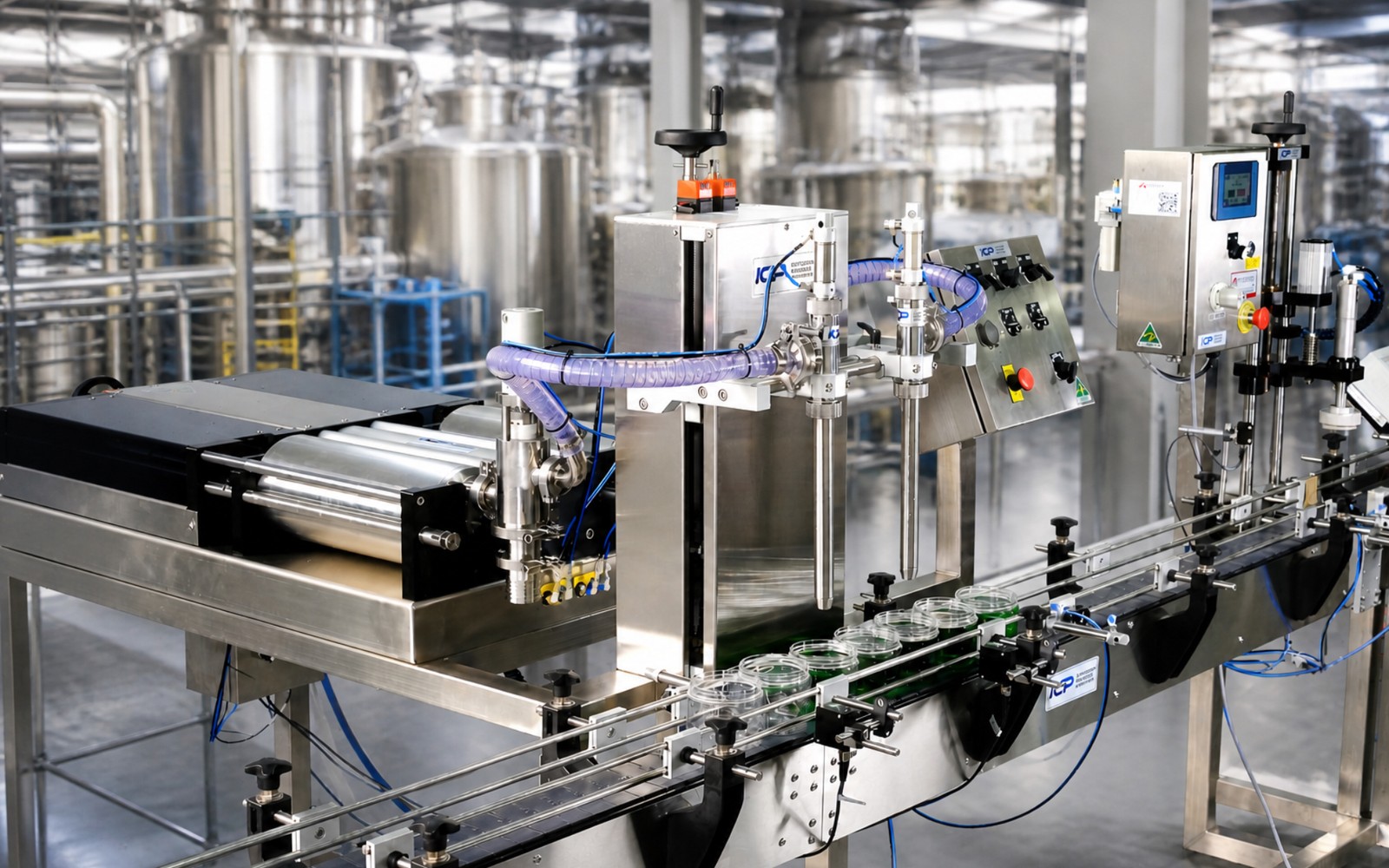
The bottleneck does not wait for capital to accumulate. A filling station running at 60 percent of rated throughput is losing money every shift, and a six-month delay while you build a cash reserve costs far more than whatever a lender charges for a zero-down structure. No-money-down equipment financing lets you deploy the line asset immediately, keeping your operating account intact for tooling, changeover stock, and the labor to run the new equipment.
We structure zero-down transactions on Complete Production Line Financing, individual station upgrades, and multi-machine packages from $50,000 into the millions. The collateral is the equipment itself, so cash reserves stay available for what actually moves the line.
Who Uses Zero-Down Financing on Production Equipment
Most manufacturers who request no-down-payment structures are not cash-poor. They are capital-disciplined. Tying up $80,000 to $250,000 in an equipment down payment reduces the float available for raw material purchases, seasonal inventory builds, or the next capital project in queue. These are the profiles we see most often:
- Co-packers and contract manufacturers who win a new customer account and need to add Packaging Line Financing immediately, before the revenue from that account materializes.
- Food and beverage plants scaling a SKU that has outgrown its current filling or labeling station, where every week of delay is a week of missed shipments.
- Automotive parts suppliers adding stamping or welding capacity to meet a new model-year requirement with a hard start date.
- Plastics and Electronics Assembly operations bringing an injection molding or pick-and-place cell in-house to reduce subcontract spend.
The common thread is that the equipment pays for itself faster than the loan term. When OEE improvement or direct labor savings cover the monthly payment within the first quarter of operation, the financing cost is essentially self-funding.
How a Zero-Down Structure Actually Works
Standard equipment loans require 10 to 20 percent down because lenders want the borrower to have skin in the game and a cushion against depreciation. Zero-down structures get to the same underwriting outcome through a different path: stronger deal packaging, accurate appraisal of the collateral, and sometimes a slightly higher rate or a first-and-last payment at signing rather than a true cash down payment.
Here is the typical flow for a no-money-down production equipment deal:
- Application and soft pull: We start with a one-page application. For deals up to roughly $400,000 on well-established businesses, that is often sufficient to get to a term sheet without full financials.
- Collateral position: The lender takes a first lien on the equipment. For packaging machinery, robotic cells, or conveyor systems with clear OEM serial numbers, that collateral is easy to document and value.
- Structure options: Zero-down can be structured as a capital lease with a $1 buyout, an equipment loan, or a fair-market-value lease depending on your depreciation posture. Each has a different balance-sheet footprint.
- Funding timeline: Most deals close in one to two weeks from a complete application. For in-stock or used equipment, sometimes faster.
If your credit profile is in the B/C tier, zero-down is harder but not impossible. The lender may require additional collateral, a personal guarantee with cross-collateralization, or a modest first-and-last structure. We tell you what is realistic before you spend time on paperwork.
What to Expect on Rate and Term
No-money-down financing carries a modest premium over a standard 10-percent-down deal. For strong-credit manufacturers with two or more years of operating history, that spread is usually small enough that the preserved working capital earns more than the rate difference. For newer businesses or those with credit challenges, the spread is wider, and the math deserves scrutiny before committing.
Typical parameters on zero-down production equipment deals:
- Terms of 36 to 72 months, with 60 months being the most common for equipment landing between $150k and $500k.
- New equipment from established OEMs (Krones, FANUC, Multivac, Ishida, and similar) generally qualifies more easily because residual value is well-documented.
- Used equipment qualifies on a case-by-case basis. A five-year-old thermoformer with a verifiable maintenance history and active spare parts availability is fundable; end-of-life equipment with no OEM support is not.
- Sale-leaseback is available if you already own equipment free and clear. That structure releases cash from the asset without requiring any new out-of-pocket, which is a zero-down approach from the opposite direction.
For Section 179 treatment, a capital lease with a $1 buyout or a straight loan allows you to deduct the full asset value in year one, which can offset the rate premium substantially. Talk to your tax advisor about which structure fits your election strategy.
New Equipment, Used Equipment, and Mixed Packages
Zero-down financing is not limited to new iron. The used market for production line equipment, particularly in packaging, bottling, and food processing, is active and well-documented. A Used Production Line Equipment Financing structure on a refurbished filler or a second-hand form-fill-seal machine can deliver the same throughput gain at 40 to 60 percent of the cost of new, and that lower cost basis makes zero-down terms easier to achieve.
Mixed packages, where a plant buys new robotic cells to anchor a line and fills in with used conveyors and checkweighers, are common. We can structure those as a single blended facility rather than forcing two separate applications. The lender underwrites the package as a system rather than individual assets, which usually produces better terms than financing each piece separately.
What You Need to Qualify
The documentation bar depends on deal size and business profile. For businesses with two or more years of operations and revenue above $1 million annually:
- One-page application plus a soft credit pull
- Three months of recent business bank statements
- Basic equipment quote or invoice from the seller
For deals above $400,000, most lenders will want two years of business tax returns and sometimes a current balance sheet. For startups or businesses under two years old, Startup and New-Business Production Line Equipment Financing programs exist, but zero-down is harder to achieve without a strong personal credit profile or additional collateral.
B and C credit borrowers can still access production equipment financing, including some zero-down structures, through specialty lenders who focus on equipment value rather than credit score alone. The terms will reflect the risk, but the deal can still close.
Get a Zero-Down Production Equipment Quote
Tell us the equipment you need, the seller, and your approximate project size. We will come back with structure options, rate ranges, and a realistic read on what zero-down looks like for your specific deal, usually within one business day. No commitment required to see the numbers.
Questions About No-Money-Down Equipment Financing
Clear answers on equipment eligibility, documentation, timing, and transaction structure before you send the file.
Does zero-down financing mean I pay nothing at all at closing?
Not always in the strictest sense. Some lenders require a first-and-last payment at signing, which is equivalent to one monthly payment held as a deposit rather than a traditional percentage-based down payment. Others genuinely require nothing at closing beyond documentation fees. We specify which structure applies before you sign anything.
Will my working capital show up on the lender's application?
For application-only deals under roughly $400,000, lenders typically review bank statements to confirm cash flow cadence rather than scrutinize your cash reserves. They want to see consistent inflows covering the projected payment, not a specific cash balance. That said, very low bank balances can raise questions even on smaller deals.
Can I finance installation, freight, and integration labor with zero down?
Soft costs like freight, installation, and integration programming are harder to include in a zero-down structure because lenders collateralize the physical equipment, not the labor. Some lenders will include up to 15 to 20 percent soft costs in the financed amount. Beyond that, it is usually cleaner to handle soft costs separately or roll them into a working capital line.
How does zero-down interact with Section 179 or bonus depreciation?
If you use a capital lease with a $1 buyout or a standard loan, you can still claim Section 179 or bonus depreciation on the full equipment value in year one, regardless of how much you put down. The IRS cares about the nature of the transaction, not the down payment amount. Consult your tax advisor to confirm eligibility for your specific deal.
What if I already have equipment loans with other lenders? Does that hurt my chances?
Existing equipment debt is not an automatic disqualifier. Lenders look at total debt service coverage: whether your monthly cash flow can service all existing obligations plus the new payment. If your current loans are performing and your revenue supports the additional payment, existing debt rarely blocks a new deal. Where it creates friction is if existing lenders have blanket liens that could interfere with the new collateral position.
Finance Your No-Money-Down Equipment Financing
Send the equipment quote, seller details, price, deposit, and delivery schedule. The financing desk will review the file and return a practical next step.