

Popular Model
FANUC LR Mate 200iD Robot Financing
Finance a FANUC LR Mate 200iD robot for your production line. Flexible terms for new and used units. Application-only up to $400k. Funding in about 1-2 weeks.
Start Review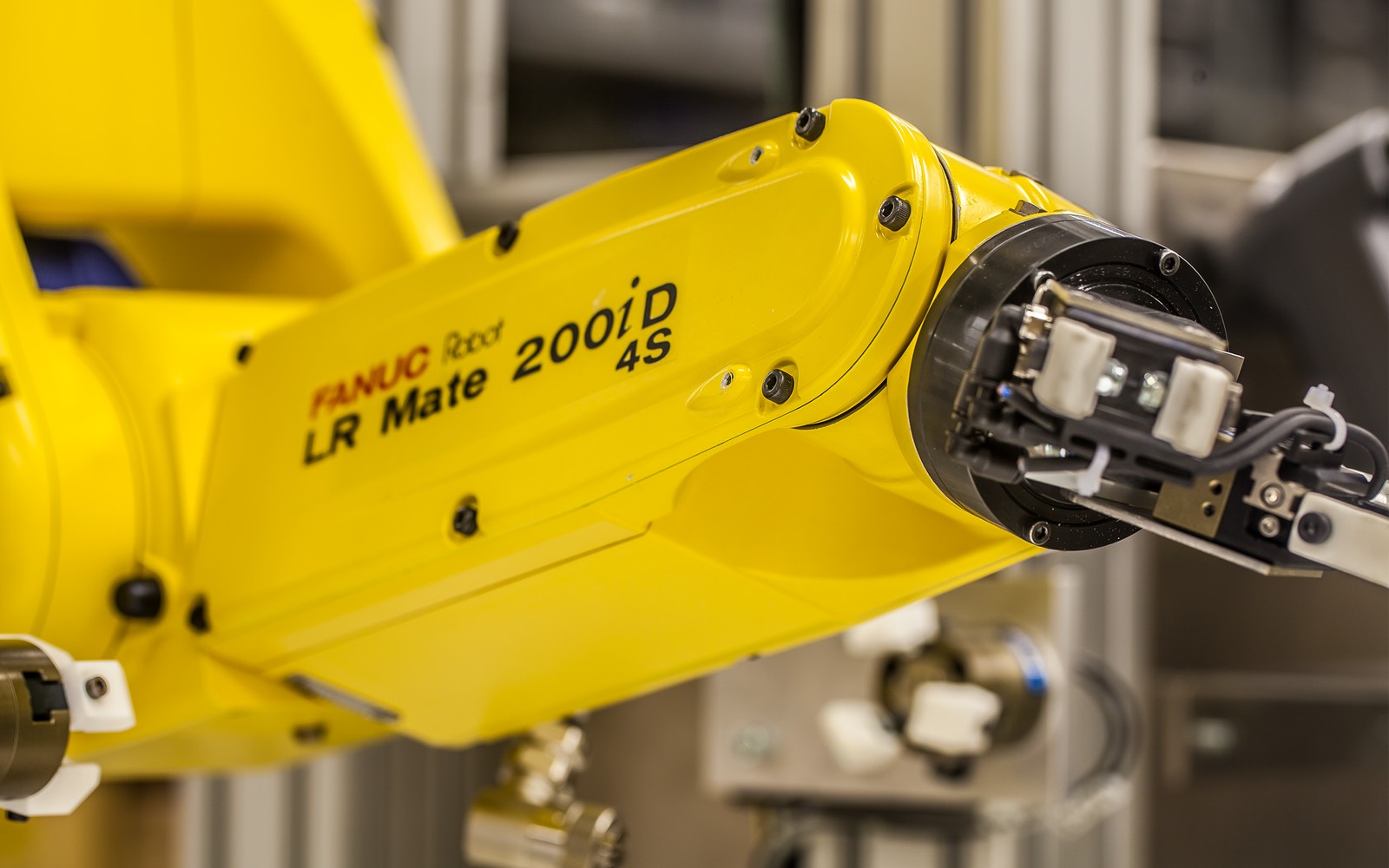
The bottleneck on a small-parts assembly or inspection line is rarely the human operator working hard. It is the human operator who cannot maintain 120 picks per minute without variance. That is exactly the gap the FANUC LR Mate 200iD fills. With a 7 kg payload capacity, a 717 mm reach on the standard model, and a compact footprint that fits inside a guarded cell no bigger than a workbench, this six-axis robot does precision handling, tending, dispensing, and light assembly at throughputs that shift labor hours toward higher-value tasks rather than eliminating them entirely.
We finance LR Mate 200iD robots for plants running everything from electronics sub-assembly to pharmaceutical blister-pack loading. The minimum transaction we consider is $50,000, and the sweet spot for this model tends to fall landing between $100k and $150k once integration, end-of-arm tooling, safety guarding, and commissioning are included. New units and certified-used cells both qualify. If the project is under roughly $400,000, we can typically work from an application and three months of bank statements. Funding runs about one to two weeks from approval.
For plants already running other FANUC M-20iA Robot Financing for heavier handling, the LR Mate is a natural complement on lines where payload and footprint matter more than reach. We can write a single credit facility covering multiple assets so you are not filing separate applications for each piece of the cell.
What Makes the LR Mate 200iD Worth the Investment
FANUC introduced the LR Mate series as its answer to the space-constrained, high-mix environment where full-size robots are simply overbuilt. The 200iD is the current-generation variant in that lineup, and several technical choices make it well-suited for production floor financing.
- Payload-to-footprint ratio: At 7 kg payload on the standard wrist and a 200iD/7L extended-reach model stretching to 911 mm, you get meaningful capability without the real estate penalty of a larger arm. Floor space in a production cell has a dollar-per-square-foot cost, and this robot respects it.
- IP67 wash-down rating (200iD/7WP variant): Food, beverage, and pharmaceutical plants can run the wash-down-protected variant and meet sanitation protocols without enclosing the robot in a separate clean enclosure.
- FANUC R-30iB Plus controller: The controller family has broad iRVision integration, which means machine-vision-guided picking, inspection, and placement without a separate vision computer adding cost and latency to the cell.
- Cycle time: Typical pick-and-place cycle times in the 0.5 to 1.5 second range depending on path and payload, which translates to productive output that makes payback math tractable for mid-market plants.
For operations that also need Pick-and-Place Machine Financing on a parallel station, the LR Mate pairs well with dedicated Cartesian or delta systems and a single financing package can cover both.
Operations That Finance This Robot
Not every shop needs a full gantry or a heavy-payload arm. The LR Mate 200iD serves a specific niche well, and the financing inquiries we see reflect that.
- Electronics assembly and PCB handling: Surface-mount and final-assembly operations where handling delicate components at consistent force matters more than raw speed.
- Pharmaceutical and nutraceutical packaging: Pharmaceutical manufacturers use the wash-down variant for blister-pack loading, vial sorting, and label verification stations where cleanroom adjacency and sanitization are part of the cell spec.
- Machine tending on CNC cells: A single LR Mate can tend two or three compact machining centers on a rotating basis, spreading the financing cost across the OEE gain on each machine.
- Food and beverage line integration: Food and beverage plants running small-format products like snack pouches, condiment packets, and portion cups use the robot for loading and lane diverting before the case packer.
- Medical device assembly: Medical device manufacturers value the repeatability specifications (plus or minus 0.02 mm on the 200iD) for sub-assembly tasks where manual handling introduces unacceptable variation.
Financing Structure for an LR Mate 200iD Cell
The robot itself typically prices between $25,000 and $45,000 for a new unit depending on the variant and included peripherals. The full cell, however, is where the financing number lives. End-of-arm tooling, integration engineering, safety guarding, a vision system if included, and installation typically push the total project cost to $80,000 to $200,000 or higher for multi-robot configurations. We finance the complete installed project, not just the robot arm.
Terms for this asset class generally run 36 to 72 months. Shorter terms reduce total interest cost; longer terms improve monthly cash flow and are useful when the cell's payback period extends past three years. We can structure Equipment Leasing with an end-of-term buyout, or a straight Equipment Loans that builds equity from payment one. For plants that already own integrated cells and want to free up capital, Sale-Leaseback on existing automation is also available.
B and C credit profiles are considered. We look at the overall financial picture, including time in business, revenue consistency, and the strategic logic of the investment, rather than stopping at a score threshold.
How Quickly Can This Close
Production line investments rarely sit comfortably in a six-week underwriting queue. Customers are waiting, labor contracts are being negotiated, and capital that earns a return next quarter is worth more than capital that earns it the quarter after. Our process is designed for that reality.
For transactions under roughly $400,000, the application covers the basics: business name, time in operation, the equipment description, and the vendor quote. Three months of business bank statements typically round out the file. We do not require audited financials or tax returns for these smaller projects unless the credit profile calls for Diligence Notes.
From complete file to approval usually takes a few business days. Funding to the vendor follows within about a week after executed documents. Total time from inquiry to funded is typically one to two weeks on a clean deal. If the integration is phased, we can structure draws to match the vendor's payment schedule so you are not carrying undrawn credit at cost.
Questions About FANUC LR Mate 200iD Robot Financing
Clear answers on equipment eligibility, documentation, timing, and transaction structure before you send the file.
Can I finance a used or refurbished LR Mate 200iD?
Yes. Certified-refurbished units and used robots with documented service history are eligible. We look at age, condition, and remaining economic life rather than requiring new-only. A refurbished unit from an authorized FANUC integrator with a warranty carries more weight in underwriting than a bare arm from an auction.
Does the financing cover integration and end-of-arm tooling, or just the robot?
The full project cost qualifies: robot, controller, end-of-arm tooling, safety guarding, vision systems, integration engineering, and installation. Financing only the robot arm and self-funding the rest is common but often suboptimal. A single facility covering the complete cell simplifies cash flow and keeps your working capital intact for other uses.
My business has been operating for 18 months. Can I still qualify?
Two or more years in business simplifies the file. At 18 months we can still work with you, but we will look closely at revenue trajectory and may ask for additional supporting documents. Stronger revenue history and a clear payback story for the cell both help.
What happens at end of term if I financed a lease rather than a loan?
That depends on how we structure the lease. A dollar-buyout lease (sometimes called a capital lease) lets you own the equipment at end of term for one dollar. A fair-market-value lease gives you the option to purchase at appraised value, return the equipment, or renew. We discuss which structure fits your accounting and operational preferences before documents are signed.
Can I add a second robot to this facility later?
Yes. Many customers start with one cell and add capacity as the first cell proves out. We can write an amendment to an existing facility or open a new one. Either way you are not starting a full underwriting from scratch on the second asset.
Finance Your FANUC LR Mate 200iD Robot Financing
Send the equipment quote, seller details, price, deposit, and delivery schedule. The financing desk will review the file and return a practical next step.