

Popular Model
FANUC M-20iA Robot Financing
Finance a FANUC M-20iA robot for your assembly or pick-and-place cell. Application-only up to $400k, 36-72 month terms, new and used robots qualify.
Start Review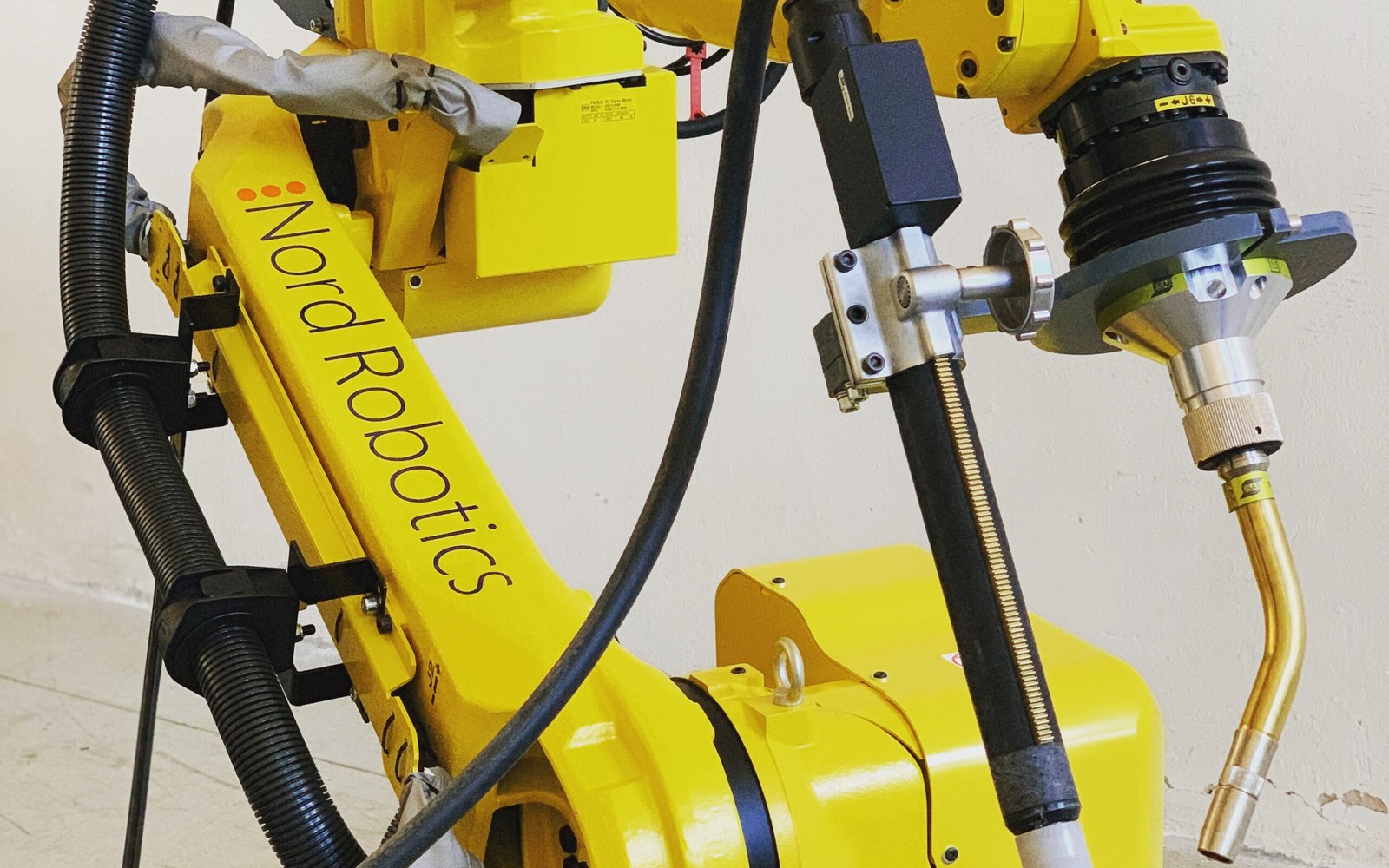
Twenty kilograms of payload at a 1,811 mm reach puts the FANUC M-20iA in the middle of the broadest robot application category: general-purpose assembly, machine tending, pick-and-place, and light material handling. The M-20iA's slim arm profile is a key engineering feature because it allows the robot to operate within a narrow footprint, enter machine tool work envelopes that wider arms cannot reach, and be mounted overhead, floor, or wall without structural modification. Plants that optimize floor space treat that versatility as a productive asset in its own right.
We finance M-20iA cells for manufacturers, electronics assemblers, food processors, and general industrial operations. Minimum deal size is $50,000. Application-only approval covers projects up to about $400,000, and funded transactions close in approximately one to two weeks. Operators in San Jose, CA and throughout the electronics and precision manufacturing clusters of Northern California contact us when a robot cell needs funding faster than conventional bank timelines allow. We understand the difference between what the asset is worth as collateral and what a banker who has never been on a plant floor thinks it is worth.
M-20iA Technical Profile and Cell Value
The M-20iA standard variant delivers 20 kg payload at 1,811 mm reach with a repeatability of plus or minus 0.04 mm. The M-20iA/12L extends reach to 2,009 mm at a reduced 12 kg payload for tasks requiring a longer arm without the full 20 kg moment capacity. The M-20iA/35M is the high-payload sibling at 35 kg with a shorter, stiffer arm geometry preferred for deburring, polishing, and grinding operations where the robot encounters lateral force on the end-of-arm tool.
The R-30iB Plus controller common to the M-20iA family enables iRVision integration without an external PC, which simplifies the cell design and reduces integration cost. A vision-enabled M-20iA cell that can locate and pick parts without hard-tooled nesting is worth more in secondary markets because it can be redeployed across product changeovers. That flexibility is an underwriting consideration: higher residual value supports better financing terms.
Electronics assemblers use the M-20iA for PCB handling, component placement verification, and final assembly operations where the combination of payload, reach, and accuracy is sufficient for sub-millimeter part positioning. In Food & Beverage Manufacturing, M-20iA robots handle portioned product, tray loading, and secondary packaging tasks at line speed with FANUC's stainless-steel or IP67-rated wash-down configurations.
Financing Mechanics for an M-20iA Cell
M-20iA cells typically run from a single robot with simple tooling at $80,000 to $120,000 up to multi-robot cells with conveyors, vision systems, and integration at $300,000 to $500,000 or more. The full cell cost is what we finance, not just the robot hardware. Integration labor, end-of-arm tooling, guarding, and the controller are all eligible assets in the transaction.
For single-robot cells under $400,000, the application-only path moves fastest. We do not require tax returns, appraisals, or bank commitment letters to start. A one-page application and the equipment quote typically produce a credit decision within 48 hours. For larger multi-robot programs, three months of bank statements are added to the file and the review runs at a similar pace because the additional information comes in together.
No-Money-Down Equipment Financing is available for qualified operators, which preserves working capital for integration costs and initial production ramp. On robot cell projects where integration is a significant share of the total, keeping cash in the business for integration invoices rather than using it as a down payment is a better use of capital.
We also support Production Line Upgrade Financing for manufacturers adding an M-20iA to an existing partially automated line. The upgrade financing structure recognizes that the robot is one piece of a larger productivity improvement rather than a standalone asset acquisition.
Comparing the M-20iA to Adjacent FANUC Models
The M-20iA sits between the compact six-axis LR Mate series and the medium-payload M-710iC family. The FANUC LR Mate 200iD handles up to 7 kg at shorter reach and is the right choice for bench-mounted assembly and smaller machine tending applications where the M-20iA is oversize. The FANUC M-710iC Robot Financing steps up to 20-70 kg for applications where the M-20iA's 20 kg limit is a constraint.
From a financing standpoint, all three models are financed the same way. The difference is in project cost and cell scope. A single M-20iA cell is a simpler credit conversation than a six-robot M-710iC welding line, but the review process, documentation requirements, and funding timeline are structurally the same.
Operators building a full robot-intensive production floor might also look at Robotic Assembly Cell Financing as a category page, which covers multi-brand and multi-model programs under a single financing conversation.
Questions About FANUC M-20iA Robot Financing
Clear answers on equipment eligibility, documentation, timing, and transaction structure before you send the file.
Can the M-20iA be financed if it is mounted overhead rather than floor-mounted?
Yes. Mount orientation does not affect financing eligibility. Overhead and wall-mounted configurations are common in machine tending cells. We finance the robot, controller, and the structural mounting frame as part of the cell package.
I need an M-20iA in a food-safe wash-down configuration. Does the IP67 option affect financing?
The IP67 and stainless-steel wash-down variants are financed identically to standard M-20iA units. The configuration may affect secondary-market value depending on demand for food-grade robots at the time of any residual calculation, but we note it in the credit file and it rarely changes the outcome meaningfully.
We are an electronics startup with two years in business. Can we finance a robot?
Two years of business history is workable. We look at cash flow, contracts, and the strength of the business model. Electronics assembly startups with identified contract customers or purchase orders are in a much better position than pure early-stage companies with no revenue. Provide three months of bank statements and a customer summary.
Our cell includes a vision system from a third-party provider. Does it roll into the financing?
Third-party vision systems that are permanently integrated into the cell and purpose-built for it are typically eligible as part of the financed scope. Vision cameras, illumination systems, and inspection software licenses that come with the cell can roll into the transaction. Standalone vision systems purchased separately from the robot cell may require separate evaluation.
Is there a penalty for paying off the robot loan early?
It depends on the structure. Some equipment loan structures include a prepayment schedule; others do not. We will show you the exact prepayment terms before you sign. For operators who anticipate accelerating payoff when production ramps up, we look for structures that accommodate early paydown.
Finance Your FANUC M-20iA Robot Financing
Send the equipment quote, seller details, price, deposit, and delivery schedule. The financing desk will review the file and return a practical next step.