

Production Equipment
Liquid Filling Machine Financing
Finance inline liquid fillers, rotary liquid filling machines, gravity fillers, and overflow fillers for beverage, dairy, chemical, and personal care operations. $50k minimum.
Start Review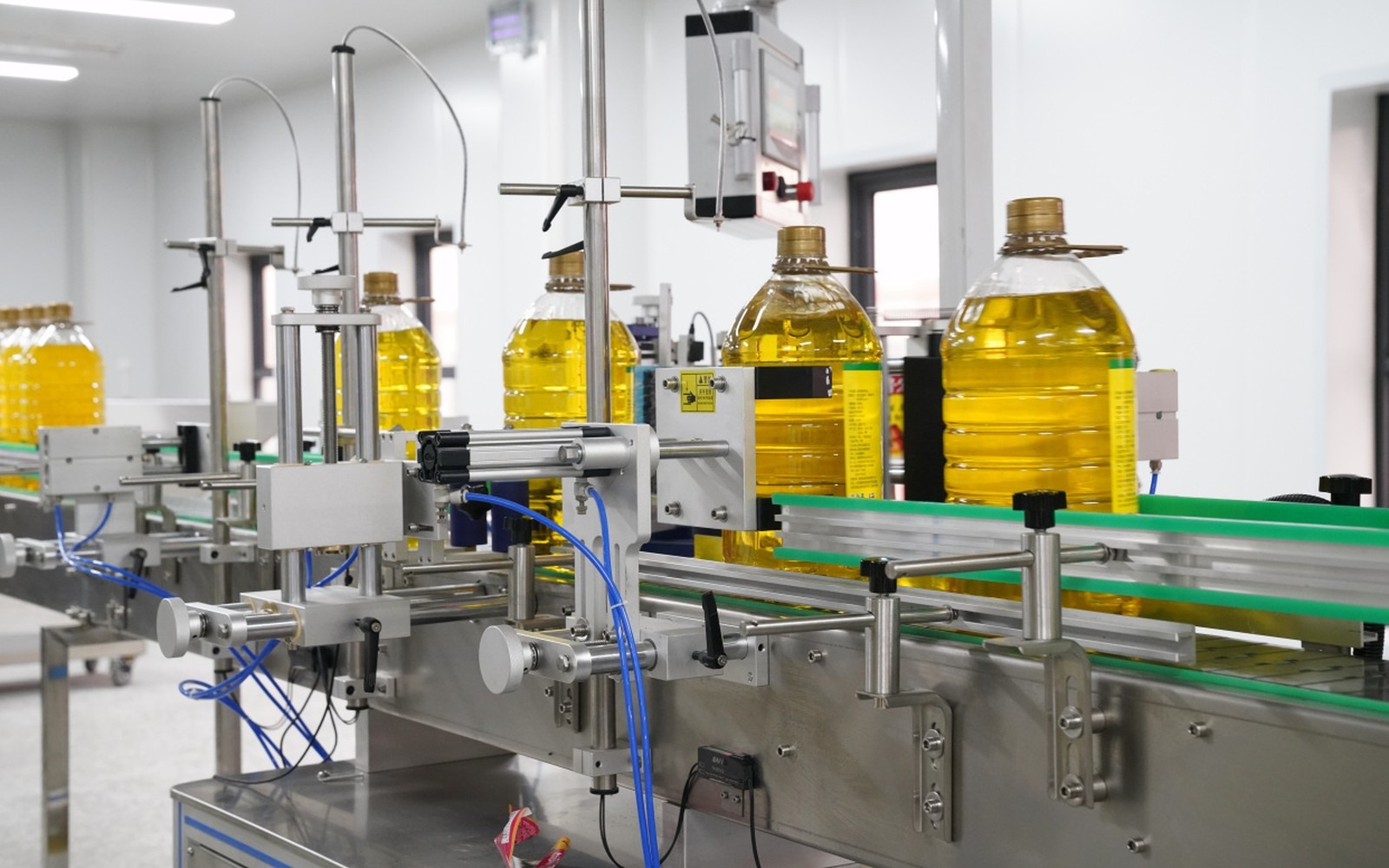
Liquid filling is a tight discipline. The wrong nozzle leaves foam in a carbonated beverage, the wrong valve leaves product on the outside of the container rather than inside, and the wrong fill speed creates a changeover problem every time the SKU rotates. The capital cost of getting the fill technology right is real, and so is the cost of getting it wrong. Liquid filling machine financing is where we work through the application with plant engineers and production managers who already know exactly what they need and need the financing to keep up with the project timeline.
Liquid filling technology splits along two primary axes: the fill measurement method (volumetric, gravimetric, or level-based) and the machine format (inline versus rotary). Inline fillers space nozzles in a row and fill multiple containers simultaneously without rotating the product, which keeps mechanical complexity lower and format changes faster. Rotary fillers move containers around a rotating star on a continuous basis, achieving higher speeds at the cost of more complex format change procedures. A small to mid-size food or personal care operation typically lands on an inline machine; a high-volume beverage or dairy plant running a single product at sustained speeds moves to a rotary.
Our minimum for liquid filler financing is $50,000. Fully automatic inline liquid fillers start around that threshold for simple four-head to six-head gravity or overflow systems. High-speed rotary fillers from major OEMs like Krones, Sidel, or KHS run $300,000 to well over $1,000,000 for a complete blow-fill-cap integration. We finance across the full range, structuring each project around the specific machine and the borrower's profile.
Liquid Fill Technologies and Their Applications
Gravity fillers use the weight of the liquid itself to drive the fill. They work well for free-flowing, thin liquids: water, juices, vinegars, and light oils. The nozzle opens and closes based on a timed or level-based signal. Gravity fillers are relatively low in cost and low in mechanical complexity, making them the preferred format for smaller producers filling thin liquids. A fully automatic eight-head to twelve-head inline gravity filler appropriate for a craft beverage or vinegar producer runs $55,000 to $120,000.
Overflow fillers fill containers to a consistent visible level rather than a consistent volume, making them ideal for transparent containers where the liquid level appearance matters. Mouthwash, cleaning products, and some beverages use overflow fillers. The liquid circulates through the nozzle and overflows back into the tank, so the fill level is consistent even if container volumes vary slightly. Overflow filler costs are similar to gravity filler costs for comparable head counts.
Piston fillers, covered in more detail in the general Filling Machine Financing section, handle higher viscosity products. For borderline products, the choice between a piston filler and a peristaltic or gear-pump filler depends on the product's shear sensitivity. Shear-sensitive products like emulsions, living cultures, or products with suspended particulates should use low-shear fill technology to avoid product degradation during the fill.
For carbonated beverages, a counter-pressure filler is required. The container is pressurized with CO2 before filling to prevent de-carbonation during the fill, and the liquid enters under counter-pressure. Counter-pressure fillers are more mechanically complex and more expensive than gravity or overflow fillers. A counter-pressure rotary filler for a craft brewery or carbonated soft drink operation typically runs $200,000 to $500,000. Beverage bottling and canning operations are among the most frequent buyers of counter-pressure liquid filling systems, and the equipment holds strong value on the secondary market.
Liquid Filling Investment Across Industries
The beverage industry is the dominant buyer of liquid filling equipment by dollar volume. Bottled water, carbonated soft drinks, beer, spirits, juice, and functional beverages all require filling equipment matched to the product's specific characteristics: carbonation, viscosity, particulate content, temperature, and container format. A brewery switching from bottle to can filling needs a completely different fill head configuration. A still water bottler adding a carbonated product line needs counter-pressure capability. These format-driven capital upgrades happen continuously across the beverage sector and generate a steady stream of filling machine financing requests.
Personal care and household chemical operations represent another significant segment. Liquid soap, shampoo, conditioner, lotion, cleaning products, and laundry detergent are all filled on piston or peristaltic systems matched to the product viscosity. These operations often have high SKU counts and need machines that can change format, volume, and container type quickly. Servo-driven piston fillers with programmable stroke control are the common choice because format changes require only HMI parameter changes rather than mechanical adjustments.
Cosmetics and personal care manufacturers sometimes add filling complexity in the form of two-component products, airless systems for sensitive formulas, and ultra-high-precision fills for expensive serums or pharmaceutical-grade topicals. These applications require filling systems with very tight fill tolerances and often demand food-grade or pharmaceutical-grade construction even if the product is not technically a drug.
Chemical manufacturers filling corrosive, flammable, or hazardous liquids need filling systems built to ATEX or NEC Class I Division 1 or Division 2 standards depending on the product flash point and the facility classification. We finance these specialized systems as readily as food-grade equipment; the ATEX classification is part of the machine's specification, not a financing complication.
Liquid Filler Secondary Market and Financing
The liquid filler secondary market is active and well-organized. OEM-certified used machines, privately sold units from plant upgrades, and auction liquidation sales all feed a supply of used liquid fillers at prices ranging from 25 to 65 percent of new list depending on age, condition, and the format parts included. For a growing beverage or food operation, a used filler can provide the throughput capacity needed at a fraction of the new machine cost.
We finance used liquid fillers with the same underwriting discipline as new equipment. The key documents are the inspection report or OEM certification of the machine's condition, the serial number and OEM specification sheet confirming the machine's fill technology and rated speed, and the purchase agreement. Used equipment financing typically advances 75 to 90 percent of the appraised or purchase value on documented machines.
One consideration specific to liquid fillers is the fill head configuration. Nozzles, seals, and diaphragm components in contact with the product wear over time and represent a maintenance cost. A used filler where the fill heads have been recently serviced or replaced is a materially better asset than one where the service history is unknown. Ask the seller for the fill head service records and include them in the financing package.
For operations financing a used liquid filler from an auction, the timeline is often compressed. We process time-sensitive auction purchases regularly and can sometimes provide a conditional approval before the bidding closes when you submit a basic application and bank statements in advance. Contact us before the auction, not after you have won the bid without financing arranged.
Questions About Liquid Filling Machine Financing
Clear answers on equipment eligibility, documentation, timing, and transaction structure before you send the file.
I am building a new craft spirits brand and need a liquid filler but my business is only eight months old. Can I get financed?
Eight months is below our typical 12-month minimum for most programs. However, a strong personal credit score, a substantive down payment (20 to 30 percent), and a demonstrated product with retail purchase orders can sometimes open doors with specialty startup-friendly lenders. Call us and describe the situation; we will be direct about what is possible.
My liquid filler will be filling two types of product: one water-based and one oil-based. Do I need separate machines?
Not necessarily. Many filling systems handle both water-based and oil-based products with proper CIP procedures between runs, depending on the nozzle and valve materials. Your OEM will confirm the compatibility. If one machine handles both products, you finance one machine. If the product separation requires dedicated equipment, we can structure a facility that covers both.
Can I include the CIP (clean-in-place) system in the financed amount?
Yes, if the CIP system is integral to the filler's operation and part of the OEM's or project contractor's quoted scope. CIP systems that are permanently installed at the filler and serve only the filler are includable. A shared plant CIP system serving multiple pieces of equipment is typically not.
The filler I need has a 24-week build lead time. What happens to the financing approval during that time?
We issue a credit approval that holds for a defined period (typically 90 to 120 days). If the build lead time extends beyond that, a re-approval at the end of the term is usually straightforward, especially if the business has continued operating without material changes. We can also structure a deposit advance at initial approval with the balance funded at delivery.
We produce a product where the fill volume must meet regulatory net weight requirements. Does precision fill capability affect how the asset is underwritten?
High-precision fill systems (net-weight, flow-meter with closed-loop control) are generally stronger collateral than simple gravity or timed fillers because the fill accuracy is documented and verifiable. The lender views the machine's precision capability as evidence of its purpose-built nature and market value. It helps, not hurts.
Finance Your Liquid Filling Machine Financing
Send the equipment quote, seller details, price, deposit, and delivery schedule. The financing desk will review the file and return a practical next step.